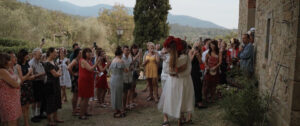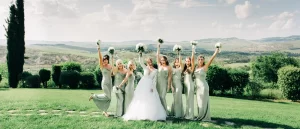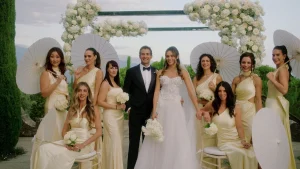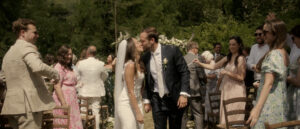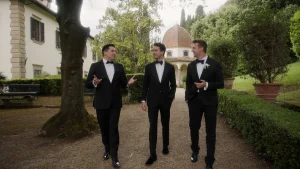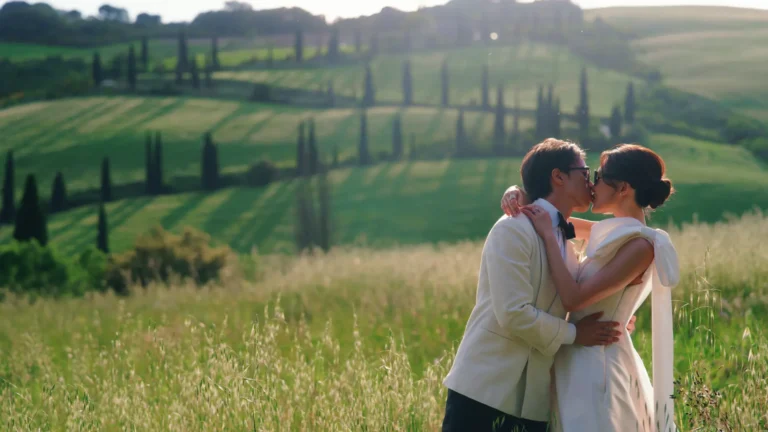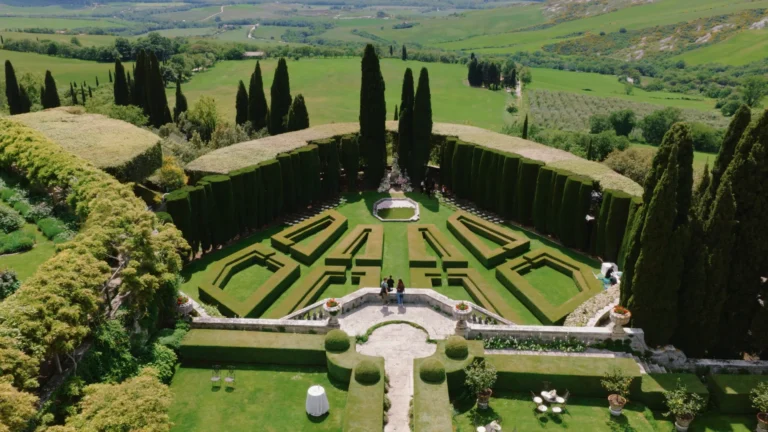


The late afternoon light washes over the Italian countryside in a warm, deep gold, the exact hue painters chased for centuries and couples now travel continents to marry within. Italy has never needed to perform its own beauty. It simply offers it, unevenly and generously, to whoever arrives with the patience to look closely: a Liberty villa on Lake Como reflecting in the dark water, a stone farmhouse nestled among Tuscan hills and framed by cypresses, a clifftop terrace in Amalfi where the scent of lemons meets the sea salt. To plan a wedding here is to accept an invitation into something larger than the couple themselves, a landscape that has already rehearsed elegance for centuries and asks only to be met with equal intention.
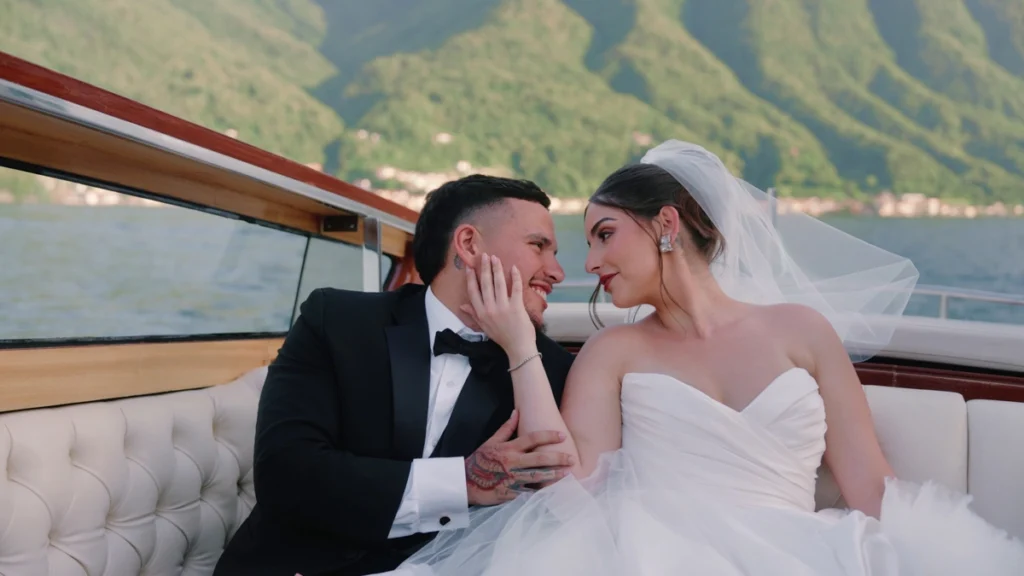
This is not a country that rewards improvisation, despite its reputation for spontaneity. Behind every seemingly effortless Tuscan celebration or Capri elopement sits a architecture of decisions made months, sometimes years, in advance: which region speaks to the couple’s own temperament, which season will flatter the chosen setting, which hands will shape the flowers, the food, the music, the light. Guests must be received with a hospitality that feels particular to them. A ceremony must honor whatever tradition the couple carries into it.
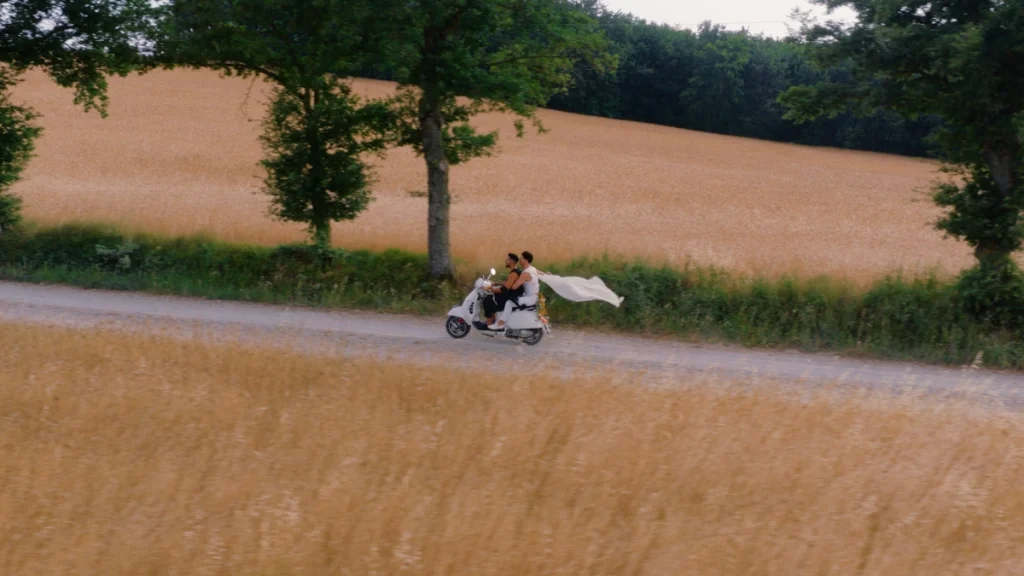
And somewhere in this constellation of choices sits the wedding film, the one element capable of holding all the others together after the flowers have wilted and the guests have flown home. A wedding video, when done with real craft, is not documentation. It is authorship. It takes the atmosphere a couple worked so hard to create and gives it permanence, rhythm, a gaze. What follows is a working guide through the decisions that shape an Italian destination wedding worth remembering long after the last dance, built not on convention but on clarity.
The North and the South: Two Souls, One Country
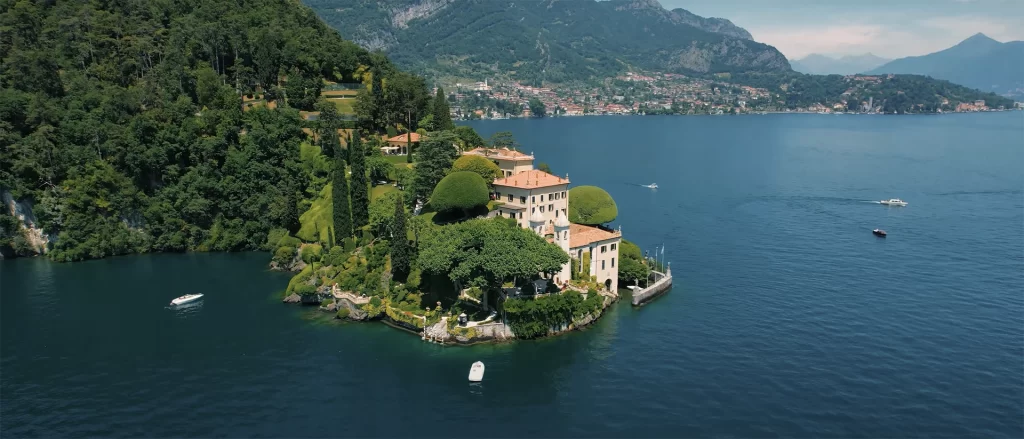
Ask any Italian which half of the country they belong to and you will receive, without fail, a small speech about temperament. The North carries itself with a certain restraint, an architectural discipline visible in the symmetry of villas along Lake Como and Lake Garda, in the mist that settles over the Dolomites at dawn, in the way northern light tends toward silver rather than gold. It is a landscape that favors composition over spectacle, and couples drawn to it often recognize something of their own reserve in its quiet grandeur. A wedding film shot against these lakes and mountains inherits that same discipline: symmetrical framing, patient pacing, a visual language closer to portraiture than to spectacle.
The South speaks a different dialect entirely. Along the Amalfi coastline, through Puglian olive groves and Sicilian lemon orchards heavy with fruit, the light turns warmer, more forgiving, almost theatrical in how it falls across terracotta and stone. Here celebrations tend toward abundance rather than restraint, and the camera responds in kind, favoring movement, texture, the interplay of shadow and Mediterranean glare. Couples who feel most themselves in noise, color, and improvisation often find their truest expression not in the North’s polished ceremony but in the South’s looser, more sensory embrace.

Neither identity is superior to the other, and the choice rarely comes down to geography alone. It comes down to recognizing which atmosphere already lives inside the relationship being celebrated. A videographer worth hiring understands this distinction instinctively, adjusting rhythm, lens choice, and visual tone to the region’s own character rather than imposing a single aesthetic everywhere. Choosing between North and South, then, is less about selecting a postcard and more about locating the emotional register that will carry through every frame of the eventual wedding video, long after the trip itself has ended.
Read also: Destination Weddings in Italy: North, Central & South Compared
The Venue: Between UNESCO Heritage, Cities of Art, and Film Sets
Once region and character are settled, the search narrows toward something far more specific: the place that will hold the ceremony itself. Italy offers an unusually layered menu of possibility here. Some couples gravitate toward UNESCO-protected sites, villas and gardens whose preservation status guarantees a kind of untouched authenticity, from the terraced grounds of a Medici estate to a cloister that has witnessed five centuries of vows before theirs. Others prefer the beauty of an art city, choosing a rooftop in Florence or a hidden courtyard in Venice precisely because the wedding unfolds inside a neighborhood still going about its ordinary business, market stalls and church bells included. And a growing number arrive with a very particular image already in mind, drawn by locations that international cinema made famous, a lake terrace or a coastal piazza recognized instantly by anyone who has seen the right film.

What matters more than the category, though, is how the space behaves once the sun begins to move. Outdoor settings promise natural light of extraordinary quality but demand real forethought around shade, wind, and the acoustics of an open sky, which can swallow vows if no one has planned for it. Indoor venues offer control, dramatic ceiling heights, stone that holds sound with a richness open air never will, but require lighting expertise to avoid flattening a room’s character into something generic. A skilled videographer reads these conditions the way a location scout would, anticipating where the ceremony’s natural drama lives and where it needs help. This is, in many ways, where the wedding film begins its real work. The venue was chosen with enormous care, often years before the date itself, and the resulting video exists to hand that same care back to the couple, preserving not just who attended but the specific architecture, light, and atmosphere that made the day unrepeatable.
Read also: Indoor vs Outdoor Ceremonies: What Works Best for Wedding Videography
The Seasons Worth Reconsidering
Most couples arrive with June or September already circled on the calendar, convinced that peak season guarantees peak beauty. The truth is more nuanced, and considerably more interesting for anyone willing to look past convention. Winter weddings in Italy, still rare enough to feel genuinely distinctive, offer a clarity of light that summer’s haze never quite achieves, low sun angles that stretch shadows into something painterly, and interiors warmed by candlelight and fireplaces that read on camera with real intimacy. Venues once impossible to book now open their calendars, and cities like Rome or Florence, emptied of their usual crowds, regain a kind of dignity that makes for extraordinary backdrops.

The Amalfi Coast, so often associated with July’s crushing heat and even more crushing tourist density, reveals a different personality entirely in April and May. Lemon trees carry their fruit alongside fresh blossom, the sea holds a clarity it loses by midsummer, and temperatures stay comfortable enough for guests to actually enjoy the terraces rather than retreat from them. Fewer boats crowd the water, fewer buses clog the coastal road, and the resulting wedding film gains a stillness that peak-season footage, however skilled the videographer, simply cannot replicate against a backdrop full of strangers.

Tuscany in autumn tells its own story through color rather than light. As the grape harvest winds down and vineyard leaves turn amber and rust, the landscape itself becomes a collaborator, offering a palette no stylist could manufacture. Temperatures soften into something genuinely pleasant for both ceremony and reception, and the tourist volume that overwhelms Florence and Siena in summer thins considerably. Choosing an unconventional season, then, is rarely a compromise. It tends to be where atmosphere, practicality, and visual richness align most naturally, rewarding couples with both comfort and a wedding video unlike anything shot in the crowded months on either side of it.
Building the Right Team
No Italian wedding, however spectacular the venue or fortunate the season, assembles itself. Behind every celebration that appears effortless sits a small constellation of professionals chosen with real discernment, starting with a wedding planner and florist who understand the region not from a portfolio but from years of working its suppliers, its weather patterns, its unspoken local customs. A planner rooted in Puglia navigates that landscape differently than one flown in from abroad, and the same holds true for a florist who knows which blooms the local growers will actually have in October versus what a catalog merely promises.
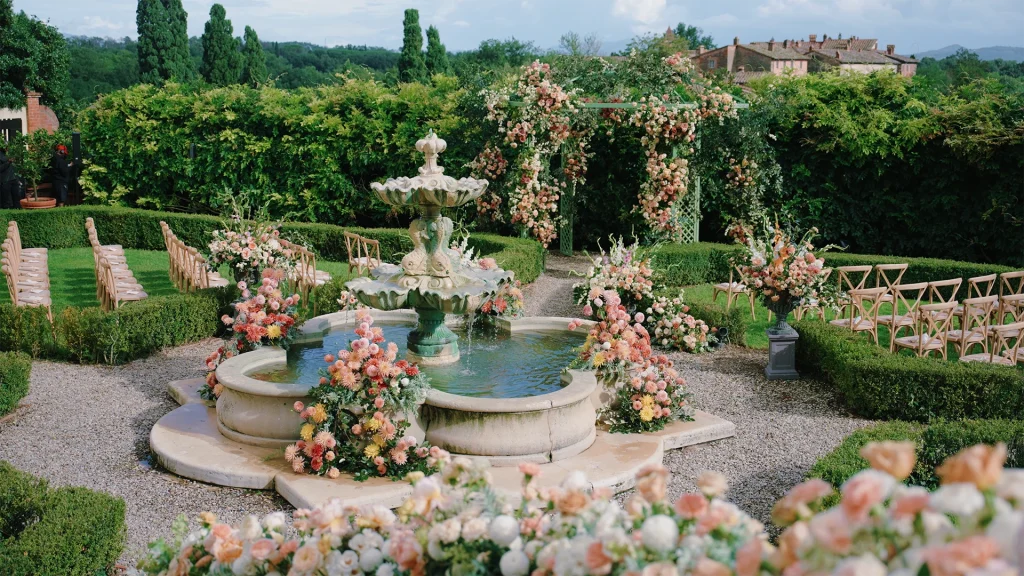
Within this same logic sits one decision couples routinely delay far longer than they should: choosing a videographer. Do not make the mistake of leaving this choice for last, treated as a final logistical box to check once everything else has been settled. The finest wedding films rarely come from a videographer meeting the couple for the first time days before the ceremony. They come from relationships given months to develop (even if via video calls), enough time for a couple to articulate what actually matters to them, which quiet exchange between father and daughter should never be missed, and enough time for the videographer to translate that sensibility into a genuine creative approach rather than a generic template.

This is also where the technical conversation belongs. Some couples want a second shooter capturing simultaneous angles during the ceremony. Others debate between a documentary style, observational and unobtrusive, or a more overtly cinematic treatment built around composed shots and deliberate pacing. Drones enter the conversation for aerial establishing shots of a villa or coastline, while vintage formats like VHS and Super8 appeal to couples chasing texture and imperfection over polish.
Read also: Documentary vs Cinematic Wedding Film: Which Style Is Right for You?
Guests, Invitations and Dress Code
Every wedding is, among other things, an exercise in composition, and guests are as much a part of that composition as the venue or the flowers chosen to fill it. A destination wedding in Italy asks more of its guest list than a local celebration ever would: travel logistics, accommodation, sometimes an entire long weekend built around the couple’s two or three days of festivities. Invitations, then, carry a responsibility beyond simple courtesy. They set expectations, establish tone, and give guests enough runway to plan flights and outfits without feeling rushed into a decision that deserves consideration.

Dress code belongs in this same category of quiet direction rather than afterthought. A linen-heavy palette suited to an Amalfi terrace in May reads entirely wrong against the stone interiors of a winter ceremony in Umbria, just as jewel tones that flatter candlelit November interiors would feel heavy under a blazing July sun in Puglia. Couples who communicate this clearly, whether through a formal dress code line on the invitation or a gentler suggestion on the wedding website, spare their guests both discomfort and visual dissonance.

The reward extends beyond comfort alone. A crowd dressed with some coherence to its surroundings creates a far richer canvas for the day’s photography and film, avoiding the jarring clash of, say, neon fabric against a muted stone courtyard chosen precisely for its restraint. This is where planning quietly overlaps with the eventual wedding video. A videographer working across a well-considered palette, whether pastel, earth-toned, or deliberately monochrome, has considerably more to work with than one facing a visually chaotic crowd. Guests need not match, and shouldn’t be asked to, but a shared sensibility around color and formality tends to produce a wedding film with a more unified, more intentional atmosphere from ceremony to final toast.
Menu and Music: The Rhythm of the Evening
If the venue provides the stage and the guests the audience, menu and music supply something closer to the evening’s pulse, the sensory register through which everything else is felt. Italian regional cuisine offers a natural advantage here, since few culinary traditions carry such strong ties to specific geography. A Puglian reception built around orecchiette, burrata, and the region’s own olive oil tells guests something true about where they’ve landed, in a way that a generic international menu never could. A Tuscan autumn dinner leaning into truffle, chestnut, and the season’s first pressed oil does similar work, turning the meal itself into a form of storytelling about place and time of year.

Wine deserves the same regional logic. A couple marrying near the Amalfi Coast might pour Falanghina or Fiano di Avellino rather than importing something unrelated to the terrain their guests are standing on, while a Piedmont wedding practically demands Barolo or Barbaresco on the table. These are not incidental choices. For international guests unfamiliar with Italy beyond its postcard reputation, a thoughtfully regional menu becomes part of the education, an edible extension of the location itself.

Music carries comparable weight, though it operates on rhythm rather than taste. A string quartet suits the restrained elegance of a northern villa ceremony, while a local tarantella band, common across Puglia and parts of the south, injects an entirely different energy into the reception, often pulling even reluctant guests onto the floor. Couples increasingly blend both registers deliberately, formal music for the ceremony giving way to something looser and more regional once dinner ends. For the videographer, this sensory layering matters enormously. Sound design in the final wedding film often draws directly from the evening’s actual music, while the visual texture of a regional menu, the colors, the plating, the candlelit tables, becomes part of the broader atmosphere the camera is there to capture.
Ceremony, Gown and Sustainable Choices
The ceremony itself resists any single formula, and Italy’s growing popularity as an international wedding destination has only made that plurality more visible. A Catholic mass in a centuries-old basilica follows its own liturgical rhythm and constraints, often requiring specific permissions and a priest willing to marry couples arriving from abroad. A Jewish ceremony beneath a chuppah, an Orthodox celebration rich in ritual, a secular ceremony written entirely by the couple themselves, each carries its own structure, its own symbolic language, its own pacing that a videographer needs to understand rather than simply record. Approaching any of these cultures and traditions requires genuine curiosity and a willingness to ask rather than assume, since the meaning embedded in a particular gesture or blessing rarely translates through appearance alone.
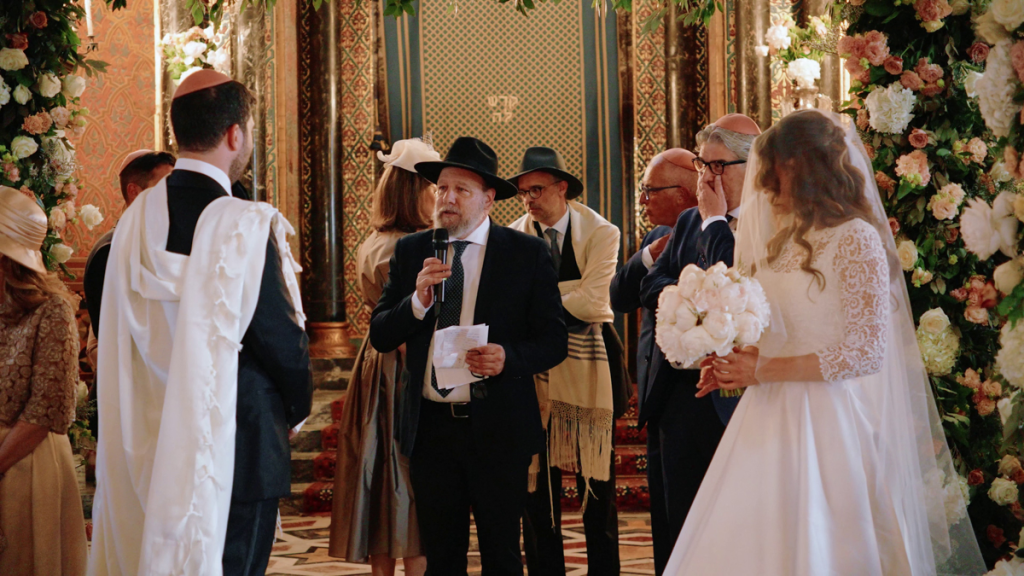
The gown, too, becomes part of this broader conversation about identity and place. Some brides arrive with a dress chosen from Italy’s own ateliers, drawn to the country’s long relationship with couture craftsmanship. Others prefer something carried from home, a garment already tied to family history before it ever touches Italian soil. Either choice deserves the same attentiveness from behind the camera, since fabric movement, embroidery detail, and the way light catches silk or lace all shape the eventual wedding film’s texture in ways easy to overlook until the footage is reviewed.

Increasingly, couples extend this same thoughtfulness toward sustainability, aware that celebrating in a country not their own carries a certain responsibility. Locally sourced flowers instead of imported blooms, seasonal menus that reduce unnecessary transport, minimal single-use decor, these choices honor the region hosting them rather than treating it purely as scenery. It is a quieter form of respect, one that ripples outward through vendor selection and waste far more than through any single visible gesture on the day itself.
Vows, the Unexpected, and the Art of Letting Go
Amid venues, seasons, teams, and menus, it’s worth pausing on the one element no planner or videographer can fully script: the vows themselves. Whether exchanged in a whispered private moment before the ceremony or spoken aloud in front of every guest, these words tend to carry more weight than anything else scheduled that day, precisely because they resist rehearsal. Couples who write their own often find the process reveals things left unsaid even after years together, a private reckoning that has little to do with performance and everything to do with honesty. A skilled videographer knows to hold back here, letting a trembling voice or an unscripted pause breathe rather than cutting away from it.

Then there is everything nobody plans for. Italian weather can turn without warning, a sudden downpour arriving over a coastal terrace an hour before guests take their seats. Trains run late, a hairstylist misjudges timing, a ferry to an island venue gets cancelled by wind. These disruptions rarely ruin a wedding, whatever anxiety they cause in the moment. More often they become the detail guests recount years later, the ceremony moved indoors at the last minute that somehow felt more intimate for it, the storm that cleared just as vows began. A seasoned team, videographer included, has usually seen enough weddings to adapt without visible panic, treating improvisation as simply another form of craft. Perhaps this is the real lesson beneath all the planning: Italy rewards those willing to hold their intentions loosely. The research, the choices, the months of preparation matter enormously, but so does the humility to let a single unplanned afternoon rewrite what the day becomes, and to trust that whatever unfolds, captured with care, will still tell a story worth returning to.
Read also: Does the Perfect Wedding Exist? Tips for Managing Challenges and Surprises