

There is a kind of blur that settles over a wedding day. Not the blur of chaos, because most well-planned weddings run with surprising precision, but something closer to the blur of full immersion. Of being so entirely inside a moment that the moment itself becomes difficult to see. Couples describe it consistently, when the wedding day is over: it passed the way dreams do, vivid and shapeless at once, leaving behind a feeling more than a sequence of events. This is not a flaw. It is, in many ways, the whole point. A wedding is not meant to be observed from a distance. It is meant to be inhabited.

And yet, there is always a counterpoint to that inhabiting. While a couple moves through their day answering to the pull of emotion, schedule, and presence, a videographer is doing something structurally different: reading the room. Watching the periphery. Anticipating the frame before it forms. Noticing, with a practised eye, what is happening three steps to the left of where everyone else is looking. The result is a record of a day that, in many respects, neither the couple nor their guests actually saw. Not because it was hidden, but because conscious attention is selective, and the camera is not.

What follows is a reflection on that gap: on the details, the errors, the expressions, and the atmospheres that tend to slip past the people living the day most intensely. Some of what a videographer registers is technically precise: the quality of light at a given hour, the acoustic character of a space. Some of it is deeply human: the glance exchanged when no speech is being made, the involuntary gesture that says more than any rehearsed moment could. A wedding film, at its best, is not a souvenir. It is an alternate vantage point on a day you thought you knew.
When the Light Does the Work
The light sometimes becomes pure atmosphere. It happens without announcement: the angle drops, the warmth intensifies, and whatever was ordinary about a room or a garden acquires a dreamy golden quality. Most couples, at that precise moment, are somewhere else entirely: in conversation, in transit, in the middle of a toast. That is exactly as it should be. Reading light is a professional discipline, closer to meteorology than aesthetics. A videographer arrives at a location thinking about time: not the schedule printed on the order of service, but solar time, the arc of available light across the hours of a specific day. Where will the afternoon sun fall at 4pm in this courtyard? How does this chapel’s east-facing window perform at midday versus late afternoon? When the candles are lit, what will the camera see that the eye, adjusted to the warmth of the room, will not?

These are the questions that shape the visual character of a wedding video before a single frame is recorded. Window light at a bridal preparation. The particular diffusion of an overcast sky that makes skin tones remarkable. The moment when candlelight becomes the dominant source in a reception room and the entire atmosphere of the footage shifts. These transitions are fleeting and largely invisible to anyone who isn’t specifically watching for them, which is to say, anyone who is actually living the day. Couples who work with a videographer attuned to light are, in a very real sense, freed by it. The technical landscape of their wedding is being read and worked continuously, with a precision they will only appreciate when they watch the film. In the meantime, they have somewhere better to be.
Unseen feelings
The most telling moments at a wedding rarely happen at the altar. They happen in the three seconds after the vows are exchanged, when the officiant is still speaking and a couple has already retreated into a private world that no formal photograph will reach. They happen in the grip of a hand that tightens imperceptibly during a reading. In the way a father adjusts his jacket one last time before the doors open; not from vanity, but from something that has no name. A camera that shoots at 24 frames per second sees all of it, especially if there is a second camera. The gap between photography and film, in this specific territory, is not technical. It is temporal. A photograph is a decision: the photographer chooses a fraction of a second and commits to it.
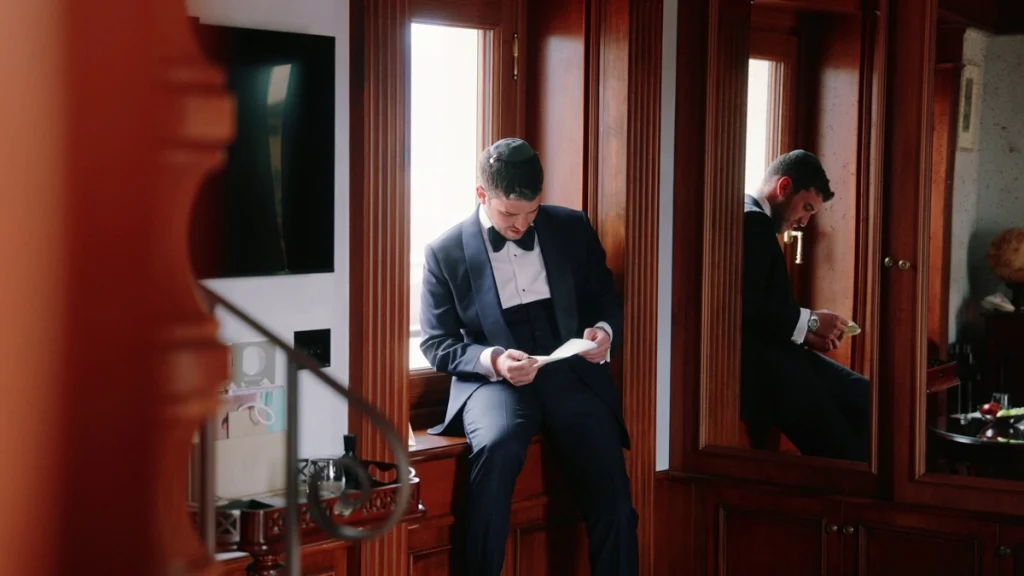
A wedding film accumulates time, which means it catches what precedes and follows the decisive moment: the inhale before the laugh, the smile after the tears, that first look that lingers a beat too long. Emotional truth, in human faces, tends to live in those transitions. What a videographer learns to read, over years of working in charged rooms, is the geography of a face under feeling. The moment a person stops performing their role of guest, parent, or partner and becomes, for a second or two, entirely unguarded. These are not the moments couples remember clearly. They remember the shape of the day, its emotional weather. The wedding film gives those sensations a specific face, a specific instant. It returns to them something they felt but never quite saw, which is a different order of value than simply having been there.
The Mistakes That Quietly Shape the Day
No wedding unfolds exactly as smoothly as planned. This is not pessimism, it is the nature of any event that involves human beings, weather, and the particular emotional pressure of a day that has been anticipated for months. The question is never whether something will deviate, but whether anyone is positioned to work with it rather than against it. A ceremony that runs long compresses the couple’s time between the venue and reception. The light that was perfect at 6pm is gone by 6:40. A videographer who understands this, who has been reading the schedule since the morning, has already adjusted. The shot list shifts. The priorities reorder. The film that will come from this day will not reflect the delay; it will reflect the choices made inside it.

Sound is another area where couples rarely think to plan until it is too late. A speech delivered in a room with hard floors and bare walls, or outdoors against an unexpected wind, can be technically unworkable. These are not catastrophic problems. They are the kind of problems that a prepared operator anticipates and, where possible, quietly corrects with a discreet lapel microphone, a changed position, a different approach. The couple hears the speech. The film captures it properly.

Then there is the more personal dimension: self-consciousness. Many people arrive at their wedding day slightly unsure of how to be filmed: where to look, how to stand, whether their face is doing the right thing. A skilled videographer knows this, and knows that the solution is never direction in the conventional sense. It is presence. The camera becomes unremarkable when the person behind it is calm, unhurried, and clearly in control. Ease is contagious. And some of the most beautiful footage in any wedding film comes from the moment a couple stops worrying about being watched and looking natural, and forgets the camera is there entirely.
Read also: Mistakes Couples Make That Ruin Their Wedding Video
The Details That Reveal Who You Are
There is a particular irony in wedding planning: the details that couples invest the most care in are often the ones they see least clearly on the day itself. The stationery suite conceived over weeks of back-and-forth with a designer. The specific ivory of a linen that took three samples to approve. The floral arrangement built around a variety that had to be sourced from two countries. All of it curated with intention and all of it, on the day, glimpsed in passing, registered peripherally, experienced as backdrop rather than as the considered aesthetic statement it actually is.
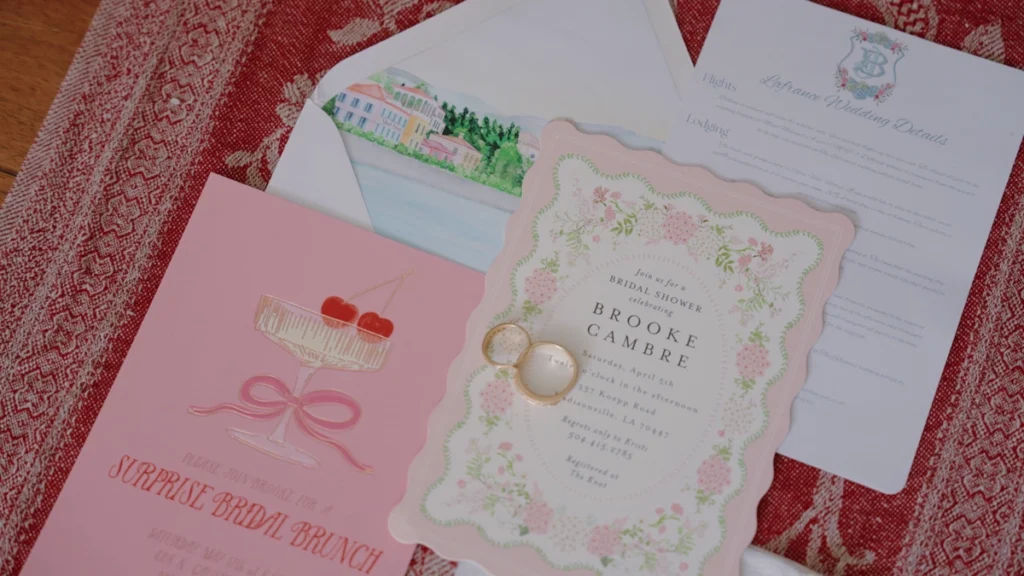
A videographer moves through these details with a different kind of attention. Not cataloguing them, but reading them: understanding that a table setting or a choice of typeface carries information about the people who chose it. Restraint. Maximalism. A preference for the organic over the geometric. An eye drawn to texture rather than colour. These preferences, expressed across dozens of decisions, accumulate into something that has a coherent visual character, and that character, when filmed with sensitivity to it, becomes part of the story the wedding film tells.

But the most revealing details are rarely the designed ones. They are the unrehearsed ones: the way one partner instinctively reaches to straighten the other’s collar before the entrance. The private language of a look that crosses a room. The particular way a person laughs when they are genuinely caught off guard; not the public laugh, the real one. A couple’s aesthetic taste can be studied in advance. Their dynamic, their ease with each other, the specific texture of their affection: that can only be observed. And it is in those unguarded moments, as much as in any floral arrangement or carefully chosen venue, that a wedding film finds its truest material.
Silence Between Words
Sound is one the elements of a wedding film that surprise speople most, when they watch it back. The specific acoustic quality of a room filling with guests before the ceremony begins, the way that particular silence falls in the seconds before the doors open, the low register of a voice that has been steadied with effort during a speech. These are things you cannot hear when you are living them. Emotion rewires perception. A person delivering a toast in front of two hundred guests is not hearing their own voice the way the room hears it: the hesitations, the breath taken before a name, the involuntary drop in volume when the words become difficult. A videographer with properly positioned audio equipment captures all of it, and in doing so preserves something that memory alone could never reconstruct.

The acoustic landscape of a wedding day has its own dramatic arc. There is the ambient warmth of a reception room in full conversation, a kind of organised noise that tells you, even with eyes closed, that something beautiful is about to happen. There is the threshold quiet before the first dance, when the crowd pulls back and two people stand in a sudden exposure that is as much sonic as visual. And there are the private registers: the aside between a couple during the signing, the laugh shared under the cover of applause. In the finished film, these moments arrive with a presence that photographs, however beautiful, cannot carry. A wedding film is also, always, a sound portrait. The voice of a father who did not expect to cry. The tremor in a vow delivered from memory. These acoustic details are as compositionally deliberate as any frame, and equally irreplaceable.
Read also: Music and Audio: Transforming Your Wedding Video into an Emotional Experience
The Guests Who Tell Your Story
A wedding is, among other things, a portrait of a life assembled in one room. The people gathered, the ones who flew in from other countries, who rearranged their schedules, who chose their clothes with unusual care, are not simply an audience. They are context. And in the hands of a videographer who understands this, they become some of the most eloquent material of the entire day.
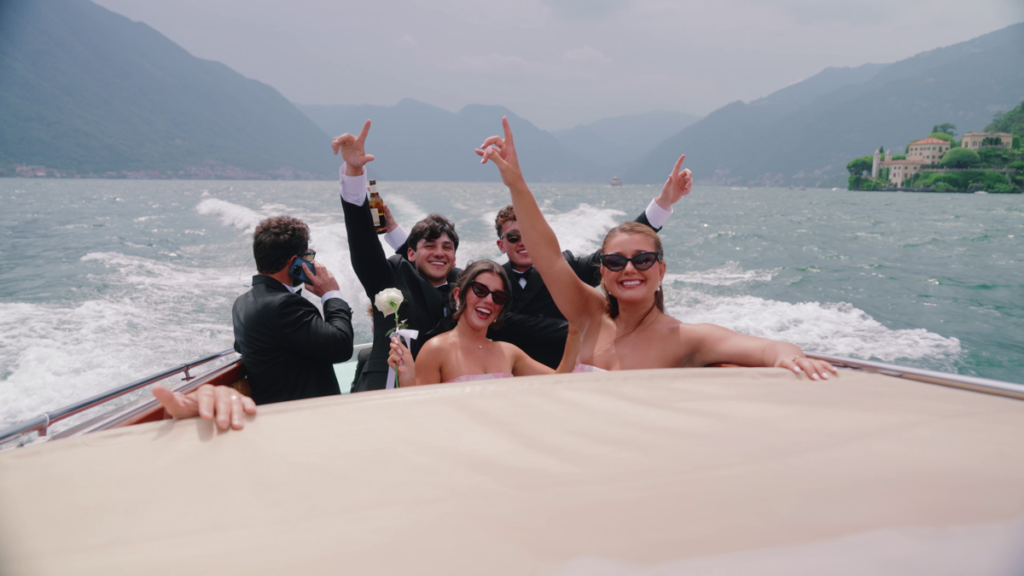
There is a grammar to how people behave at weddings that differs from any other social occasion. Guards come down. The occasion gives permission for emotional responses that ordinary life tends to suppress. An older guest who has known one partner since childhood brings an entirely different register of recognition to the ceremony than a colleague met three years ago, and that difference is visible, if you know where to look. The childhood friend who mouths the vows along with the couple, because she has heard them practised. The grandmother who stopped crying long enough to smile at exactly the right moment. The father who spent the entire morning being steady, and then wasn’t.

These are not secondary details in a wedding film. They are the film’s depth. They locate the couple inside a history, a network of affection and loyalty that no posed portrait could convey. When edited with intention, the reaction shots that cut between a couple and their guests create a kind of emotional triangulation: the viewer understands something about who these two people are by seeing who loves them, and how. What a couple rarely has, on the day, is the angle to see any of this. They are at the centre of it, which means the rest of the room is largely behind them or beyond their attention. The wedding video returns that view and it is often the part of the film that surprises couples most profoundly.
The Architecture of the Day
Every wedding day has a structure that goes beyond the order of service. There is a rhythm to it which is not the printed schedule, but something less visible and more essential: the way anticipation builds through the morning hours, the particular suspension that precedes the ceremony, the release that follows it, and the gradual shift in atmosphere as the evening loosens into celebration. This arc exists whether or not anyone is paying attention to it. A skilled videographer pays attention to nothing else. Thinking about a wedding day in cinematic terms changes what you notice and when.

The preparation sequence is the opening of the film, where character is established and tension begins to gather. The ceremony is not the centerpiece because tradition says so, but because it earns that position dramatically: it is the moment toward which everything has been moving. Then, the first hours of the reception, the speeches, the first dance, mark a resolution, but resolution of a specific kind, the kind that opens rather than closes, that converts private feeling into shared celebration.

A wedding film that understands this does not simply record these phases in sequence. It shapes them. The editing choices, the music, the decision to linger on a particular moment or cut away before it fully resolves: these are directorial choices, and they determine whether the finished film has genuine emotional movement or merely chronological order. There is a significant difference between the two. This is what separates wedding videography conceived as authorship from the one conceived as coverage. Coverage documents what happened. Authorship asks why it happened, what it meant, and how to make a viewer feel that meaning rather than simply witness it. The raw material is the same day. What changes is the intelligence brought to bear on it, before, during, and in the long, careful work of the edit.
What the Camera Kept
Memory is not an archive. It edits, compresses, and occasionally invents. The feeling of a wedding day tends to survive intact for years, but the specific texture of that day grows harder to access over time. The face of a guest caught in a particular expression. The exact quality of the light at a certain hour. The sound of a voice saying something that mattered. This is not loss, exactly. It is simply how human memory works. But it does explain why a wedding film, watched years after the day itself, can feel less like watching a recording and more like recovering something that had begun to recede. The finest wedding films are not comprehensive. They do not attempt to document everything that happened. They are built, instead, around a series of choices about what to keep, what to juxtapose, what to let breathe and what to cut.

These choices are aesthetic and emotional in equal measure, and they determine whether the finished film is something a couple watches once and stores, or something they return to across the years with the same quality of feeling, renewed each time. That durability is what distinguishes a wedding video conceived with genuine cinematic intention from one that simply records. Years pass. The flowers are long gone. The venue has hosted hundreds of other celebrations. But the film holds the day in its particular form, with a fidelity that no other medium quite matches. Not because the camera sees more than the human eye, but because it remembers without distortion, and returns what it kept, intact.
Read also: The Value Of Capturing Memories: Why Wedding Videography Looks Expensive