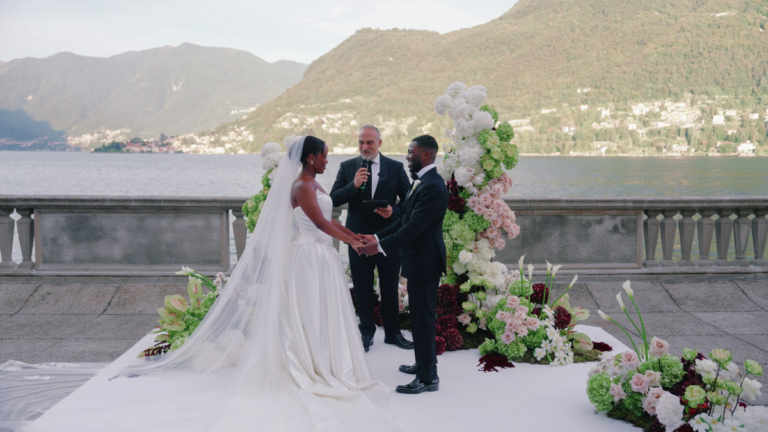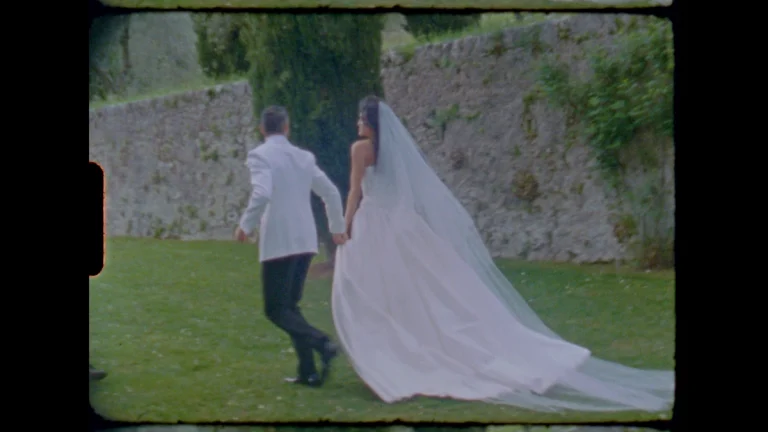
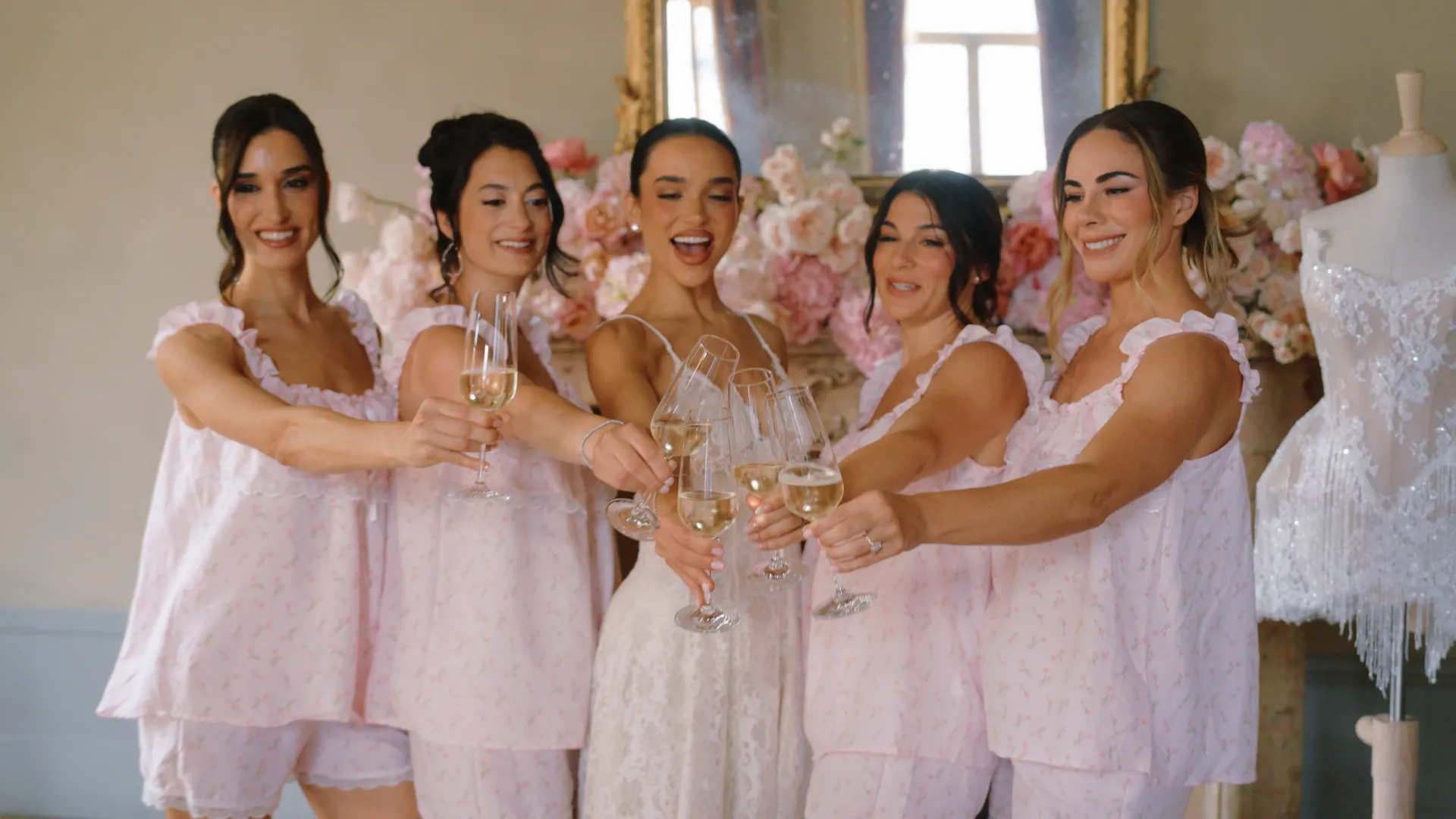

A couple planning a wedding in Italy from another continent will sooner or later land on the same page: the venue’s list of recommended suppliers. A dozen names, sometimes fewer, each with a website and a gallery of images that look equally accomplished at first glance. The question comes at once. Why these names and not others? The answer lies in how an Italian estate understands itself. A villa on the lake, a farmhouse in the Tuscan hills, a palazzo above the Amalfi coast: none of these is a neutral backdrop rented by the evening. Each is a house with its own rules, its own neighbours, its own staff, who have spent years learning how a hundred and twenty guests move through a garden at dusk.
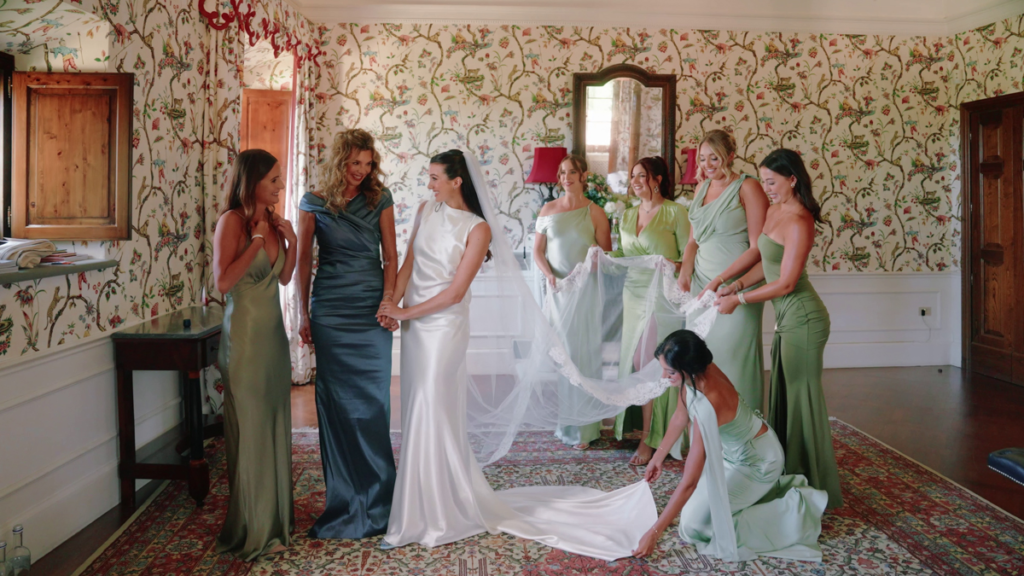
When a wedding takes place there, the venue lends its reputation to everyone who works under its roof, and the list of preferred vendors is the visible record of that decision. It shows who has been trusted, tested and invited back. Florists, caterers, musicians, wedding planners and photographers are chosen by broadly the same logic, though each profession is read through a different lens. Punctuality means one thing to a head chef and another to a lighting designer.

The judgement is especially layered for wedding videography, because a videographer crosses the whole day, enters every room, follows the light from the first preparations to the last dance, and leaves behind a film that carries the venue’s name far beyond the guests who were there to see it. Behind every short list lie seasons of shared work, mutual esteem and problems solved together in a courtyard at midnight. Understanding this gives a couple a sharper eye for the venue’s choices and, in time, for their own, including the choice of the person who will shape their wedding film.
Guardians of the House
Behind the wrought-iron gate, a historic Italian estate runs on a rhythm few guests ever perceive. Between May and October it may host two or three weddings a week, and each one must leave the property exactly as it was found. The frescoes in the salon, the stone balustrades worn soft by four centuries of weather, the boxwood parterres clipped into geometry long before anyone drew up a seating plan: all of it is in the venue’s keeping, and often under the watch of heritage authorities, particularly where the property belongs to a UNESCO site or carries a protective listing. A misplaced ladder can chip a cornice. A heavy cart can crush the gravel of an Italian garden in an afternoon, and some of those gardens take years to recover.
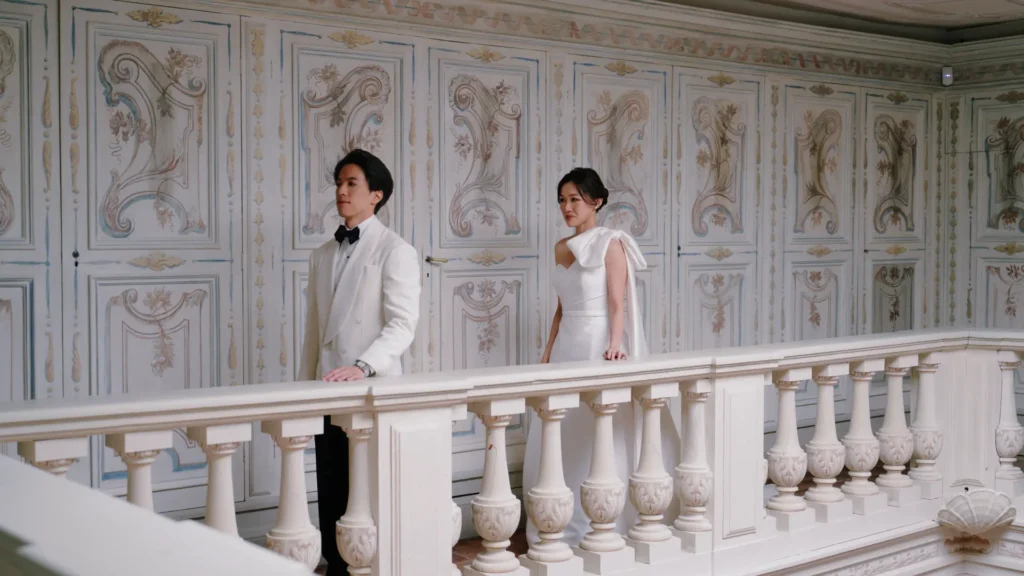
Managing such a place resembles running a small theatre. There are service corridors timed to the minute, kitchens that follow a choreography, electrical capacity rationed room by room, a head of staff who knows which door sticks in humid weather. This order goes unnoticed when it holds and becomes painfully obvious when it fails. The owners spent years building it, and the standing it earned is the property’s most valuable asset, worth more than any view of the lake or the hills.
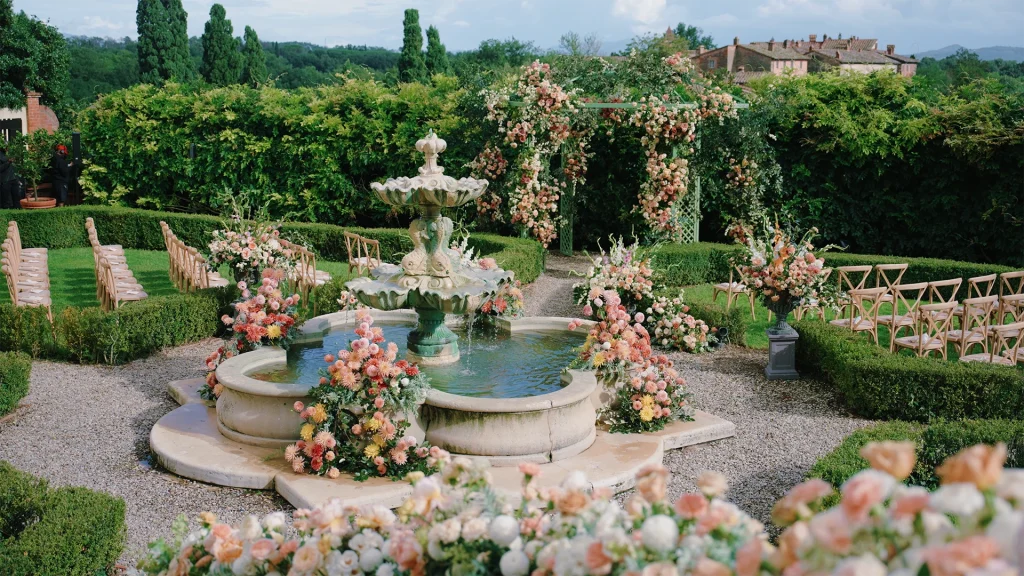
Every supplier who crosses the threshold therefore enters as a guest whose conduct will be read as the house’s own. The florist who builds a monumental arrangement around a historic fountain, the band that tests its amplifiers, the videographer who carries lights, stabilisers and cables through rooms painted in the sixteenth century: each acts in the venue’s name, and the venue answers for them. From that single fact the whole method of selection follows. A name earns its place on the list when the house can hand it the keys with an easy mind.
How a Short List Is Born
Nobody applies to be on a venue’s list. The process runs in the opposite direction, slowly, and most of it happens out of sight. It tends to begin with a supplier who has been seen at work over several seasons, often at weddings the venue did not organise. A planner brings a couple to the estate in April, and the florist she always uses arrives at dawn with buckets of ranunculus and a team that knows how to cross a service courtyard. The events manager notices. She notices again in June, and once more in September, when the same florist stays composed through a downpour.

Recommendations from wedding planners carry particular weight, because someone who has spent ten years on the Lake Como circuit has already made the mistakes a venue would rather not repeat. When she reports that a certain videographer arrived early, settled the lighting with the caterer before the aperitivo and left the terrace as orderly as a gallery after a hanging, the remark moves through the staff faster than any portfolio could. Then comes the trial. A newcomer, whether caterer, musician or wedding videographer, is often admitted to a smaller occasion first, a Friday wedding of sixty guests, to see how he behaves around the sommeliers and the head gardener.
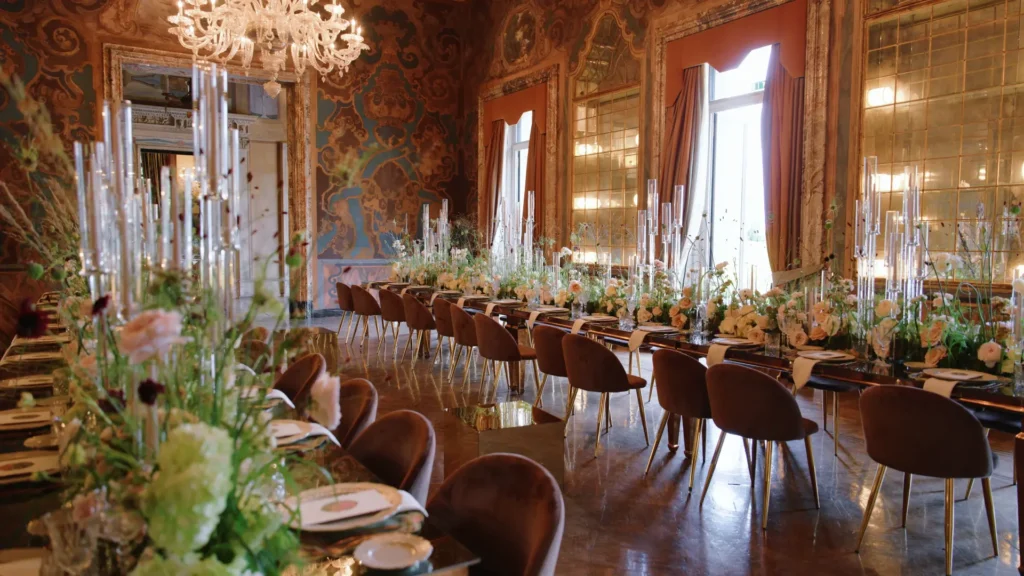
The staff become the real jury. Waiters, drivers and the person who unlocks the gates at seven in the morning form opinions and voice them freely. A single comment from the head of banqueting, such as “he asked before moving the chairs”, can open a door that years of marketing never reached. Only after this long apprenticeship does a name appear on the page that couples read. By then the venue has watched the professional in rain, in heat, through a ceremony that started an hour late, and knows what the work looks like when the plan comes apart. The list is a memory made public.
Read also: Does the Perfect Wedding Exist? Tips for Managing Challenges and Surprises
Reliability Comes First
Talent is what couples notice, and it is rarely what a venue examines at the outset. The questions asked in the office behind the reception desk are plainer. Does this person arrive at the agreed hour? Is the liability policy current, and does the certificate name the right property? Are the permits in order for what is planned on the grounds? A gifted supplier who fails these tests is a risk that no reel can offset, because a house with forty weddings a season cannot improvise around a single lapse.
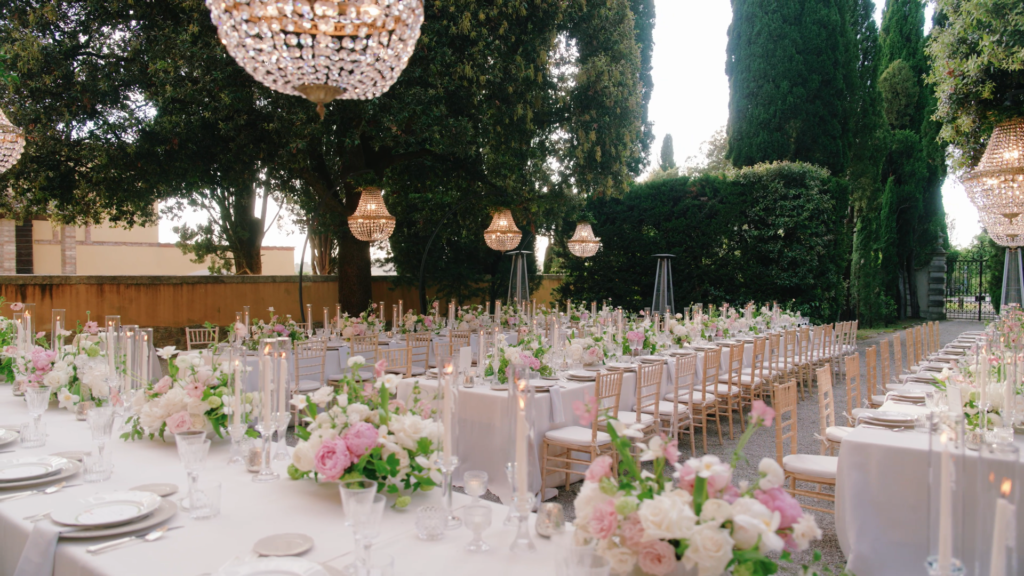
The rules are many and rarely negotiable. Access to the courtyard may be granted between two and four in the afternoon and not a minute later. Amplified sound must stop at a set hour, imposed by the municipality as much as by the owners. Rigs, candles and generators answer to fire regulations, and a drone is a matter for the aviation authorities, with the airspace above heritage sites and lakeshores frequently restricted. A professional who has studied these limits before arriving tells the venue more than any testimonial could.
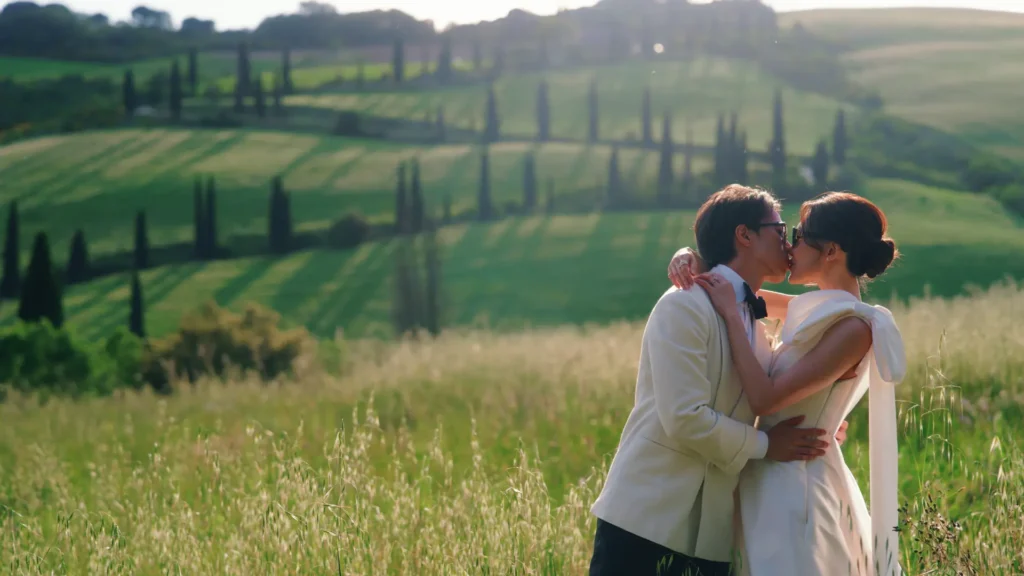
Wedding videography exposes this more than most trades. A film crew brings stabilisers, lights, spare batteries and heavy cases, and often wants to stand in the garden just as the sun clears the cypresses, which may be the very hour the staff are laying the tables. The work follows the day through every room, and each passage between them needs an answer: which corridor, which stairway, which salon is empty at that moment. A videographer who sends a floor plan and a shot schedule a week ahead is already speaking the language of the house. The people who run these estates recognise that preparation at once. The cinematic result they admire on screen rests on logistics they have watched succeed or collapse many times over.
The Eye a Venue Trusts
A venue reads a supplier’s images the way a gallerist reads a young painter’s canvases, looking for a consistent hand and for judgement under pressure. The images do not stay private. Footage and stills of a wedding at the estate travel through magazines, social feeds and the websites of planners and florists, and they become, whether the owners wish it or not, the public face of the house. A clumsy film shot in the ballroom hangs in the same shop window as the property itself. So the office looks closely. Does the colour hold steady through an entire film, or does the palette drift with every location? Is the framing deliberate, or merely lucky?
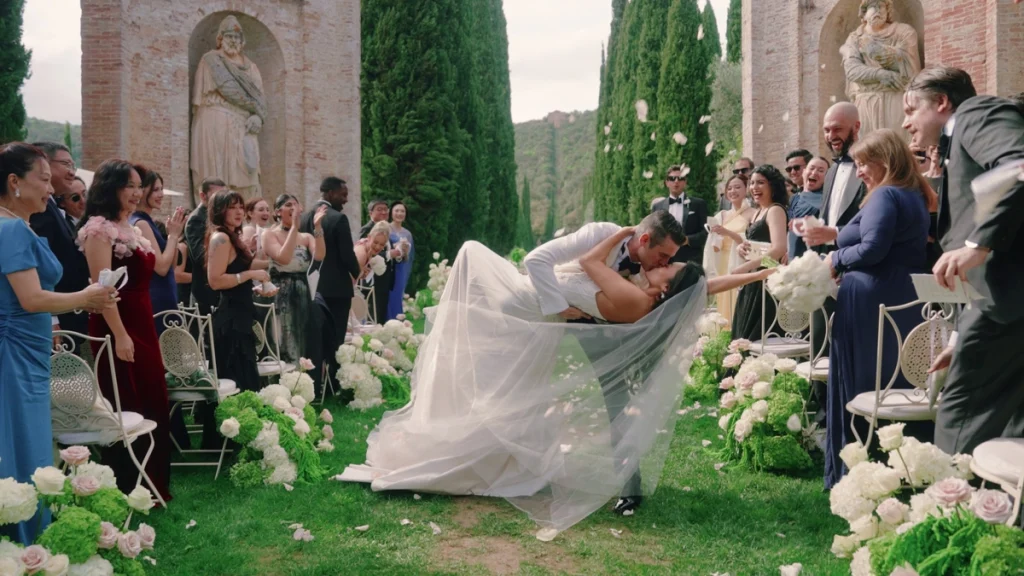
Light is the harshest test. A salon frescoed in the seventeenth century offers a camera very little: a dim room, pigments that flatten under the wrong lamp, windows that burn out into white. A terrace at noon brings its own difficulty, with hard sun on linen and faces. The professionals a venue keeps are those who have learned to wait for the hour when the sun turns plaster amber, to lift a vaulted ceiling with soft bounced light, to expose for skin and still leave the painted walls their depth. Direction matters as much as exposure. A well-directed wedding film gives the viewer a sense of the building’s proportions: the order of the rooms, the way a staircase opens onto a loggia, the length of the walk toward the altar.
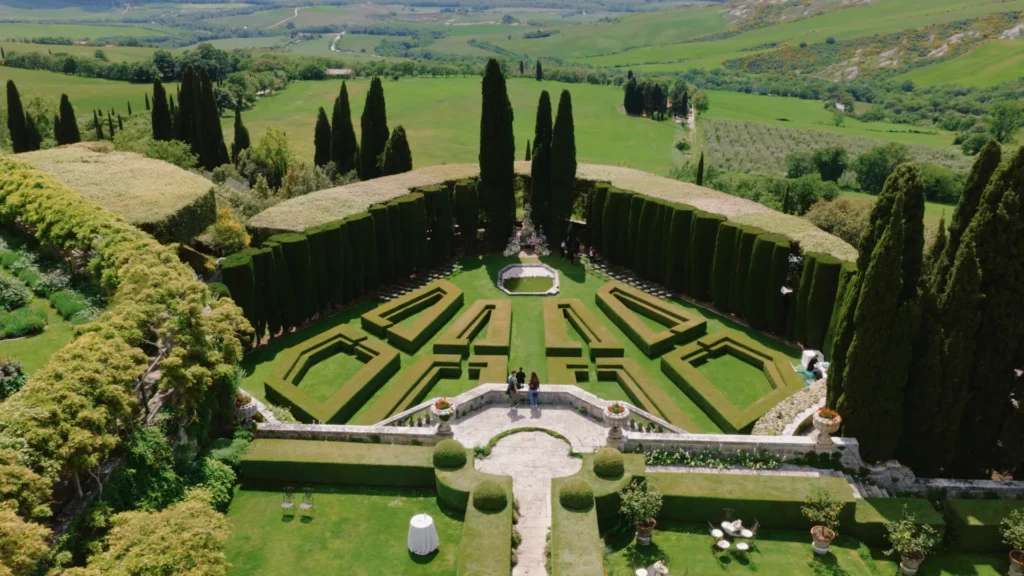
It has to be faithful, so that a guest who returns years later recognises the place. That fidelity comes more easily to a videographer who works locally. Someone who has filmed for years on Lake Como knows how the afternoon glare rises off the water into a villa’s frescoed hall, and which windows can be trusted. Someone who has crossed the same Tuscan farmhouse courtyard in every season knows what its stone looks like in November, and how a house surrounded by open fields seems to breathe. A venue sees that knowledge on screen, and it is the surest reason to trust the eye behind the lens.
Read also: Best Time of Year to Get Married in Tuscany
Discretion as a Professional Skill
At a well-run wedding, the best suppliers leave almost no trace of themselves, and the staff of an exclusive venue learn to spot this the way a sommelier spots a corked bottle. They watch how a newcomer moves. Does he cross the terrace during the toasts, or wait at its edge until the speech is over? Does he ask the maître d’ where the kitchen doors will swing open, or discover it by standing in the path of a tray of Franciacorta? Does he agree with the bandleader on a place beside the stage, so that the lens never competes with the trumpet?

Wedding videography rewards this temperament more than almost any other trade, because the camera is the one instrument guests feel pointed at them. A crew that arrives with a compact kit, moves softly and keeps low in a room of two hundred people changes the mood of that room for the better. Part of this is craft: choosing a longer lens to work from a distance, relying on available light in place of a blazing lamp, learning the choreography of the dinner so as to stand exactly where the next scene will unfold.

The paradox is that the lighter the presence, the better the film. People who forget the camera stop performing. A groom laughs with his father in a doorway, a grandmother straightens the veil of her granddaughter, and nobody poses. The videographer’s authority shows in small, kind interventions: a quiet word to the couple, a hand that eases a nervous cousin into the frame, a pause called gently as the light begins to turn. Couples look natural on screen largely because someone took the trouble to make them feel unobserved. Direction of this kind stays invisible, and venues prize it above any trophy on a studio’s shelf. Awards describe a film. Discretion protects the evening it records, and the evening is what the estate is judged on.
Read also: How Wedding Videographers Work Without Being Seen
The Planner and the Circle of Trust
Between a venue and its suppliers stands a third figure, and in the Italian luxury market she often holds more influence than either. The wedding planner arrives at the estate months before the couple, walks the grounds with the events manager, and in time becomes the most trusted interpreter between the house and the people who have hired it. Her recommendations travel in both directions. She tells the venue which florist can be left alone in a cloister, and she tells her clients which names the house already knows by heart.

These networks form slowly and tend to stay small. A planner who has staged thirty weddings at the same villa has watched the same photographer calm a delayed ceremony, the same designer rebuild an arrangement after a storm, the same videographer fold into a procession as if the scene had been rehearsed. Each season adds a layer of evidence. Names are repeated until the repetition becomes a form of guarantee, and the venue, hearing the same few from the people it trusts most, adds them to its own list. A recommendation inside this circle carries a weight no advertisement can borrow, because the person giving it stakes her own name. If the supplier falters, her next wedding at that address is the one at risk. For that reason endorsements are given sparingly and withdrawn quietly.

For a couple, the benefit is easy to underrate. A videographer who has already worked beside the same photographer and the same florist in a given garden knows instinctively where the bouquet will be set down before the first portraits, when the photographer will need the arcade, and where the planner prefers the cameras during the vows. Nobody has to negotiate positions on the day. The crews move around one another like a company that has played the same stage before, and the wedding film gains the ease of that familiarity, a steadiness of pacing that viewers feel without being able to name.
Read also: The Definitive Guide To Choosing A Wedding Planner In Italy
Preferred, Exclusive, Open: Reading the Fine Print
The phrase “preferred vendors” covers more ground than most couples expect, and the differences between its meanings are worth learning before a single deposit is paid. Broadly, Italian venues follow one of three arrangements, and many sit somewhere between them. A preferred list is a recommendation. The house has worked with these professionals, trusts them and suggests them, while leaving the couple free to look elsewhere, sometimes with a few conditions attached. An exclusive list is a closed circle: the venue requires that certain services, most often catering and occasionally others, be provided by its own appointed names. An open venue admits outside suppliers more freely, though it will still ask to see insurance, permits and a plan for the day.

Which of these applies, and to which categories of service, differs from one property to the next, and sometimes from one season to the next. Hence the value of asking plainly. Is the list a suggestion or a requirement, and for which services? What is the procedure for introducing a supplier who is not on it? Which documents will the venue request, and how far ahead? Are there limits on access hours, equipment or aerial filming that an outside team should know about?

Ask for the answers in writing. A well-run house provides them gladly. Listen to the manner of the reply as well as its content. A venue that explains its reasons, citing the safety of an old building or the rhythm of its service, usually has sound ones. For a couple who have fallen for the work of a particular videographer, the sensible course is an early, courteous conversation with the venue, ideally including the supplier, so that the wedding film is planned with the house’s agreement from the start. Openness of this kind rarely closes a door. Venues tend to value a professional who arrives prepared, whether or not the name was already on their page.
Choosing in Dialogue with the Venue
A couple who have followed the reasoning so far already hold most of what they need. What remains is the order in which to use it. Begin with the venue. A conversation with the events manager, held early, teaches more than any directory: whom the house has seen at work in its own rooms, whom it would hesitate to welcome back, and for what reasons. Treat the answers as evidence, because people who have watched two hundred weddings in the same garden know things that no website records.
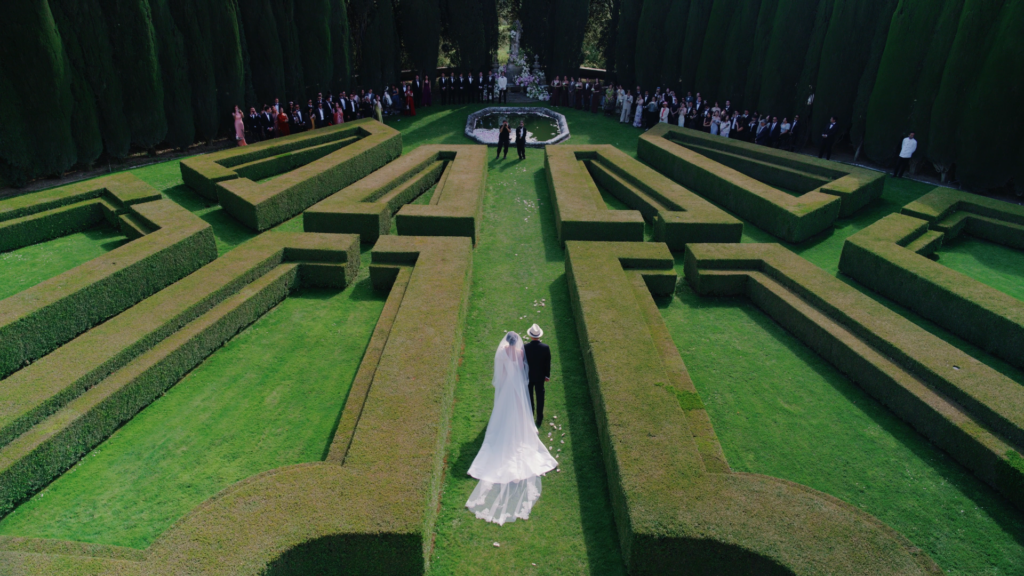
Then look at the work properly. Social feeds are assembled from fragments, thirty seconds chosen to flatter and cut to whatever track is circulating. Ask for complete films, beginning with the morning preparations and running through the final dance, and watch them with attention. Notice whether the pacing holds across an hour of material, whether the light stays coherent between a shuttered dressing room and a candlelit terrace, whether the silences are judged as carefully as the music. Set three or four portfolios against one another. Differences of sensibility appear quickly once the footage sits side by side.

If the couple’s vision is precise and the venue’s list does not reflect it, proposing an outside videographer is a reasonable step, taken with courtesy and a well-prepared file. Houses tend to answer generously to a professional who writes first, sends the paperwork and asks to walk the grounds before the season begins. All of this returns to a single point. The trust built over years among venue, planner and suppliers is the reason a wedding film looks unhurried: the crew knew which door to use, the light had been studied in advance, and nobody in the room was asked to stop what they were doing. When the film is played for the first time, the screen will show a bride’s father crossing a gravel courtyard at dusk, one hand brushing the stone wall, as though the house had been expecting him.