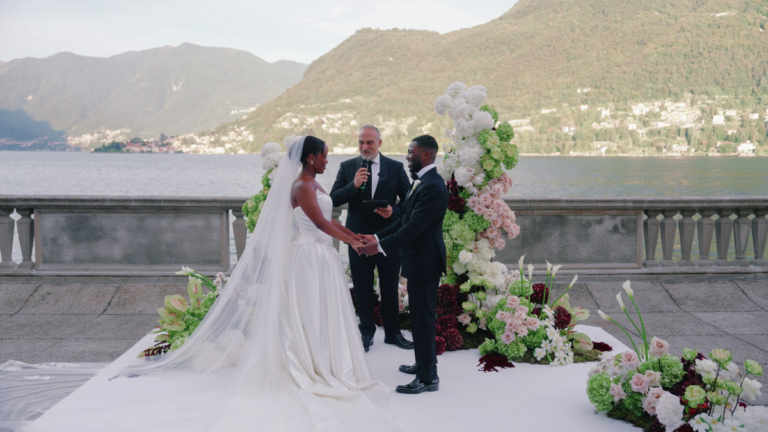


There is a particular kind of skill that leaves no trace of itself: the ability to be present without being perceived, to watch without being watched, to record a story while remaining invisible to it. This is one the defining qualities of a great wedding videographer. Not the camera chosen, not the editing suite, not the portfolio of scenic venues. What distinguishes a wedding film that genuinely moves people is, at its core, a question of presence: specifically, of how little of it is felt on the day. A luxury wedding unfolds according to its own internal logic. Guests arrive, rituals begin, private moments surface between one formal sequence and the next. Tears appear before the ceremony officially starts. A father straightens his daughter’s veil in a corridor no one else enters. Two old friends recognize each other across a courtyard and embrace without a word.

These are the moments that define a wedding film, and they exist only because no one with a camera stepped forward to claim them. The ability to read a room, anticipate an emotion, and position oneself correctly before the moment occurs is something that develops over years of work, across dozens of weddings and hundreds of hours of footage. It cannot be taught in a workshop. It is a form of attunement. That attunement begins well before the wedding day itself. Every serious videographer invests time in understanding the couple: their aesthetic sensibilities, the atmosphere they want to create, the moments they consider untouchable. This conversation also shapes the working relationship with the photographer: when two people cover the same event with completely different tools, they must find a shared language of space and timing to ensure that what appears on screen feels effortless, because the effort happened long before the first frame was shot.
The Direction No One Notices
There is a scene that most people imagine when they think of wedding videography: someone moving through the reception with a camera raised, asking guests to wave, directing the couple toward better light. Well, that version of this work exists. Often, that is also something to avoid. The discipline that produces a genuinely cinematic wedding film is closer to what a director does on a fiction set, with one critical difference: nothing can be staged, nothing repeated, and the cast has no idea a film is being made. Every decision about where to stand, when to move, which angle to hold, happens in real time and cannot be undone. The editing room offers choices only among what was actually captured. Which means the real work of directing happens in the room, quietly, before anyone notices.

Positioning is a form of thinking. A videographer who understands light, architecture, and human behavior will choose a corner of the room not because it is convenient, but because from that precise point, when the doors open or the music shifts, something will happen worth recording. That choice requires reading the space with the same attention a set designer would bring to a location scout. Waiting, too, is active. There is nothing passive about the stillness of a good videographer holding a frame while the scene around them develops. It requires resisting the impulse to move, to adjust, to intervene. The moment a camera operator imposes their own rhythm on an event, the event responds: people stiffen, gestures become self-conscious, the atmosphere changes register. The best wedding films carry no trace of that imposition. What they carry instead is the feeling that the camera simply happened to be in exactly the right place, at exactly the right time, almost by accident. That accident is the result of a great deal of considered, invisible work.
Moving Through the Frame
A wedding, even the most intimate one, is a layered social event. There are rituals with fixed choreography, moments of controlled emotion, and then the spaces between them where real life quietly reasserts itself. Learning to move through all three registers without disturbing any of them is one of the less discussed but most consequential skills a videographer develops over time. Inside a religious building, the constraints are immediate and absolute. Sightlines matter to the officiant, to the families seated in the front rows, to the couple themselves. Moving across that space during the ceremony is not an option. What is an option is knowing, before a single word is spoken, exactly where to be: which column offers cover without blocking a guest’s view, which aisle position allows movement at the right moment without drawing the eye. These decisions are made during the venue visit, sometimes weeks earlier, and they shape everything that follows.

During a reception, the geometry shifts. Tables, guests moving between courses, speeches, the first dance: each phase opens different angles and closes others. The videographer reads these transitions and repositions accordingly, always toward the periphery, always in the direction that least intersects with where attention is already flowing. It is a kind of spatial intelligence, partly learned and partly instinctive, and it produces footage that feels as though the camera was simply part of the room. But it is important to say that there are also moments when a gentle presence is appropriate: a quiet word to a guest who seems uncertain, a small adjustment suggested to the couple during a natural pause in the afternoon. These brief interactions, handled with care and discretion, are what allow people to feel at ease rather than observed, ultimately helping them look natural in the final film. A wedding film carries the emotional temperature of the day it was shot. When people are comfortable, the camera feels it too.
Two Lenses, One Story
Few professional relationships on a wedding day are as quietly consequential as the one between the videographer and the photographer. They occupy the same rooms, move through the same moments, and compete, if that is even the right word, for proximity to the same scenes. Yet their outputs could not be more different in nature, and that difference, understood properly, is precisely what makes collaboration between them so productive. A photograph freezes. It selects one fraction of a second and holds it permanently, giving it a weight and clarity that the moment itself may not have felt while it was happening. A wedding video, by contrast, unfolds. It carries duration, rhythm, sound, the quality of light as it moves rather than as it lands. These are complementary ways of seeing, and when the two professionals working on them understand each other, the results on both sides improve.

The practical dimension of this relationship is largely spatial. Two people with long lenses moving through a ceremony or a portrait session need to know, almost instinctively, where the other is pointing and where they intend to move next. An unspoken geometry develops over time, and it is built on communication that happens before the day begins. When a videographer and photographer have discussed the schedule, agreed on priorities, and established a shared sense of how each other works, they they manage to achieve something truly significant from the wedding film’s perspective: continuity. No photographer stepping into a frame at a critical moment, no conflicting light sources, no sequences interrupted by someone else’s positioning. The footage flows because the space around it was managed. Couples rarely see this coordination happening. They simply notice, later, that the film feels whole, that nothing seems missing, and nothing feels forced. That seamlessness has a source, and it is almost always this invisible professional accord.
Read also: Why You Need Both Photography & Videography at Your Wedding
Reading the Room, Reading the People
Technical mastery, in wedding videography, is the entry point; it’s crucial to be proficient in camera work, sound, editing, and drones, or even vintage gear like VHS and Super 8. What distinguishes a film that genuinely resonates from one that is merely well-shot is something harder to quantify: the ability to understand people, and to understand them quickly, under conditions that are emotionally charged and logistically compressed. Every couple brings a different relationship with the camera. Some are naturally at ease being observed, moving through the day with an openness that makes the videographer’s work almost effortless. Others are more private, and the presence of a lens, however discreet, creates a low-level tension that shows up in the footage if it is not addressed. Neither disposition is better or worse. Both require a different approach, and recognizing which one is in front of you is a skill that develops through years of paying close attention to people rather than just to pictures.

The preliminary conversations between a couple and their videographer is not only for clarifying logistics, shot lists, and understanding the couple’s preferred aesthetic. They are a chance to understand something about how two people inhabit their own story. Are they expressive and spontaneous, or do they find meaning in quieter, more contained gestures? Do they want to feel directed at certain moments, or does any form of guidance make them self-conscious? These are not questions that appear on a questionnaire. They emerge through conversation, through observation and listening. On the day itself, this reading becomes continuous and adaptive. A couple that seemed relaxed during the engagement shoot may be overwhelmed by the scale of their wedding morning. Someone who described themselves as unsentimental may fall apart during the vows. The videographer adjusts, recalibrates, and does so without drawing attention to the adjustment. The goal is a film that reflects who these two people actually are, not a generic idea of what a wedding looks like; that kind of authenticity begins with the person behind the camera being genuinely curious about the people in front of it.
Before the Eye, the Ear
Sound shapes a wedding day as much as light does. If you want your wedding film to echo these acoustic qualities too, you must choose a videographer who is willing to listen, not just observe. The rhythm of a ceremony, the pace at which a celebrant speaks, the musical choices a couple has made, the ambient texture of a particular venue… All of this constitutes information, and it informs every visual decision: when to hold a frame, when to drift closer, when to let a wide shot breathe.

But the act of listening begins long before the wedding morning. It starts in the initial conversations between a couple and their videographer, where what matters most is not the exchange of technical specifications but the quality of attention brought to understanding two people, their story and sometimes even their culture. How they speak about each other, what they choose to emphasize, what they gloss over… These details, absorbed carefully, become the emotional grammar of the film. This is precisely why the timing of that first meeting matters. Couples who book their videographer well in advance, and who invest time in a proper consultation, give the process something that cannot be recovered at the last minute: familiarity.

By the time the wedding day arrives, a videographer who has genuinely listened knows not just what to film but why. They understand which exchange between the couple will carry weight, which family member will need a quiet moment recorded, which part of the day the couple themselves may not fully experience in real time, and will need the film to return them to. Availability at that level, the kind that allows for this depth of preparation, is not indefinite. It is one of the less obvious reasons why the decision to book a wedding videographer early is worth making with the same seriousness as any other choice about the day.
Read also: Music and Audio: Transforming Your Wedding Video into an Emotional Experience
What the Camera Finds When No One Is Looking
The most affecting moments in a wedding film are almost never the ones that were planned: they happen in the margins. None of these moments can be requested or arranged. They surface because the conditions for them exist: a room full of people absorbed in something larger than themselves, and a camera that has made itself invisible enough not to disturb that absorption. The videographer who steps forward to frame a shot more deliberately, who adjusts a position audibly or draws someone’s gaze, breaks the spell. What was about to happen simply does not happen, or happens differently, with a layer of self-awareness that alters its nature entirely.
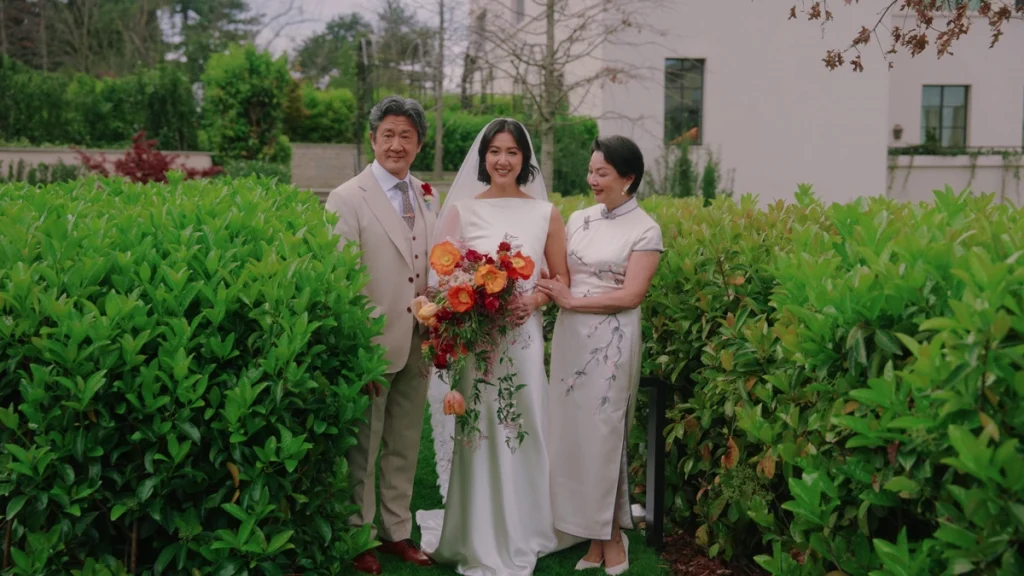
This is the central argument for discretion in wedding videography, and it is more than an aesthetic preference. It is a understanding of how human behavior actually works when people feel unobserved. Gestures become more genuine, glances more unguarded, physical contact between people more instinctive. A hand held under a table during the speeches. Two siblings exchanging a look across the room that requires no translation. A quiet moment between the couple, just before they are announced, that belongs only to them. When these scenes appear in a wedding film, they tend to be the ones that stop people mid-watch. Not because they are dramatic, but because they are true. And their truth comes entirely from the fact that no one in them knew they were being filmed. That is the particular gift of invisibility: not just the absence of intrusion, but the presence of something that could not have existed any other way.
The Proof Is in the Watching
There is a certain irony in the work of a discreet videographer: the better the job, the less anyone remembers it happening. Couples who have worked with a truly skilled professional often struggle to recall specific moments when they were aware of being filmed. The camera was there, evidently, because the film exists. But the sensation of being recorded, that low hum of self-consciousness that can shadow an entire day, simply never materialised.

This is not, by itself, a complete measure of quality. There are weddings where a brief exchange with the videographer puts a nervous bride at ease, or where a quiet suggestion to a guest transforms an awkward moment into something worth keeping. Invisibility is a default disposition, not an absolute rule, and the judgment to know when to break it is part of the same intelligence that governs everything else. But the deeper proof of that intelligence arrives weeks later, when the wedding video does. What a wedding film returns to a couple is not simply footage of an event they attended. It is access to the parts of their own day they could not inhabit in real time.
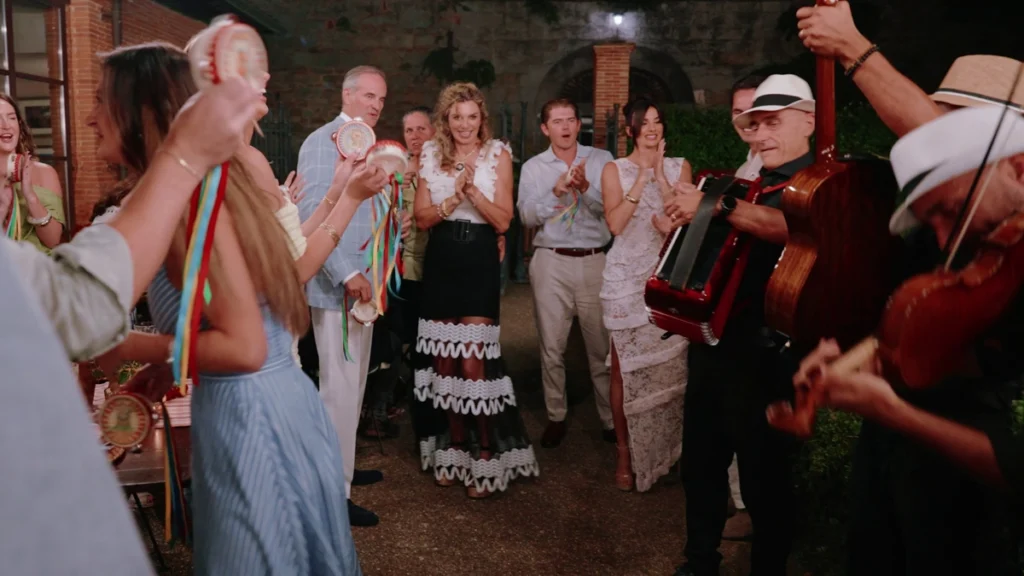
No matter how present a couple tries to be, they cannot be everywhere at once: they do not see the look on a parent’s face during the first dance, or the moment their closest friends found each other at the edge of the garden and stood there talking quietly while the light turned gold around them. The videographer was there. The couple, absorbed in their own experience of the day, was not. Watching the film for the first time, many couples encounter their wedding as they could never have experienced it while living it: from the outside, with perspective, and with the particular tenderness that comes from seeing something irretrievable held carefully in place. That is when the quality of the work becomes fully legible. Not on the day, but in the stillness afterward.
A Film That Lasts as Long as a Marriage
Photographs yellow. Flowers are pressed between the pages of books and forgotten. The wedding dress is folded into tissue and stored somewhere dark. Of all the physical traces a wedding leaves behind, the film is the only one that moves, that breathes, that restores the day to something close to lived experience rather than artifact. But a wedding film is only as durable as its ambition. A recording that catalogues events in sequence, that covers the day efficiently and completely, will be watched once or twice and then filed away with the same indifference accorded to any document once its purpose has been served.

What keeps a film alive across years, what makes a couple return to it on an ordinary Tuesday evening a decade later, is the quality of its gaze. The sense that whoever was behind the camera cared not just about coverage, but about meaning. That quality cannot be manufactured in the edit. It is either present in the footage or it is not, and its presence depends entirely on the choices made during the day itself: where to stand, what to prioritize, which moments to protect and which to let go. The edit shapes and refines, but the raw material it works with is irreplaceable.

A wedding film with genuine emotional intelligence begins with a videographer who brought that intelligence to the day. Choosing who films a wedding is, in this sense, a decision about how the day will be remembered. Not just by the couple, but eventually by people who were not there: children who will one day want to understand something about who their parents were at that particular moment in their lives, in that light, in that room, before everything that came after. A film made with that kind of awareness does not feel like a service. It feels like an act of care. And that, ultimately, is the standard worth holding.