
Ask an Italian videographer which month makes the best wedding film and you will rarely get the same answer twice. Some swear by the particular gold that settles over Tuscany in late September. Others hold out for the clear, hard light of a February morning in Rome, when the crowds thin and a piazza can look almost private. The honest answer is that Italy simply does not have one wedding season. It has twelve, each with its own temperament, and each asking something different of the person behind the camera.
This matters more than couples often realise when they begin planning. A wedding in June under a punishing midday sun calls for entirely different instincts than one held in November, when the light turns soft and grey and low, better suited to close, quiet frames than wide, sunlit ones. A ceremony in a garden bursting with wisteria reads differently on screen than one held indoors, candlelit, surrounded by frescoed walls. The month a couple chooses shapes far more than logistics. It shapes the visual grammar of their entire wedding video, from the colour palette a videographer will lean into to the pace at which the day itself seems to move.
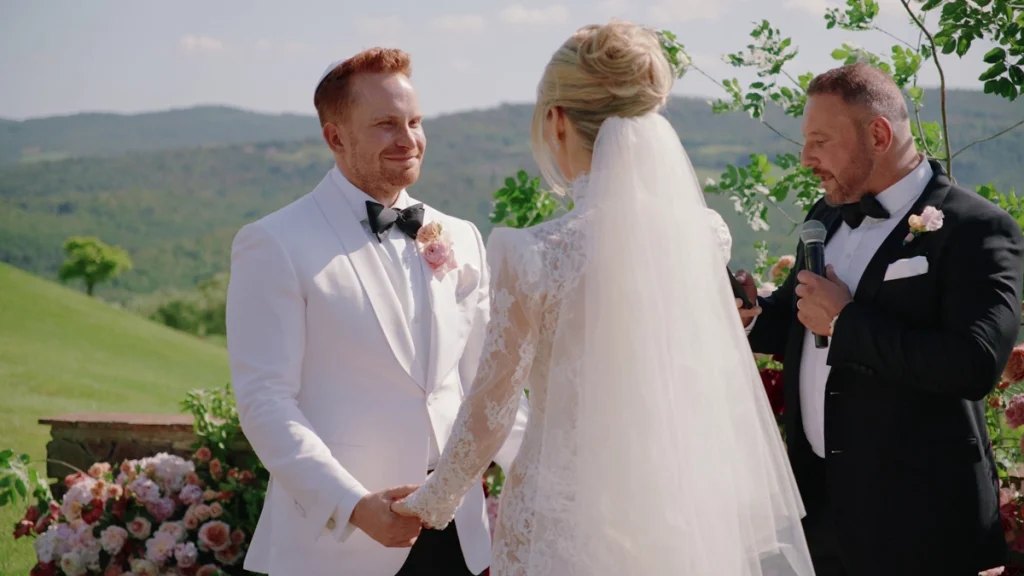
What follows is a walk through the year as it unfolds across the Italian calendar, month by month, landscape by landscape. Spring gardens waking after winter. Coastal summers along Amalfi and Como, glamorous and demanding in equal measure. The particular hush of September light that many professionals quietly consider the finest of the year. Autumn’s slower rhythm, winter’s intimacy, and the underrated beauty of seasons couples too often overlook entirely. Along the way, a simple thread holds everything together: there is no wrong month to marry in Italy, only a different story waiting to be told, depending on when you choose to tell it.
April and May: When the Gardens Wake
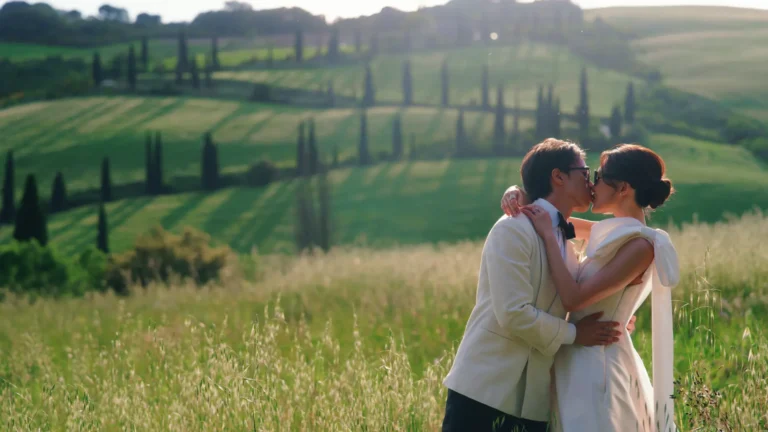
Spring in Italy arrives with a particular kind of restraint. The heat has not yet settled in, the light stays soft through most of the afternoon rather than hardening into the flat white of summer, and gardens across Tuscany reach a fullness that lasts only a few short weeks. Wisteria drapes over stone pergolas in shades of violet, spilling just enough to soften every hard edge of the architecture beneath it. Roses open in that first generous flush before the real heat arrives to stress them. For a videographer, this window offers something summer rarely can: colour with depth rather than glare, and a landscape that still carries the freshness of everything having just bloomed.
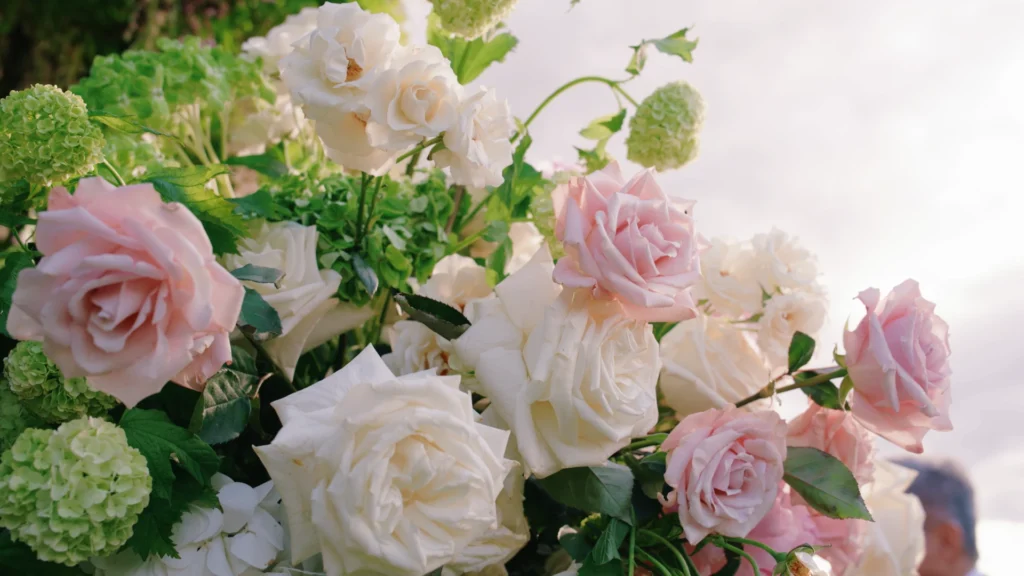
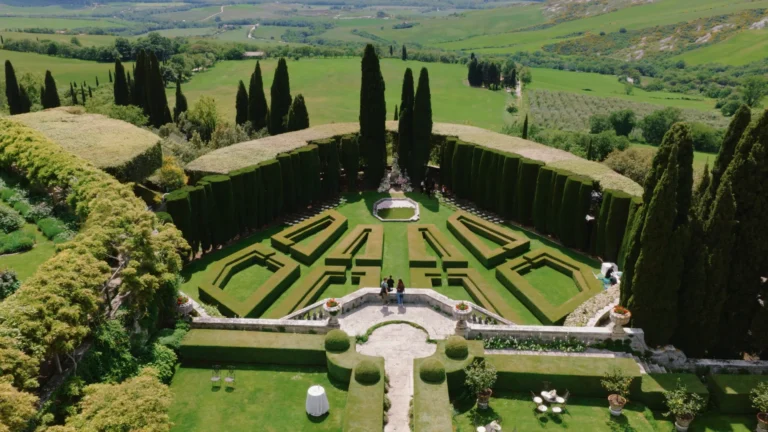
What makes this season particularly rewarding on screen is not a single decision made by any one person, but the way several separate instincts happen to align. A florist chooses blooms suited to the month, working with what is naturally at its peak rather than forcing something out of season. A videographer who already knows those grounds, from past mornings spent watching how the light moves through that same pergola, carries an instinct for where a scene will come together before the couple has even arrived. Neither party is thinking of the other’s craft directly, yet the result, once assembled into a finished wedding film, reads as remarkably cohesive.

This is the quiet advantage of a spring wedding in Tuscany. The garden is doing genuine work in these months, not merely decorative but structural, shaping the palette of the entire visual story before a single frame is shot. A wedding film filmed here in April carries a freshness that is difficult to manufacture later in the calendar, something closer to a season caught at the exact moment it decided to bloom.
June, July, August: The Coast Calls
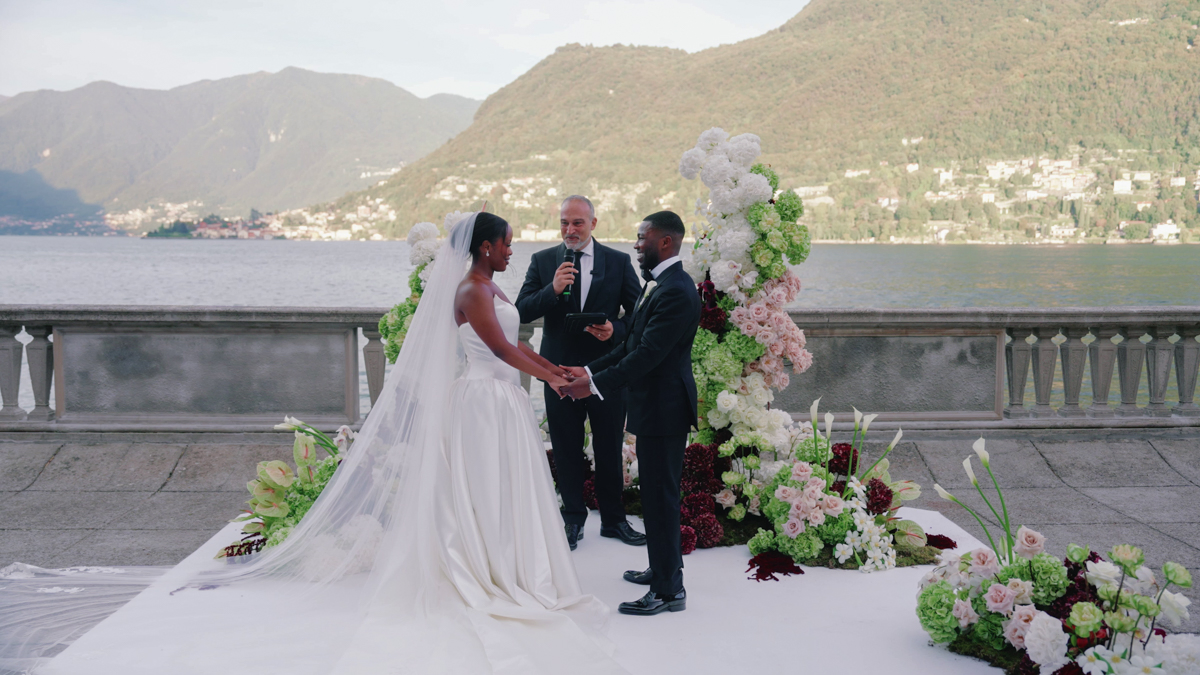
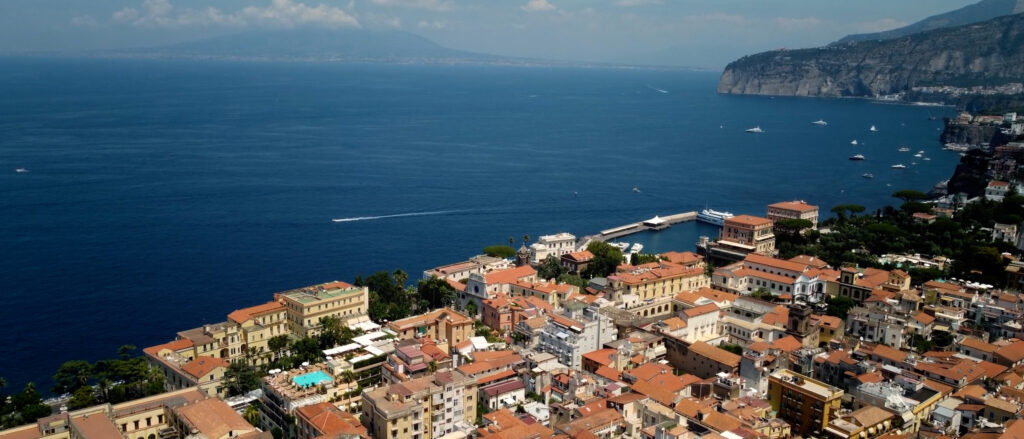
High summer belongs to the coast. Along the Amalfi cliffs and around the still water of Lake Como, this is when Italy performs its most recognisable version of itself, all sun-bleached stone and impossibly blue surfaces, the kind of light that needs no embellishment to look cinematic. For a videographer, though, this same light comes with real technical demands. A midday sun sitting directly overhead flattens faces and throws shadows in places no one wants them, which means much of the most striking footage from a summer wedding is actually won in the narrower windows around it: early morning haze rolling off the water, or the hour before sunset when the light finally softens and the whole coastline seems to exhale.
There is also a more human challenge specific to these months, one that has less to do with equipment and more to do with comfort. Heat changes how people hold themselves. A groom sweating through his tailored jacket, a bride whose careful hair has begun to soften an hour into the ceremony, both read on screen if the moment is rushed or self-conscious. The couples who look natural in their wedding film are usually the ones who have made peace with the heat rather than fought it, choosing looser tailoring, lighter fabrics, an unhurried pace that leaves room to actually breathe between shots.

This is where an experienced eye earns its keep. Knowing when to pull a couple into shade rather than push through direct light, when to let a slightly flushed, sun-warmed complexion read as vitality rather than discomfort, separates footage that flatters from footage that merely documents. Shot with that sensitivity, a summer wedding film along the Amalfi coast or Como’s shoreline carries an ease that no amount of dramatic scenery can substitute on its own.
September: The Light Videographers Ask For
Mention September to most Italian wedding videographers and something in their tone shifts. Ask why, and the answer tends to circle back to the same thing: light. By early September, the sun has dropped just enough in the sky that golden hour stretches longer than it does in July, sometimes by a full extra half hour, giving a camera more room to work with that low, warm glow before it disappears entirely. The harshness of August fades with it. What remains is a softer, more forgiving quality of light that flatters skin, deepens colour, and lets a scene breathe rather than fight for exposure.

There is also a shift in atmosphere that has nothing to do with optics. The crowds that fill Tuscan hill towns and coastal paths through peak summer begin to thin. Venues that felt bustling in July regain a certain composure in September, and that composure tends to carry into the footage itself. A courtyard photographed without a dozen strangers wandering into frame reads differently on screen, calmer, more intentional, closer to the atmosphere a couple actually wants their wedding film to hold.
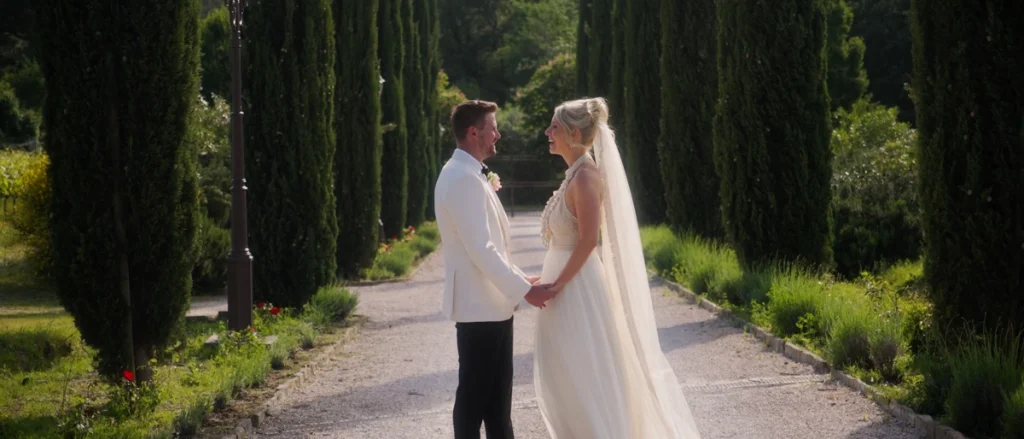
Temperature plays its part too. Evenings cool enough for a jacket without yet turning cold mean receptions can move outdoors later into the night, extending the hours available for genuinely cinematic footage, candlelight against a darkening sky rather than the flat glare of an early sunset forcing everything indoors by nine. None of this is coincidence dressed up as poetry. It is a fairly precise convergence of angle, temperature, and human behaviour that happens to align in Italy’s favour for a few short weeks each year. Many videographers, given an entirely free choice of month, would quietly pick this one every time.
Beyond the Calendar: October, Winter, and the Case for Rain
Couples often approach October, or worse, January, as a compromise, a month chosen for a venue‘s availability rather than its beauty. This deserves reconsidering. Autumn in Italy carries its own particular register: mist settling over vineyards at dawn, chestnut trees turning amber against grey stone, a stillness in the air that summer never quite allows. Winter weddings, held indoors beneath frescoed ceilings or candlelit halls, trade the sprawling outdoor scenes of July for something more contained and, often, more intimate. Fewer guests wandering through frame, closer shots, a warmer palette drawn from firelight rather than sun.

Then there is rain, the weather every couple fears and almost no one plans for, yet one of the most visually rewarding conditions a videographer can work with. Water on cobblestones catches light in unexpected ways. A veil moving against wind and drizzle photographs with a texture and drama that a still, cloudless afternoon simply cannot offer. Indoor ceremonies forced by weather often produce more compelling wedding films than their sunlit counterparts, precisely because everyone stops performing for the sky and starts existing in the room together, laughing at the sound of thunder, watching droplets slide down a window behind the altar.

None of this is a consolation prize dressed up as poetry. A skilled eye treats rain and low winter light as their own visual language, not an obstacle to route around. Interior scenes demand a different kind of attention, closer framing, warmer color grading, a slower rhythm that suits candlelight far better than the wide, sun-drenched compositions of a June garden. Couples who choose these months rarely regret the decision once they see the finished film. What they gain is a mood no August wedding can replicate: closeness, atmosphere, and a kind of visual intimacy that the crowded high season, for all its glamour, was never quite built to hold.
North, Center, South: One Country, a Thousand Backdrops
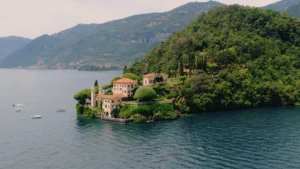
Drive three hours north from Florence and the entire visual grammar of a wedding changes. Lake Como and its northern counterparts deal in reflection and stillness, water so glassy at dawn that villa façades double themselves on its surface, mountains rising steep and close enough to feel like walls rather than scenery. A videographer working these lakes learns to frame around symmetry, to let that mirrored water do quiet, deliberate work in a wide shot rather than fighting it with movement.
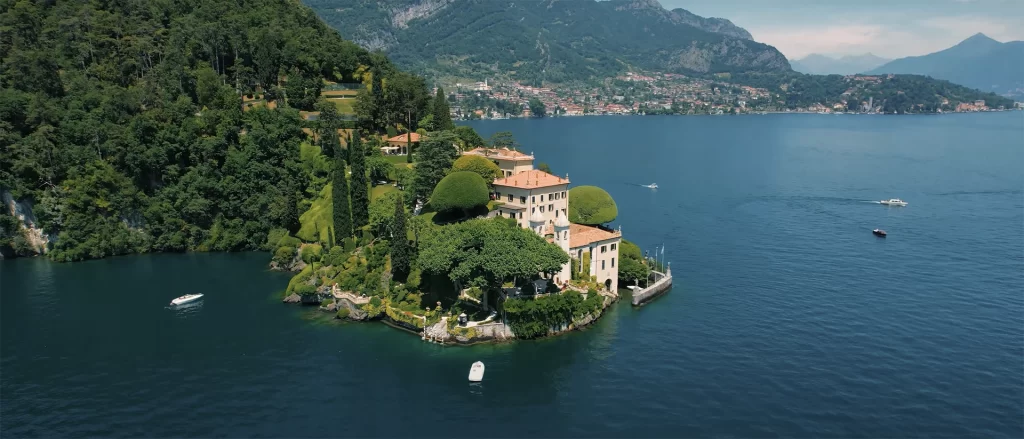
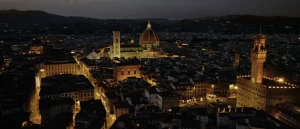
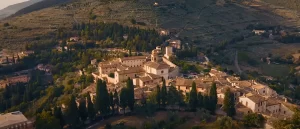
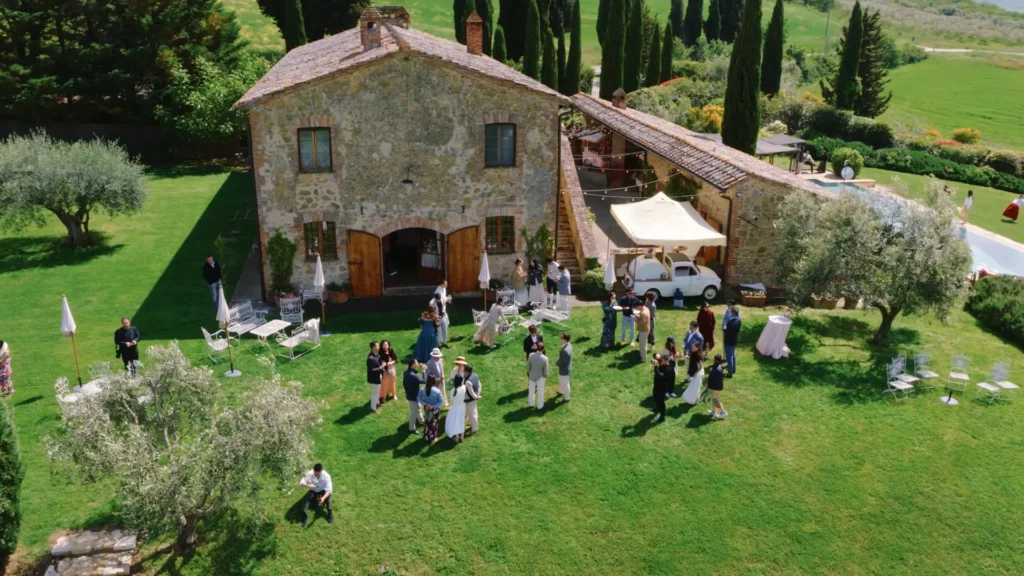
Move south into central Italy and the register shifts toward something more architectural. Florence, Siena, the UNESCO hill towns scattered across Tuscany and Umbria carry centuries of stone, fresco, and proportion built by hands that were, in their own way, thinking about composition long before cameras existed. Shooting a wedding here means working within spaces already possessed of enormous formal elegance, letting a Renaissance courtyard or a cloister’s repeating arches do some of the storytelling on their own.
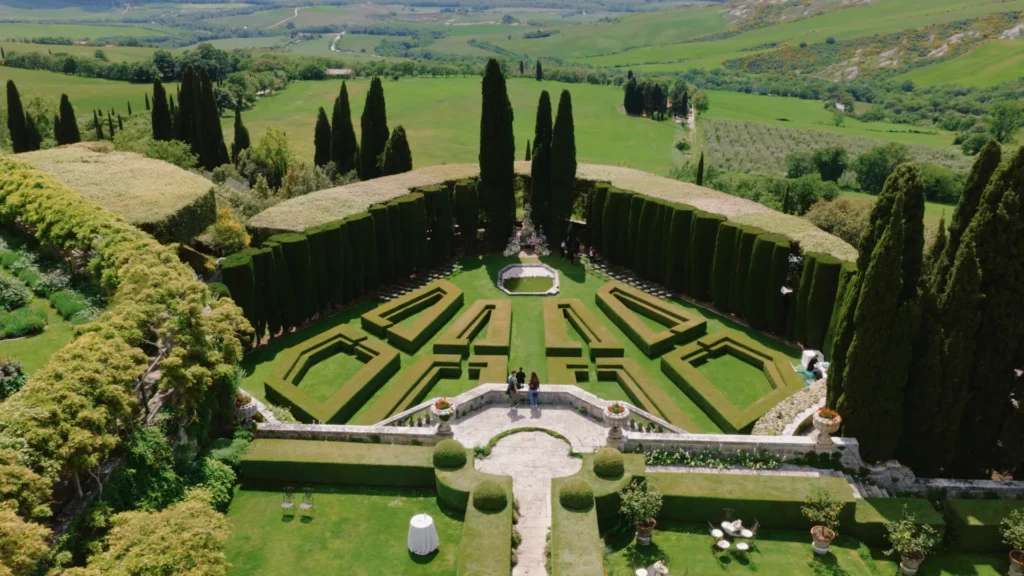
Further south, along the coasts of Puglia, Sicily, and the Amalfi peninsula, blue takes over almost entirely. Sea and sky dominate the frame in a way stone and mountain never do further north, and the light itself turns sharper, whiter, more insistent. A wedding film shot here tends to breathe differently, looser in pace, sun-warmed rather than architecturally composed, closer to a Mediterranean postcard brought to life than a period painting. What makes this range genuinely rare among destination wedding markets is not simply variety for its own sake, but coherence within that variety. A couple can move from lake to hill town to coastline without ever leaving one country, each region offering a wedding video built from an entirely different visual vocabulary, yet all of it unmistakably, recognisably Italian.
Read also: Destination Weddings in Italy: North, Central & South Compared
A Craft That Adjusts With the Calendar
Equipment does not behave the same way in August as it does in January, and neither does the eye operating it. A drone launched over Lake Como at dawn in September, when the air sits cold and still, produces footage with a clarity that becomes almost impossible by midday, once heat rising off the water begins to blur the horizon and distort long shots. Pilots who understand this rarely fly at noon if they can help it, choosing instead the narrow, calmer windows at either end of the day, when both light and air cooperate.

Colour work follows a similar logic, though it happens later, at a desk rather than on location. Footage shot under a flat winter sky needs warming, deliberately, to recover some of the richness that overcast light strips away. Summer coastal footage, by contrast, often needs restraint rather than enhancement, since the Mediterranean sun already saturates blues and whites to a point where a heavy hand in the grade quickly turns garish. Knowing when to pull back matters as much as knowing when to push.

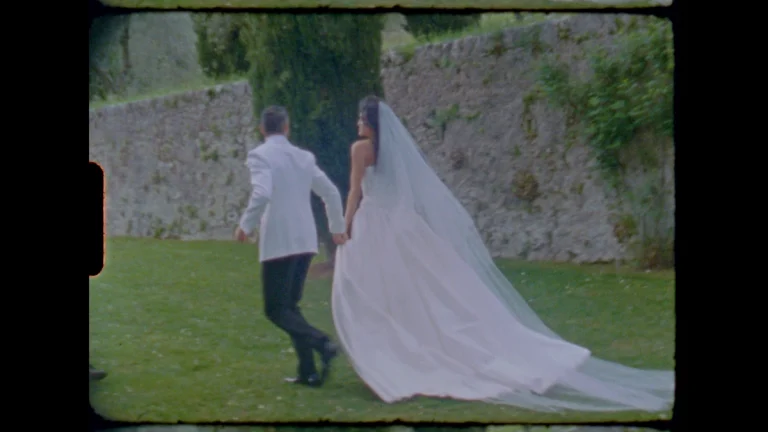
Even something as specific as vintage texture responds to season. Super8 and VHS effects, increasingly requested for their grain and warmth, read differently against a golden September field than they do against a marble-floored winter interior lit by candles. Applied without adjustment, the same preset can flatten one scene and overwhelm another. A videographer who has actually worked across Italy’s full calendar tends to treat these tools less like fixed settings and more like instruments tuned to whatever light happens to be available that particular afternoon. None of this shows up explicitly in a finished wedding film. It simply shows up as coherence, an image that feels correct for its season, the quiet evidence of someone who adjusted their whole approach to match the day rather than forcing the day to match a formula.
Flowers, Table, and a Lighter Footprint
There is a reason peonies in January look slightly wrong, even to eyes that cannot articulate why. Flowers forced out of their natural calendar tend to sit stiffly in a frame, their colour just faintly off from what the surrounding season would produce on its own. A florist working with what late spring or early autumn actually offers, rather than importing blooms from another hemisphere, tends to produce arrangements that hold together visually with everything else happening around them, the light, the greenery, the stone.
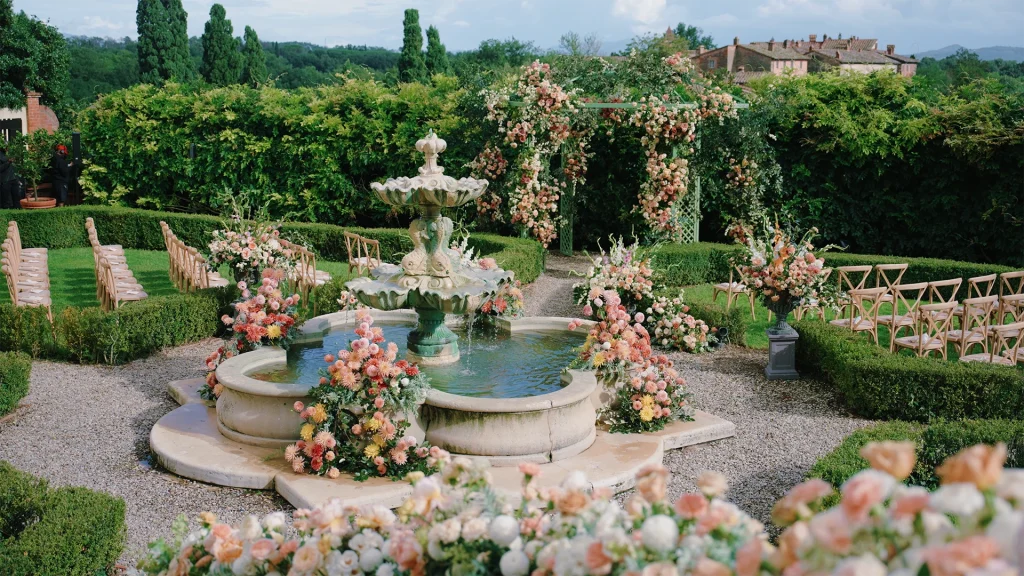
The table follows the same principle. A menu built around what a region is harvesting that month, chestnuts and porcini in October, tomatoes and stone fruit in July, does more than please a palate. It roots the entire day in a specific place and time, giving a wedding film a kind of internal consistency. Working with local growers, local kitchens, local hands who already understand what a given month looks and tastes like removes a layer of artifice that, however subtle, tends to show.

This extends naturally into questions of impact. Choosing professionals based near the venue rather than flown in from elsewhere reduces the footprint of the wedding day considerably, and it also tends to produce a more grounded atmosphere, vendors who know the light of that particular garden, the acoustics of that particular chapel, the way that specific room fills with late afternoon sun. A videographer benefits from this same familiarity, working alongside people who understand the location as intimately as they do. None of this announces itself loudly in the finished wedding film. It surfaces instead as coherence, a sense that everything on screen, from the flowers to the food to the light itself, actually belongs to the place it was filmed in, rather than having been assembled from elsewhere and set down for an afternoon.
Read also: The Advantages of Hiring a Local Videographer in Italy
Every Couple, Their Own Calendar
None of this is really a ranking. September may offer the kindest light, June the most reliable warmth, January the deepest quiet, but no month holds a monopoly on beauty in Italy, only a different version of it. A couple drawn to mist and candlelight will find little use for a July sunset, and a couple who dreamed all their lives of blue water and open sky has no reason to wait for autumn’s mellower tones. The right month is simply the one that matches who they are, not the one an industry or social media had decided to favour that particular year.
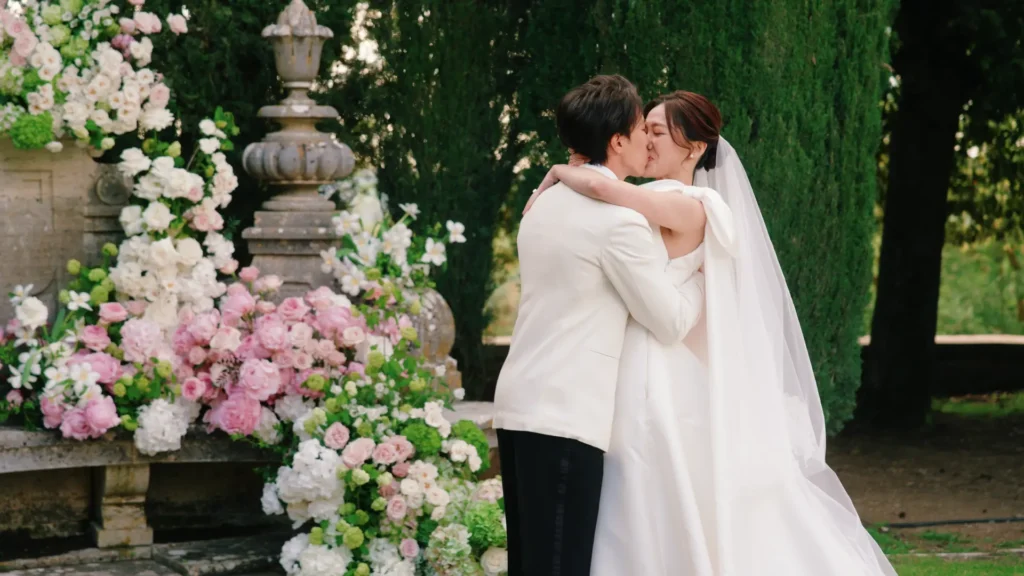
This is, in the end, the actual work of a videographer across an Italian calendar: not imposing a single house style regardless of season, but reading each month for what it genuinely offers and building the wedding film around that truth rather than against it. A garden in bloom asks to be filmed one way. A candlelit hall in December asks for something else entirely. Neither is a lesser choice. Both, handled with the right eye, become a wedding video that feels inevitable rather than arbitrary, as though no other month could have suited that particular couple quite as well.

What tends to get lost in conversations about ideal timing is the fact that a wedding is never really about the calendar at all. It is about two people, and the version of their story a skilled hand chooses to draw out of whatever conditions that day happens to offer, rain or shine, crowded August or hushed February. Twelve months, twelve entirely different films, and not one of them wrong. So the real question a couple might ask is not which month photographs best, but which season sounds most like them. Once that is settled, an experienced videographer will already know how to meet it, wherever on the calendar it happens to fall.