

In winter, between the last blue light and the first indoor lamp, Italy hangs for a moment, a brief slice of time where it belongs to no one but those standing in it. The crowds have gone home. The air has a clarity that summer never quite manages, scrubbed clean by cold, and the light, when it does arrive, falls at an angle that flatters everything it touches. Most couples never see this version of Italy. They marry in June or September, chasing warmth and predictability, and in doing so they overlook a season that offers something far more difficult to manufacture: atmosphere that has not been staged for anyone’s benefit. Winter weddings in Italy remain, for now, a quiet exception. Few plan them, fewer still understand what they offer, and this scarcity is precisely what gives the season its visual authority.

A wedding video shot in January carries a different register than one shot in July. There is less noise to work around, less haze softening the horizon, and a stillness that a skilled videographer can read as narrative material rather than inconvenience. This is a season of contrasts, and contrast is the raw material of good storytelling. The country itself splits along climatic lines that most guides gloss over: a Lake Como winter, wrapped in mist and interior warmth, has little in common with a winter afternoon on the Amalfi Coast, where the sea still holds its color and the light stays gentler than one might expect. Each region asks something different of the person behind the camera. There are real advantages to this calendar choice, and real risks worth naming honestly before any decision is made. What follows moves through both, along with the particular aesthetic language winter makes possible and the kind of attentive, deliberate eye a wedding videographer must bring to a season that rewards patience far more than it rewards convention.
The Uncommon Charm of an Italian Winter
Summer has claimed Italy so thoroughly that its winter face has become almost unfamiliar, even to those who think they know the country well. The postcard version, golden fields, turquoise water, terracotta glowing under a high sun, dominates every idea of what an Italian destination wedding should look like. Winter offers something else entirely: the same landscapes, stripped of their usual costume, revealing structure and shadow where summer only ever showed color. The sky behaves differently in these months. It clears with a sharpness rare in warmer seasons, and the sun, when it appears, sits low enough to stretch shadows across piazzas and gardens for hours rather than minutes. This is a gift for anyone composing images. A wedding videographer working in December or January inherits light that does half the work of storytelling on its own, carving depth into faces and facades that midday summer sun tends to flatten.

Tourism recedes too, and with it the visual clutter that makes so many iconic corners of Italy difficult to film without compromise. Piazzas empty. Gardens go quiet. Streets that photograph as backdrops for a thousand other weddings each June suddenly belong, briefly, to one couple and the small crew documenting them. A wedding film shot under these conditions carries an unmistakable rarity, not because the setting has changed, but because it has been seen without the noise usually surrounding it. There is something telling, too, about the kind of couple drawn to this season. Choosing a winter wedding in Italy is rarely an accident of scheduling. It tends to signal a certain independence of taste, a willingness to bypass what is expected in favor of what feels genuinely their own. That instinct, more than any single view or venue, is often what gives the resulting footage its distinct, unrepeatable character.
Read also: Why Spring Is the Perfect Season for a Wedding on the Amalfi Coast
Glacial Glamour: Cold Becomes Image
Cold has its own wardrobe, and Italian winter weddings tend to embrace it fully. Fur stoles over bare shoulders, wool capes cut like evening coats, gloves that look more architectural than practical, all of it reads on camera as a kind of glamour summer weddings rarely attempt. There is drama in a bride stepping outside into visible cold, breath curling upward, cheeks flushed from temperature rather than champagne. It is an image with tension built into it, and tension is what separates a striking frame from a merely pretty one.

The palette shifts accordingly. Where summer favors warmth, gold light, terracotta, sun-baked stone, winter leans toward blues, silvers, the pale grey of low cloud cover. Skin tones read differently against this backdrop, sharper, more sculptural. Metal surfaces, frosted glass, the hard edge of bare branches against a white sky: these become compositional allies rather than obstacles. A videographer attentive to color will find winter offering a register closer to something shot on film stock than anything digital and overexposed usually manages.

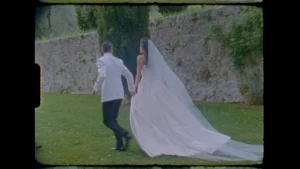
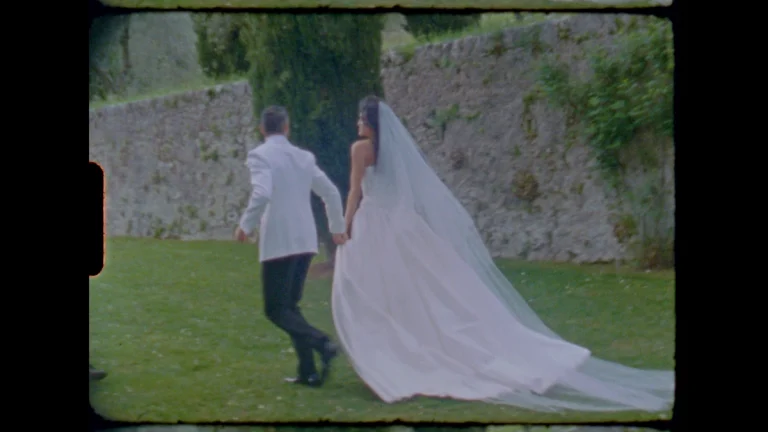
This is where an unexpected pairing starts to make sense. The grain and imperfection native to Super 8 and VHS, textures that already carry a certain nostalgic distance, sit remarkably well against winter’s cooler tones and softer contrast. A wedding film that folds analog texture into an otherwise polished, contemporary shoot gains a strange depth: part memory, part present moment, as though the footage had always existed and was simply being uncovered rather than filmed. The result is an aesthetic that feels considered rather than decorative. Nothing about it asks to be admired loudly. It simply exists, cold and luminous and slightly worn at the edges, closer to a half-remembered dream than a polished advertisement, which is precisely what gives it staying power on screen.
Read also: Super 8 Wedding Videography in Italy: The Vintage Film Trend Every Couple Loves
North and South, Two Winters Compared
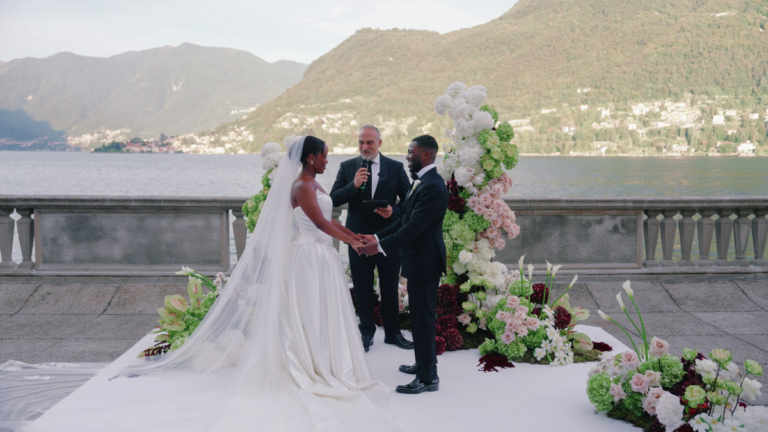
Italy resists generalization, and nowhere is this clearer than in how differently its regions wear the same season. A single word, winter, covers climates so distinct they might belong to separate countries, and understanding this range matters enormously for anyone planning a wedding around it. Lake Como in January belongs almost entirely to fog. Mist settles over the water most mornings and lingers well past noon some days, softening the outlines of villas that spend summer looking crisp and postcard-perfect. Cypress trees fade into pale grey backgrounds. Sound seems to travel less far. There is a hush to this landscape that borders on the theatrical, as though the whole lake had been staged for something quiet and intimate rather than grand. A wedding videographer working here inherits a kind of built-in restraint: less contrast to manage, more atmosphere to lean into, compositions that favor stillness over spectacle.

Travel south to the Amalfi Coast and winter tells an entirely different story. The sea holds onto its color longer than one might expect, still a deep, convincing blue on clear days, and the light retains a warmth absent further north. Terraced lemon groves stay green. Afternoons can feel closer to a mild autumn than anything resembling true cold. The visual language here leans toward brightness and openness rather than mystery, sea views uninterrupted by summer haze, coastal roads empty enough to film without waiting for a gap in traffic.

Neither version is more authentically Italian than the other, and neither photographs better in any absolute sense. What matters is recognition. A local videographer who understands these regional temperaments, who can read fog as narrative material in one setting and clear coastal light as another kind of asset entirely, produces a wedding film that feels rooted in its specific place rather than assembled from generic imagery. That sensitivity to local character, more than any single technique, is what separates footage that merely documents a location from footage that genuinely understands it.
Warmth Beyond the Glass
There is a particular kind of romance that only cold weather can produce: the sight of snow falling silently outside a tall window while, inside, a room glows with candlelight and conversation. Northern Italy, where winter arrives with genuine severity, offers this scene with striking regularity, and it may be the single most cinematic gift the season has to offer. A ceremony held indoors while snow gathers on the sill outside carries a visual charge that no outdoor summer setting can replicate. The window itself becomes a kind of frame within the frame, separating two worlds that exist only inches apart: one hushed and white, the other warm with firelight and the low hum of voices.

A videographer alert to this contrast will often let a shot linger there longer than strictly necessary, because the tension between the two temperatures does narrative work that dialogue or music cannot. Historic villas across Piedmont, Lombardy, and parts of the Dolomites lend themselves naturally to this staging. Wood-paneled rooms, generous fireplaces, chandeliers that throw amber light across old stone walls: all of it reads as intimacy rather than isolation when snow is falling just beyond the glass.

Guests seated close together, their laughter and low murmurs filling the intimate spaces, add a texture of genuine physical presence that summer weddings, spread across open lawns, don’t achieve. This is where a wedding film finds some of its most affecting material, not in grand wide shots of a snowy landscape, but in the quiet threshold between outside and in. The image of a couple exchanging vows while winter presses gently against the windows behind them tends to stay with people longer than almost anything else captured that day, precisely because it feels private, unrepeatable, entirely of that place and that hour.
The Advantages of an Off-Season Date
Practicality rarely gets mentioned alongside romance, yet it deserves a place in this conversation, because winter offers advantages that extend well beyond aesthetics. The villas and estates that fill their calendars a year in advance for summer weekends often sit comparatively open in January or February, which means couples drawn to a particular property have real negotiating room rather than a waiting list. Pricing tends to follow the same logic. Venues, caterers, and other vendors typically show more flexibility during quieter months, not because the experience they deliver diminishes in any way, but because demand simply thins out. This flexibility can translate into budget allocated elsewhere, toward details that matter more to a couple than the calendar date itself.
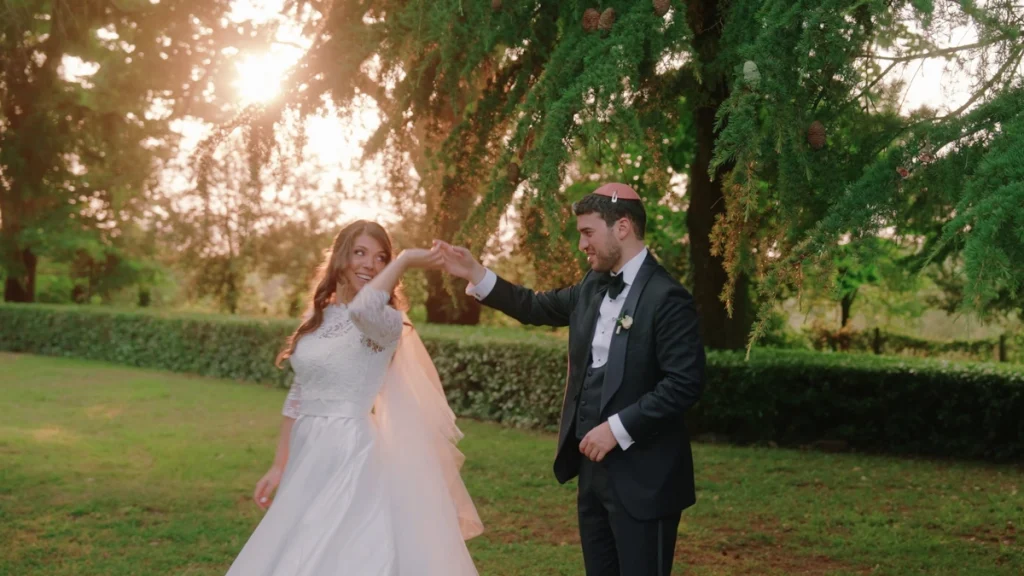
Crowds thin as well, and this matters more for the resulting footage than most couples anticipate. Locations that draw hundreds of visitors daily in summer, certain piazzas, gardens, lakefront promenades, empty out considerably in winter. A videographer filming a couple walking through one of these spaces in July often works around dozens of strangers drifting into frame. In January, that same location might offer an uninterrupted, essentially private set. Fewer obstacles generally mean more room for a director’s eye to work patiently rather than reactively.

This absence of pressure changes the texture of the entire day. Without the urgency of managing tourist crowds or racing against an intense summer sun, winter’s low, lingering light offers a slower, more deliberate pace to build a scene properly. Shots can be considered rather than grabbed. That said, this ease should never be mistaken for a reason to delay planning. The most sought-after winter dates and the finest teams still require booking well ahead, precisely because those willing to look past convention tend to have excellent instincts, and word travels fast among people who share that kind of taste.
Risks, Surprises, and Practical Considerations
Honesty matters here, because winter asks for a different kind of planning, and pretending otherwise does no one any favors. Weather becomes genuinely unpredictable in these months. Rain arrives without much warning, skies can turn from clear to leaden within an hour, and any outdoor portion of the day needs a real contingency, not a vague hope that conditions will cooperate. That said, unpredictability is not automatically a liability. A sudden storm watched from inside a salon with a roaring fireplace, rain streaking down tall windows while guests remain warm and unbothered, can produce some of the most atmospheric footage a videographer captures all year.

The key lies in preparation rather than luck: knowing exactly which room becomes the fallback, having that space lit and ready before it’s needed, so a shift in weather reads as drama rather than disruption. Daylight itself becomes a scarcer resource. Winter afternoons in Italy can lose usable light by four or five in the evening, considerably earlier than couples accustomed to long summer evenings tend to expect. This compresses the window for any outdoor portraits or ceremony moments that depend on natural light, and it rewards careful scheduling.
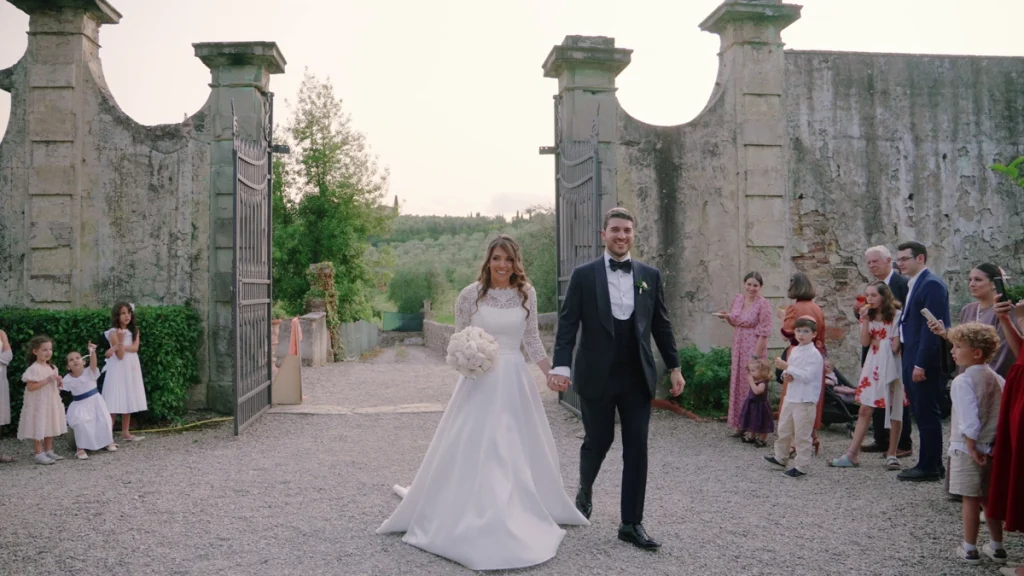
Ceremonies timed for early afternoon, with portrait sessions immediately following rather than pushed toward golden hour, tend to work far better than a schedule borrowed from a July wedding. Cold also demands attention to comfort, both for guests and for the clothing involved. Delicate fabrics react differently to low temperatures, and long stretches outdoors without proper layering can turn elegance into visible discomfort rather quickly. Discreet heating solutions and shorter outdoor segments all maintain the polished appearance couples are after. None of this diminishes the season’s appeal. It simply means winter weddings reward a team that plans with precision, treating every variable as something to be anticipated and folded into the day’s design rather than left to chance.
Read also: Rainy Wedding Day? How a Videographer Can Turn It Into Something Magical
Cinematic Vision or Faithful Record
Every wedding videographer balances two inner instincts, shifting between them as the day dictates. One moment calls for documenting reality as it happens, focusing entirely on capturing the unrepeatable event. The next requires a filmmaker’s eye: selecting moments, creating a rhythm, and shaping the day into a deliberate story. True filmmaking lives in this oscillation, where one approach never excludes the other. Winter, more than any other season, rewards the second instinct. A documentary approach thrives on abundance: sunlight, movement, color, the sheer visual generosity that summer weddings often provide without much effort. Winter offers less of that raw material. Days are shorter, palettes are quieter, and the spectacle one might rely on in July simply isn’t there in the same measure. Treated purely as chronicle, a winter wedding can risk feeling muted, even underwhelming, when in fact it holds a different kind of richness altogether.

A more directorial eye changes this entirely. Where a documentary lens waits for things to occur, a cinematic sensibility decides how they should be seen. It notices that fog rolling across a lake benefits from stillness rather than motion, that a single shaft of low winter light through a doorway deserves several seconds of held frame rather than a quick pan. This is where technique becomes inseparable from taste: knowing when patience serves the image better than coverage, when silence in a wedding film says more than a moving camera ever could. Winter’s rarefied atmosphere, the fog, the hush, the emptied piazzas, asks to be interpreted, not just recorded. A skilled hand behind the camera reads these conditions as an invitation toward something closer to cinema than reportage, framing a couple’s day as a story with its own visual logic rather than a simple sequence of events. The season, in other words, doesn’t just permit this approach. It quietly demands it.
Read also: Documentary vs Cinematic Wedding Film: Which Style Is Right for You?
An Eye That Shifts With the Seasons
Familiarity with a place changes what a camera can do with it. A local videographer who has spent years working across Italian territory carries something that no amount of scouting can replicate in a single visit. An instinct for how fog behaves over a particular lake by mid-morning, which villa windows catch the last usable light in December, where a piazza empties out by early afternoon in January. This kind of knowledge simply shows up in the footage, in choices that feel inevitable rather than improvised. Technical fluency matters just as much as local knowledge, perhaps more. Winter conditions punish anyone unprepared for them, shorter days, unpredictable weather, light that shifts character within the span of an hour. Someone accustomed to working across every season carries a kind of adaptability that summer specialists often lack: the ability to read a grey, flat sky and still find contrast, to work with candlelight indoors when natural light disappears by late afternoon.

Editing carries equal weight in this equation. What happens after filming, the pacing chosen, the way scenes are sequenced, determines whether the final wedding film feels alive or merely assembled. Color grading, in particular, does quiet but decisive work here. The cool, silvered tones native to an Italian winter can be preserved and deepened in post-production, or flattened into something generic if handled carelessly. Done well, it becomes the difference between footage that simply shows a winter wedding and a film that genuinely feels like one. None of this depends on the calendar. A summer wedding shot without attention is no better than a winter one handled the same way, and the reverse holds equally true. What separates a forgettable wedding video from one that lingers in memory has never been the season on the invitation. It has always been the sensitivity brought to interpreting it, frame by frame, choice by choice, until the atmosphere itself becomes the story.