

There was a time when a wedding video was simply a careful recording: an amateur camera, uncertain zooms, handheld shots trembling with emotion. Today the visual landscape surrounding weddings has changed profoundly. Images have never been so easy to produce, modify, and replicate. Increasingly sophisticated software intervenes in light, composition, and color, while digital platforms can create entire scenes within seconds. On the opposite end of this spectrum sits VHS — a format that refuses to be perfected, and precisely for this reason continues to move people in ways that no algorithm can replicate. Immersed in this historical moment, wedding videography also finds itself at the center of a transformation that is quiet but radical.

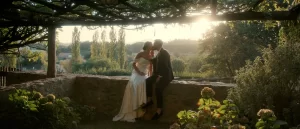
Couples who choose a high level wedding video are not only looking for an elegant record of the day. They sense that a wedding is also a visual event, a construction of atmospheres, gestures, and glances that deserve an attentive gaze. The videographer therefore moves into a territory close to film direction: observing, anticipating, building rhythm. The afternoon sun filtering through the trees, a camera movement accompanying the entrance of the couple, the way the emotion of the event alters the atmosphere and is reflected even in sounds, movements, and light.

All of this holds a deeply human value that no machine can replicate. Yet technology advances at a surprising speed. Artificial intelligence already makes it possible, with unprecedented ease, to generate scenarios, simulate sunsets, add decorations that were never there. In a word: to actively shape reality. The boundary between what was experienced and what can be recreated in post-production becomes increasingly thin. For those working in videography, this evolution raises profound questions. What is the nature of a wedding video today? A document, an interpretation, or something that emerges from the encounter between reality and technology?

Alongside the fascination with ever more powerful tools, an opposite desire appears almost in countershot: images that are more tactile, imperfect, bearing the trace of the medium itself, the grain of film, the vibrations of analog formats, and above all the mark of the hands that handled them. These are two opposing directions that reveal much about our contemporary relationship with visual memory.
When Artificial Intelligence Enters Wedding Videography
In recent years, artificial intelligence has also begun to enter wedding videography quietly. At first it functioned only as a support tool: more advanced stabilization, automatic light correction, an initial level of image editing. Today the situation is more complex. Generative systems are able to intervene directly in the image, even enriching it with elements that did not exist at the time of filming. A sky that takes on more dramatic tones, a garden that fills with flowers that were never there, a golden light that envelops the scene with almost painterly precision.

Subtle interventions, often imperceptible at first glance, that radically alter the atmosphere of a wedding video with the same naturalness with which a colorist works on a color palette. The difference is that, in this case, the image is not simply refined. It is partially reformulated, reimagined. What is being reconsidered is the very idea of storytelling through images. Every wedding film is born from a series of directorial choices: where to position the camera, how to accompany the movements of the couple, which light best enhances a face or an interior.

Artificial intelligence introduces an additional layer, capable of transforming the scene even after reality has already been recorded. In some productions this potential is already being explored with curiosity. A setting can gain unexpected depth, a reception hall can appear brighter, a landscape can become even more evocative. It is a perspective that fascinates many enthusiasts and professionals in contemporary videography, especially those interested in a highly controlled aesthetic.

Yet an implicit question remains, one that concerns the relationship between image and memory. If the wedding video begins to incorporate artificially generated elements, testimony and visual construction become increasingly similar, almost merging. This is not necessarily a limitation, but it is certainly new territory, and it can also be very fascinating, carrying with it almost infinite possibilities. The uncertainties and unanswered questions are numerous, in this historical moment when the language of the wedding film meets, for the first time, the imagination of machines.
The Promise of the Perfect Image
Every technology that enters the world of images carries with it an implicit promise: to move ever closer to perfection. In the case of artificial intelligence, this promise takes on a particularly seductive form. Impeccable compositions, skies shaped with painterly precision, palettes calibrated with perfect balance. The image can be polished until it reaches a form of almost absolute harmony, where nothing appears out of place. In the context of a wedding video, the temptation is clear. Softer light on the couple’s skin, a sunset that lingers beyond real time, a villa that appears immersed in a luminous calm that feels perfectly orchestrated, breathtaking.

All these interventions amplify the beauty of what has been filmed, bringing the wedding video closer to a highly refined visual imagination, at times even cinematic. The point, however, concerns the nature of this perfection. Wedding videography traditionally emerges from the meeting of observation and sensitivity. The videographer works within the reality of the day: the light that changes quickly in the late afternoon, the spontaneous movement of the guests, the unpredictable variations of a living environment. It is precisely within these imperfections that the visual narrative finds rhythm and authenticity. When technology allows every variation to be corrected, the image takes on a different character.

It becomes more controlled, more uniform, sometimes almost suspended in an ideal dimension. Some wedding films created with extensive use of generative tools reach a remarkable level of visual luxury, but they also present a particular quality. They seem to belong to a space slightly detached from the concrete experience of the day, almost unreal, simulated. Those who observe the language of images closely notice a subtle but meaningful distinction. A wedding video that pursues absolute perfection risks approaching an aesthetic simulation, refined and seductive, but less connected to the real pulse of what happened. Visual memory, after all, always retains a small element of unpredictability. And it is often that element that makes a filmic narrative truly alive.
The Return of Texture: Super 8, VHS and Analog Romance
While technology pushes images toward an increasingly polished perfection, a quiet and opposite movement is taking shape within wedding videography. More and more often, sequences shot on Super 8 appear, along with VHS inserts and visual textures that belong to another era of the image. Could this be a natural reaction to the increasingly uncontrolled spread of artificial, simulated imagery? These are in fact precise aesthetic choices that introduce different visual qualities into the wedding video, almost tactile, carrying with them a sense of sincere authenticity. Super 8 film has an unmistakable grain, a vibration of light that no algorithm can imitate in a satisfying way. Colors move with delicate imperfections, edges retain a dreamy softness, and the image seems to breathe together with the scene.

VHS, with its electronic texture and slight signal instabilities, also conveys the sensation of time flowing within the image. Each frame preserves a trace of the process through which it was recorded, of the lives that passed in front of and behind the lens. Within the context of a wedding video, these analog languages introduce a very particular dimension. The image stops appearing untouchable, perfectly controlled, and begins once again to reveal its material nature. A candlelit room, a moment of restless quiet before the ceremony, the first look of the newlyweds. Through film or magnetic tape, these scenes acquire a more intimate, vivid, participatory visual quality.
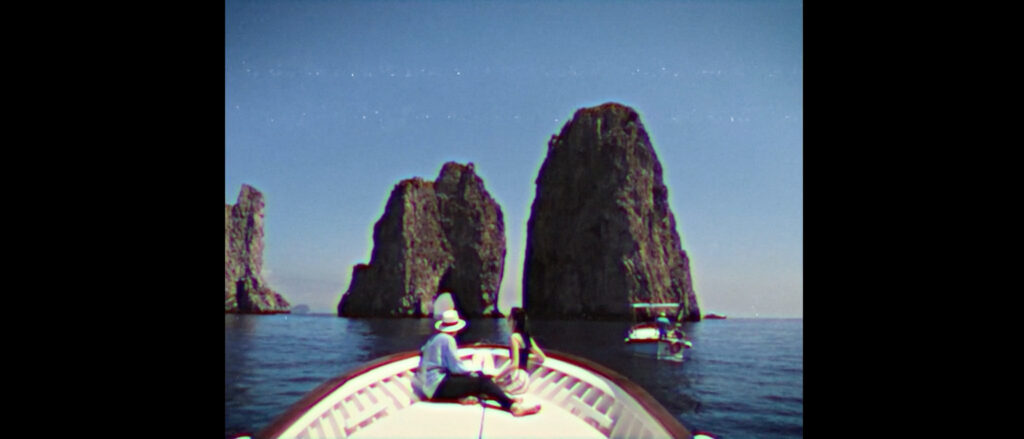
Many contemporary videographers look at these formats with growing interest precisely for their ability to restore atmosphere and emotion. The direction remains refined, the eye attentive to composition, but the image welcomes a certain unpredictability. Light reacts in a less controllable way, movements become slightly more fluid, at times more fragile. In an era when the wedding video can be perfected endlessly through software and algorithms, the presence of these analog textures introduces a rare quality: the perception of time. The image no longer appears constructed to reach an ideal form, but to preserve the density of a lived moment.
Read also: Super 8 Wedding Videography in Italy: The Vintage Film Trend Every Couple Loves
Why Couples Are Rediscovering Imperfection
In recent years, there has been a subtle shift in the expectations of many couples approaching wedding videography. The flawless image, polished to perfection, is no longer the only aesthetic horizon. For various cultural and emotional reasons, a different sensitivity is emerging, one that values the emotional quality of images over their absolute technical perfection. The grain of the film, the slow variations in light during a scene, the focus that moves with the guests and the couple: variables and uncertainties that audiovisual language tried to eliminate for decades are now precious, as a sign and guarantee of the craftsmanship of the work.
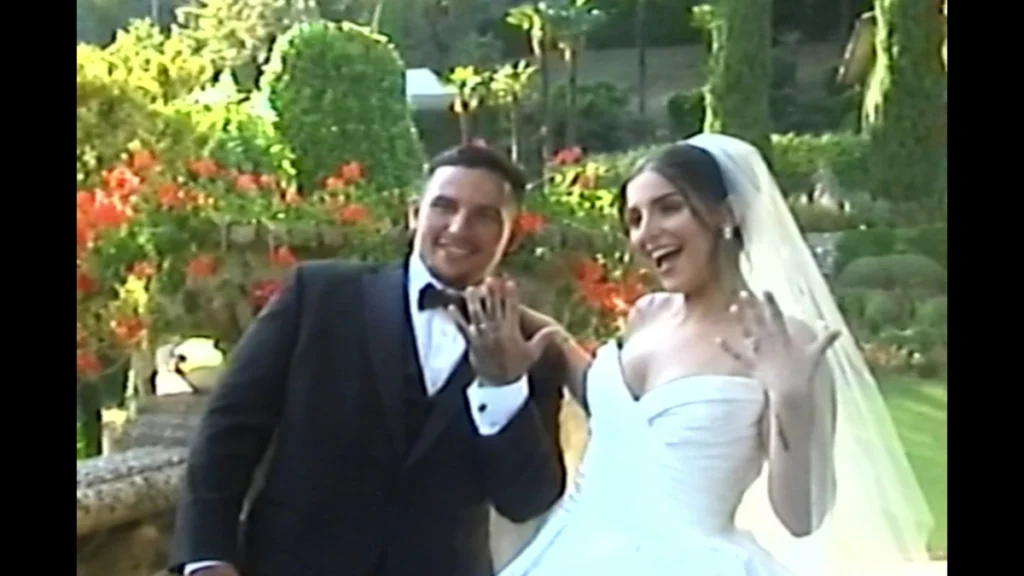
In a wedding film, these details introduce a sense of closeness. The image feels less distant, more connected to the moment it was recorded. This tendency is not only about visual taste. It reflects a broader relationship with contemporary images. We live surrounded by perfectly calibrated photos and videos, captured by devices that automatically correct colors, contrasts, and perspectives. In this context, the presence of a small imperfection becomes a proof of authenticity. The videographer working with a cinematic sensibility catches this transformation with particular care.

In the visual storytelling of a wedding, the unexpected has always played an important role: a glance caught at the last moment, a laugh that crosses the scene, the way evening light changes the character of a room. When an image preserves traces of this unpredictability and embraces small visual irregularities, the film becomes a living creature. It is precisely this expressiveness that many couples seek: they no longer want an idealized representation of the day, but rather a visual memory capable of conveying its atmosphere. The image is not meant to be flawless, but to preserve the unique character of a shared moment.
Wedding Videography and the Wider Crisis of Cinema
The changes taking place in wedding videography today do not belong solely to the world of weddings. They reflect a broader transformation that affects the entire visual language, including cinema. Moving images are experiencing a period of extraordinary technological expansion, but also deep questions about the very nature of directing. In recent years, digital tools have gradually reduced the distance between an idea and its visual realization. Simulation software, virtual environments, and automated image-generation systems allow the creation of elaborate sequences without the physical presence of a crew, a location, and sometimes even real actors.

Cinema, which for a long time was an art founded on the relationship between people, spaces, and light, is entering a territory where the machine can produce images almost independently, without a human imprint. This shift inevitably changes the role of the director. Traditionally, the director observes the world, engages with those around them, and builds a scene through a delicate combination of impulse and control. In wedding videography, this dimension remains particularly evident: the videographer moves within a real event, reads the atmosphere of the day, and chooses the right moment to approach or to give space to the scene.
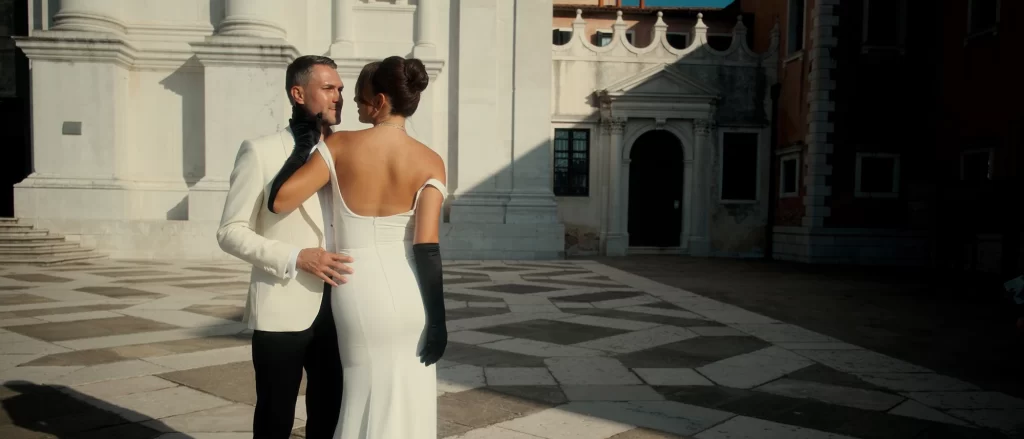
When technology allows images to be generated without passing through this relationship with reality, the very nature of visual storytelling changes. The image can appear more abstract, designed at a desk, less connected to the physicality of what is happening in front of the camera. The debate touches many areas of contemporary cinema. On one hand, there is enormous creative potential, capable of opening new visual languages. On the other, there is concern that image production could become an increasingly automated process, where human presence loses its centrality. Wedding videography, with its focus on the reality of a lived event, offers a particularly interesting perspective on this tension. Here, the value of the image remains deeply connected to the life unfolding in front of the lens.
Read also: Documentary vs Cinematic Wedding Film: Which Style Is Right for You?
Cinema Made by People
Behind every image that can move and stay in memory, there is always a human presence. Cinema, even in its most sophisticated forms, arises from a web of looks, skills, and intuitions that take shape on set. Directors, camera operators, lighting technicians, costume designers, makeup artists: different figures contribute to the collective construction of an image, each with a precise sensitivity. This principle remains surprisingly evident in wedding videography approached with a cinematic vision.

A high-level wedding video is not the result of a device mechanically recording what happens. It is the product of an attentive presence, capable of reading the atmosphere of a room, anticipating a gesture, and delicately choosing the point of view. The videographer works within a living reality, where situations flow and change continuously. Sunrays slide across surfaces with unpredictable reflections, the couple inhabits the spaces with spontaneous movements, and the guests create a network of relationships that constantly alters the energy of the film. Recognizing these signals requires experience, visual sensitivity, and a form of attention and care that no algorithm can replicate.

Even in the seemingly most controlled moments, such as the preparation of the couple, a calm portrait before the ceremony, or a short camera movement along a corridor, the image is born first and foremost from a direct relationship between the one filming and the one being filmed. In the final result, this human dimension remains visible and the wedding video gains depth precisely because it preserves the traces of that presence. The videographer’s gaze becomes the narrative thread running through the entire day, turning a succession of events into a coherent visual story, full of nuance and life.
The Videographer as Author
In an era where technical tools are increasingly accessible and sophisticated, the difference between an ordinary image and an unforgettable visual story still depends on the eye behind the camera. In wedding videography, this aspect takes on particular importance. Technologies can standardize shooting processes, make editing easier, and even suggest certain aesthetic choices. Style, however, remains a human matter.

The videographer who works with aesthetic sensitivity is not a technical operator, but the author of a unique point of view. Every choice (framing, distances, rhythm) contributes to defining a recognizable language. This dimension becomes especially clear in the editing of a wedding film. The images are not simply placed side by side but interact with each other, creating a narrative through the interplay of brightness, movement, and silence. The visual story takes shape through subtle connections that depend on the sensitivity of the person who envisioned them.

When viewing work by videographers with a defined style, this authorial presence becomes evident. In a context where technology tends to make many images replicable, it is precisely this personal dimension that distinguishes a high-level wedding film. Directing adds depth to the event, transforming the sequence of moments into a narrative that bears the mark of a precise gaze, cultivated over time through experience and visual culture.
Technology, Nostalgia and the Language of Memory
In the contemporary landscape of wedding videography, two trends coexist that, at first glance, seem to move in opposite directions. On one hand, technological innovation pushes toward images that are increasingly controlled, shaped with precision through digital tools and generative systems. On the other hand, visual languages from an analog past reemerge, made of film, grain, and unstable light. Two different sensibilities, both connected to the same question: the way we choose to preserve the memory of a wedding.
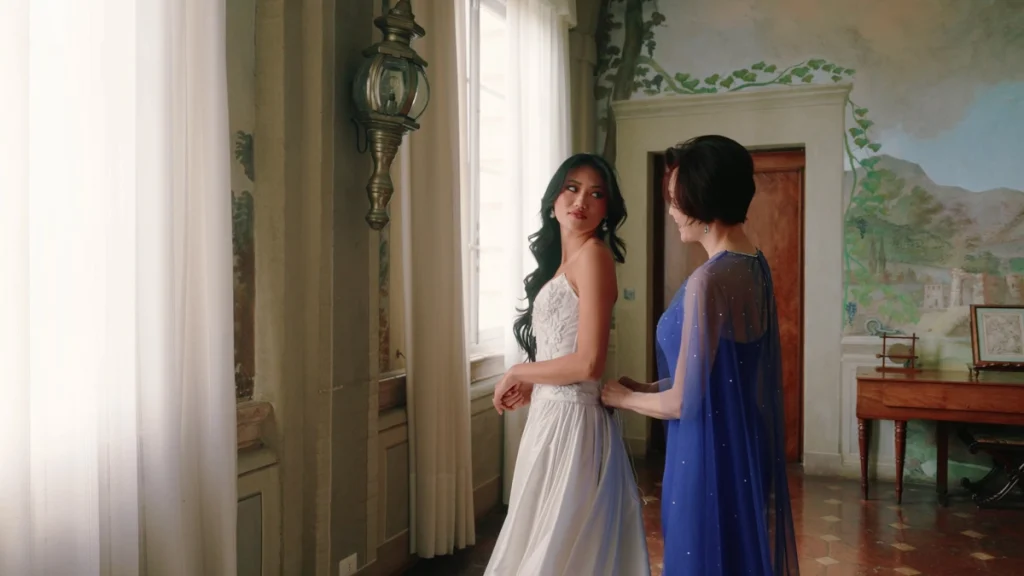
Artificial intelligence introduces the possibility of refining every detail of the wedding film. Light can be harmonized, the environment transformed, the atmosphere calibrated with great accuracy. The wedding video thus becomes a constructed visual object, where the memory of the day is filtered and shaped through a controlled aesthetic that leans toward an ideal form. Analog formats follow a different logic. Super 8 film or VHS recordings do not offer the same margin of intervention. They capture the scene with all its variations: a flickering light, more visible grain in shadowed areas, small imperfections inherent to the recording process. In this case, the visual story maintains a more direct relationship with the moment it was recorded.

Both approaches, ultimately, respond to a common desire. Those who choose a wedding video want to preserve a lasting trace of the day. Some imagine this memory through refined images, cared for with an almost painterly attention. Others find value precisely in the materiality of the image, in its irregularities, in the perception of time. Contemporary videography thus finds itself at the center of an interesting dialogue between technology and nostalgia. Two different ways of exploring visual memory, both capable of influencing the language of the wedding film and the very perception of cinematic storytelling.
The Future of the Wedding Film
Looking at the recent evolution of wedding videography, it is clear that the future will not move through drastic breaks or stubborn nostalgia. Rather, a more mature convergence is emerging between cinematic language, technology, and authorial sensibility. The tools continue to be refined: ever more compact and capable cameras, sensors able to work with natural light in conditions once impossible, stabilization systems that allow smooth and discreet movements even in the most complex spaces. Yet the real transformation concerns the eye of the person using them.
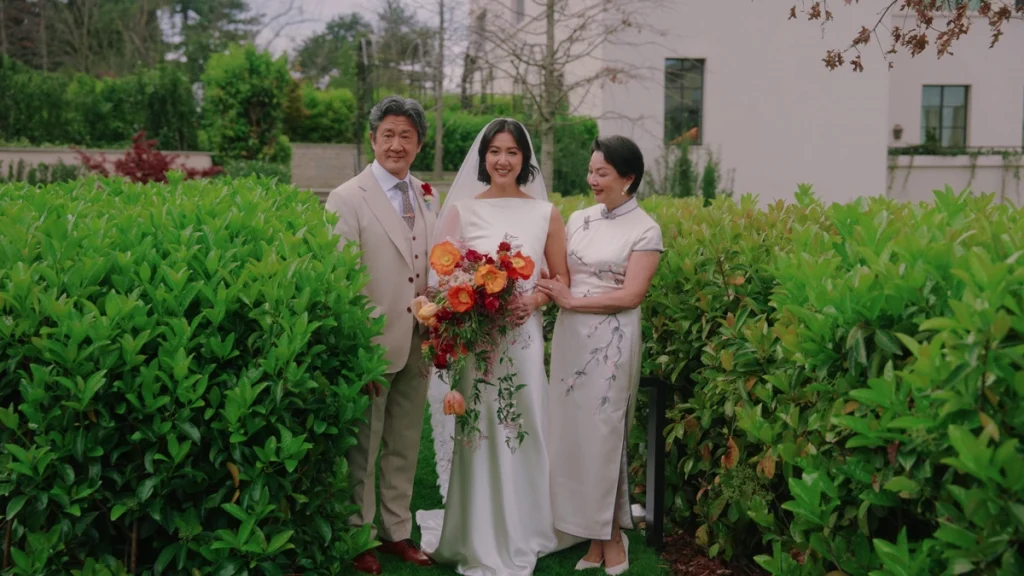
In the context of high-end weddings, the wedding film is increasingly moving away from a bare recording of events. The videographer assumes the role of a silent director, able to sense the rhythm of the day and orchestrate images, sounds, and atmospheres with an ever more refined narrative awareness. They rarely intervene in reality, but try to capture its invisible structure: the pauses, the subtle tensions, the emotion that defines every frame.

Editing also evolves in this direction. Contemporary wedding videos show a growing attention to the internal time of the images. In this type of visual storytelling, the perception of atmosphere becomes an integral part of memory. The wedding videography of the future will continue to follow this path: sophisticated technology, certainly, but always in the service of human sensitivity. Because at the heart of every great visual story, the same requirement remains unchanged: to look attentively, understand what happens between people, and find the right way to tell it.