

Tuscany is one of those places in the world that exist, for most people, as images before they exist as places. The cypress-lined roads, the hill towns that seem to have grown from the rock rather than been built upon it, the quality of afternoon light across a vineyard in late October: these are pictures that circulate so widely they have almost become abstractions, detached from geography and season. Part of the challenge of actually marrying here is reclaiming the place from its own mythology. For couples who choose Tuscany as a destination wedding location, that reclamation begins with a single, deceptively simple question: not where, but when. The region is not one landscape but many, and it shifts so substantially across the calendar that the choice of season shapes everything else, from the atmosphere of the day to the visual character of the wedding film that will outlast it.
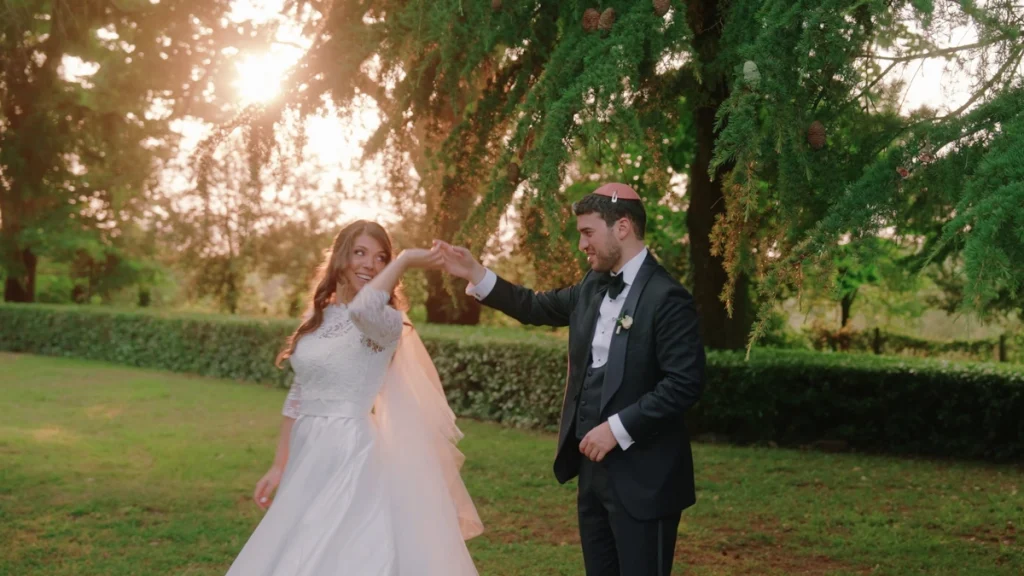
A June wedding and an October wedding in the same Chianti villa are, in almost every meaningful sense, different experiences. The light falls differently, the countryside reads differently on camera, the rhythm of the day changes with the hours of available daylight. Guests feel the season in their bodies. The film carries it in every frame. This is why the question of timing, for a Tuscan destination wedding, deserves more than logistical consideration. It is an aesthetic decision, one that determines the emotional register of the day and the visual language of everything recorded. The couples who understand this tend to arrive at their choice of season with the same deliberateness they bring to every other aspect of the wedding: not by defaulting to the most popular month, but by asking what kind of light, what kind of landscape, what kind of film they want to carry with them for the rest of their lives.
Spring: Anticipation and Soft Light
April in Tuscany arrives without announcement. The hillsides shift from the grey-green of winter to something more tentative and luminous, a landscape still deciding what it wants to become. Wildflowers appear along the roadsides before the vineyards have fully woken. The air carries a quality of suspension, as though the season itself is holding its breath, and that quality, for a wedding, is quietly extraordinary. From a visual standpoint, spring offers conditions that are genuinely difficult to replicate at other times of year. The light in April and May sits lower in the sky than summer light, and the frequent presence of thin cloud cover acts as a natural diffuser, eliminating the harsh contrasts that midday sun in July or August imposes on a scene. For wedding videography, this matters considerably. Skin tones render with more warmth and nuance, shadows fall softly, and the landscape holds a delicacy that the stronger seasons tend to override. The footage that emerges from a Tuscan spring wedding has a particular emotional register: tender, slightly dreamlike, yet precise.

Practically, spring occupies an interesting position in the destination wedding calendar. May especially has become one of the most requested months in Tuscany, which means that the most sought-after villas, the most experienced local suppliers, and the best photographers and videographers are often booked a year or more in advance. Couples drawn to this season who wait too long to plan frequently find their preferred choices unavailable, which makes early decision-making less optional than it might seem. April carries more flexibility, and arguably more atmosphere. The tourist season has not yet arrived, the towns are quieter, and there is something in the rawness of early spring, its sense of beginning, that lends itself to the emotional current of a wedding day in ways that are hard to articulate but very easy to feel when watching the film afterward.
Read also: 4 Reasons Why You Should Book Your Wedding Videographer Early
Summer: Heat, Grandeur, and Long Evenings
There is a particular kind of confidence that a Tuscan summer wedding requires. The heat is not incidental; it is structural, shaping the pace of the day, the timing of the ceremony, the instinct of every guest to seek shade and move slowly. Couples who understand this and plan accordingly tend to produce weddings with a quality of suspended, almost cinematic grandeur that no other season quite matches. June and July offer something that is genuinely rare in wedding videography: evenings that seem to refuse to end.

The sun sets late and lingers, flooding stone courtyards and open terraces with a warm, directional light that turns even the most familiar scene into something that looks composed rather than found. This is the golden hour that photographers and videographers speak of with a reverence that can seem excessive until you watch the footage. In Tuscany in summer, it lasts long enough to build sequences around it, to move through different spaces and still catch the light doing something extraordinary. The practical counterweight to all of this is significant. Summer is peak season across Tuscany, and the destination wedding market here is competitive in ways that catch some couples off guard.
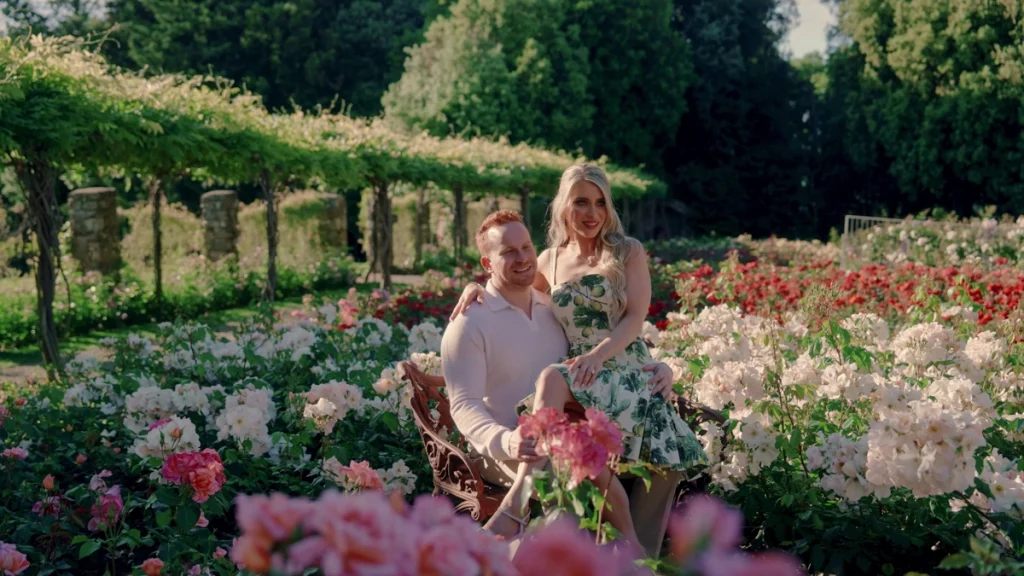
The finest properties book out early, costs rise, and the concentration of weddings at marquee venues can affect the exclusivity that many couples are specifically seeking. Guests traveling from abroad face higher airfares and crowded accommodations. These are not reasons to avoid the season, but they are reasons to approach it with a clear-eyed plan and a timeline that begins well before most people assume necessary. What summer ultimately rewards is deliberateness. The couples who marry here in June or July having chosen it consciously, for its heat, its scale, its long and generous light, tend to produce days that feel exactly as intended: abundant, unhurried, and visually alive in a way the wedding film captures without effort.
Autumn: The Season That Rewards the Eye
Something shifts in Tuscany in late September that is difficult to describe without resorting to the kind of language that sounds exaggerated until you witness it firsthand. The summer’s assertive heat gives way to a warmth that is easier to inhabit, the hillsides begin their slow turn toward amber and copper, and the light acquires a quality that cinematographers spend entire careers trying to recreate artificially. In autumn, it simply exists, available to anyone with the sense to be here. October is, for many wedding videographers working in this region, the month that makes the most compelling footage almost inevitable. The sun sits at an angle that carves definition into landscape and architecture without the harshness of summer midday. Shadows have length and direction. Stone walls glow rather than bleach. The vineyards, heavy with harvest or already stripped and turning, add a unique layer of color and texture to the background of every frame.
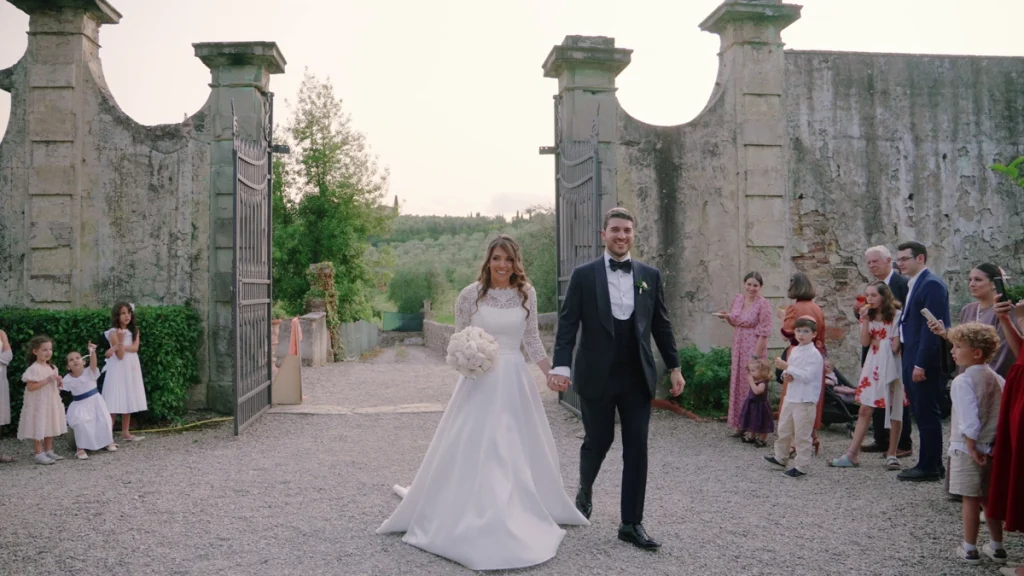
A wedding film shot in Tuscany in October carries a visual richness that owes nothing to post-production and everything to the quality of the world outside the window. Beyond the purely visual, there is an atmosphere to autumn in this region that suits a certain kind of wedding. The tourist crowds have thinned, the roads between hill towns are quieter, and the local rhythms have slowed to something more deliberate. Restaurants and estates that spent the summer at full capacity recover a sense of intimacy. Exclusive venues become, once again, genuinely exclusive. November asks more of couples willing to consider it: the weather is less predictable, the days are shorter, and the landscape has moved past its cinematic peak into something starker. Yet for those drawn to atmosphere over spectacle, even November has its argument: a low mist over the Val d’Orcia at dawn, the last light disappearing behind a ridge by four in the afternoon, a fire already burning inside when the guests arrive.
Winter: Intimacy and Unexpected Elegance
Very few couples choose to marry in Tuscany in winter, and the reasons are not difficult to understand. The days are short, the weather unpredictable, and the landscape has shed the visual abundance that draws most destination wedding couples to the region in the first place. The iconic imagery of rolling hills and sun-drenched terraces belongs to another season entirely. For anyone whose idea of a Tuscan wedding is anchored in that particular aesthetic, December through February will feel like the wrong answer. And yet, for a specific kind of couple, winter here offers something that no other season can: an almost complete absence of competition for the atmosphere of the place.

The hill towns empty out. The agriturismo that hosted three weddings every weekend in September now belongs entirely to whoever is staying there. Historic villas that are genuinely difficult to experience with any sense of privacy during peak season become, in winter, exactly what they were built to be: retreats, in the full meaning of the word. The visual register shifts accordingly. Mist collects in the valleys at dawn and burns off slowly, leaving a landscape that looks less like a postcard and more like a painting from an earlier century. Interior spaces come into their own: the firelight inside a stone sala, candlelight against frescoed walls, the particular quality of winter afternoon light through tall windows.

For wedding videography, these conditions present different challenges and different rewards. The footage tends toward intimacy rather than grandeur, toward warmth rather than luminosity, and in the right hands it produces films with a depth and stillness that summer, for all its generosity, rarely achieves. A winter destination wedding in Tuscany is, above all, a deliberate choice. It asks couples to let go of a certain idea of the place in order to discover another, quieter one. Those who make that trade rarely regret it.
The Light Question
Every conversation about when to marry in Tuscany eventually arrives at the same point, whether the couple realizes it or not: light. Not the weather forecast, not the temperature, not even the state of the countryside. Light is the variable that determines, more than any other, what a wedding day will look like on camera and what it will feel like to watch years later. This is worth understanding with some precision. Natural light is not simply present or absent. It has direction, color temperature, intensity, and duration, and each of these qualities changes substantially across the calendar. The high Tuscan sun of July hits a white stone courtyard at noon and produces contrast so extreme that faces in shade become almost unreadable on screen while sunlit surfaces blow out entirely.

Managing this is possible, but it requires compromises that a more forgiving light simply does not demand. Spring and autumn offer something cinematically closer to ideal: a sun that never climbs as high, that moves across the sky at an angle which keeps shadows long and surfaces warm throughout the day. The duration of usable light matters too, in ways that affect the entire structure of a wedding day. Summer evenings in Tuscany extend the shooting window considerably, allowing outdoor receptions and portrait sequences to continue well into the evening with natural light still available.

Winter compresses everything, and while the quality of winter afternoon light can be extraordinary, its brevity requires a different kind of planning. For wedding videography specifically, the relationship between season and light is fundamental to what becomes possible in the edit. Footage shot in good light carries an inherent emotional quality that no color grade can manufacture after the fact. The best wedding films from Tuscany are not the product of technical intervention alone; they begin with a couple who chose their season wisely, and a videographer who knew exactly what that season would give them to work with.
Read also: Under the Tuscan Sun: Inside Wedding
Choosing the Venue with the Season in Mind
The relationship between a Tuscan venue and the season in which it is experienced is closer than most couples initially appreciate. A property that feels magnificent in October can feel exposed and unforgiving under the full heat of August. A courtyard that comes alive with firelight and enclosure in winter may lose all sense of intimacy when thrown open to summer crowds. Choosing a venue and choosing a season are, in the most meaningful sense, a single decision, and they should be made together.

Belmond Castello di Casole, a tenth-century castle set within one of the largest private estates in Italy, presided over by cypress-lined avenues and surrounded by vineyards and olive groves, reads differently across the calendar in ways that matter enormously to the wedding film. In late September and October, the estate’s stone architecture catches the low autumn light with extraordinary warmth, and the surrounding landscape shifts into the kind of color palette that needs no intervention from a colorist in post-production. In summer, its terraces and ancient amphitheatre come fully into their own for larger celebrations under a long evening sky.

Villa Cetinale, a Roman Baroque residence completed in 1680, offers a different proposition entirely. Its cypress-lined staircase, expansive formal Italian gardens, and long geometric perspectives create a setting that is already composed for the camera before anyone raises a lens. Here, the season determines not whether the location is beautiful, but which of its several beauties is most legible: the garden in spring, dense with wisteria and climbing roses, produces a visual register quite distinct from the same space stripped back and architectural in winter. For wedding videography, this dialogue between place and season is where much of the creative thinking actually happens. A videographer who knows these properties across different times of year arrives with a completely different sense of where to position, when to move, and which corners of the estate will reward attention at a given hour of a given month. The venue provides the stage; the season determines the light; and the film that results is the record of how intelligently those two things were understood together.
Read also: 15 Best Places To Get Married In Tuscany
What a Destination Wedding in Tuscany Actually Requires
There is a version of the Tuscan destination wedding that exists in the imagination: effortless, golden, arrived at with a phone call and a deposit. The reality is more demanding, and understanding that early is one of the most useful things a couple planning from abroad can do for themselves. The first constraint is time. The most sought-after venues in Tuscany, the estates with the architecture, the grounds, and the privacy that make a wedding film worth watching years later, are typically booked twelve to eighteen months in advance, sometimes more for peak-season dates. The same applies to the professionals who know these properties well: experienced local wedding planners, cinematographers, photographers, and florists with genuine knowledge of the territory operate with waiting lists that reward early commitment and penalize hesitation.
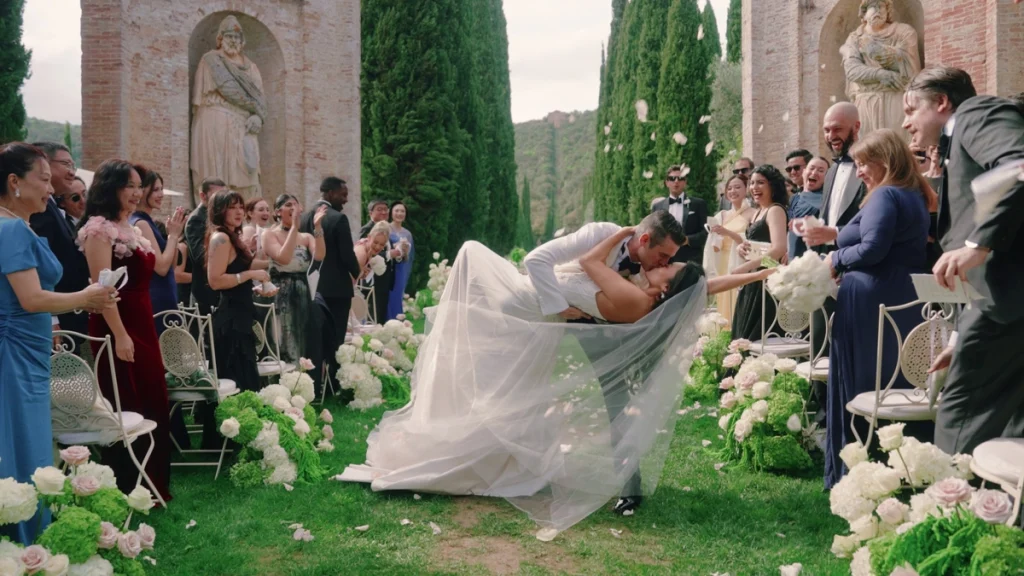
For international couples, there is also the legal dimension. Celebrating a civilly recognized marriage in Italy requires paperwork that varies by nationality, residency status, and the specific municipality involved. Some couples resolve this by handling the legal ceremony at home and treating the Italian celebration as a symbolic one, which is logistically simpler and increasingly common among destination wedding clients. Either way, the distinction matters and should be clarified early, ideally with the help of a local wedding planner who has navigated the process before. The question of team composition deserves more weight than it typically receives. A destination wedding in Tuscany is not simply an event that happens to take place in a beautiful location. It is the product of a network of people who understand the region, its light, its vendors, its seasonal rhythms, and its particular logistical character. A videographer who has filmed at a given estate in October knows where the late afternoon sun falls and which garden path opens up at dusk. That knowledge is not transferable and cannot be replicated on the day. It is accumulated over years of work in a specific place, and it shows in the footage.
Read also: Italian Videographer: Why Choosing a Local Professional in Italy Makes All the Difference
What October Looks Like, Thirty Years Later
Tuscany does not age in a wedding film the way other places do. A ballroom looks dated within a decade. A beach resort carries the specific weight of its era. But a Chianti hillside in October, stone walls catching the last of the afternoon light, a long table set under a pergola while the vineyard turns copper in the background: this footage does not date. It deepens. This is one of the less obvious arguments for choosing both destination and season with genuine care. The wedding film is not only a record of a day. It is the visual environment a couple will return to across the years, and the landscape it contains becomes, over time, part of how they understand their own story. The Tuscany of their October, the particular quality of that light, that air, that hour, becomes inseparable from the feeling of having been young and certain and together in a place that seemed to have been waiting for exactly that moment.

Couples who return to Tuscany years later often describe something that is difficult to articulate: the landscape feels familiar in a way that goes beyond having been there before. The region holds the memory of the day in its physical character, in the angle of autumn light that is the same every year, in the smell of harvested earth, in the stillness of a hill town on a weekday afternoon. The film and the place exist in conversation with each other across time. What cinematic wedding videography preserves, at its most considered, is not an event but a world. The choice of where and when to marry in Tuscany shapes the texture of that world completely. A couple who understood this when they booked their season, their venue, and their videographer will feel it most clearly not on the wedding day, but on an ordinary evening thirty years later, watching the light move across a Sienese hillside and recognizing it, still, as their own.