
A wedding film either grows old or it doesn’t. Watch enough of them and the pattern becomes obvious: the ones shot to impress a crowd in the first six months fade fastest, while the ones built with real attention to the people in front of the lens keep their pulse for decades. It has little to do with the camera used, and everything to do with a videographer‘s willingness to follow the couple rather than the fashion of the season. This is not a small distinction, and it shapes everything that follows. It shapes how a videographer approaches light and how a marriage ceremony in a Sicilian courtyard or a Tuscan villa is read, framed, and paced. It shapes the instinct to reach for grain and texture rather than polish for its own sake, and the discipline required to resist a trend that will look dated within a handful of years.

It shapes, too, the quieter questions a couple rarely thinks to ask before hiring someone to document their wedding: what happens to a film once the applause has faded, once the guests have gone home, once the two people at its centre have grown older than the parents who once stood beside them. What follows is an attempt to trace that quality across its different forms, from the sensory pull of moving image over still photography, through the evolution of wedding cinematography as a craft, to the particular alchemy of choosing Italy as a setting and assembling the right hands to shape the day. Along the way, a single conviction persists: a wedding film endures not because it captures a spectacle, but because it captures two people, honestly, in light that will still catch them, long after that room has been emptied and repainted for someone else’s evening.
When a Photograph Is No Longer Enough
A photograph holds a single breath. It is generous in its stillness, precise in what it chooses to preserve, yet it asks the viewer to imagine everything around that frozen second: the laughter that came before, the voice that followed, the way a hand moved before it settled into that particular gesture. A wedding film works differently. It does not ask for imagination. It returns sound, cadence, the specific timbre of a father’s voice cracking mid-toast, the unrehearsed glance exchanged across a room before either person realised they were being watched by the camera at all. This is the quiet argument for wedding videography that no brochure quite manages to say aloud: certain things cannot be hung on a wall, yet they are, in the end, more powerful for it.
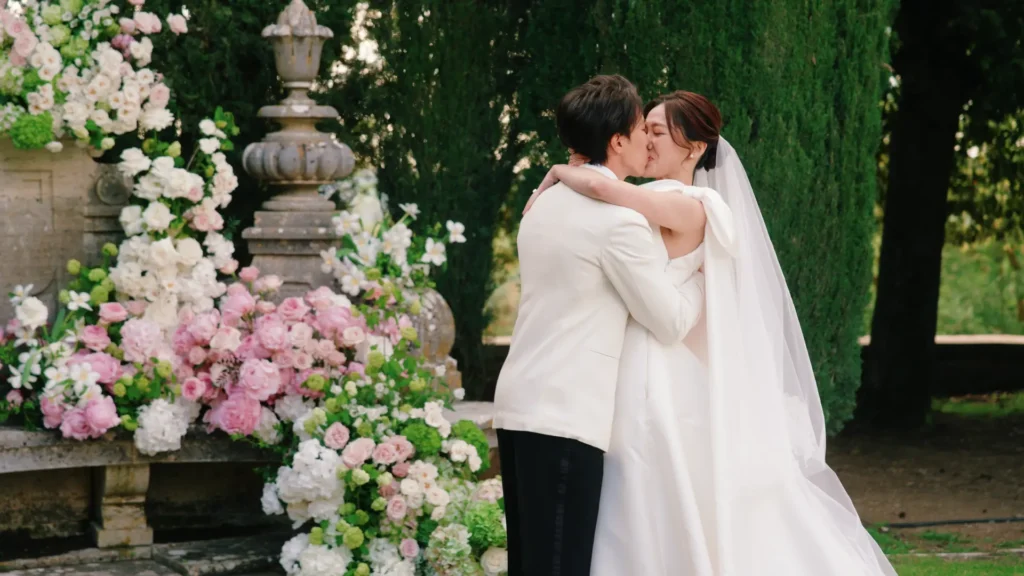
Picture a couple years from now, settled into a sofa that has replaced the one they owned on their wedding day, pressing play on a film they have not opened in a long while. The faces on screen are younger, children who once ran across a garden built for another century now have children of their own. That is not nostalgia manufactured for effect. That is what a wedding video is built to do. And the medium has grown more generous still. A well-shot film today yields far more than motion; individual frames pulled from the footage carry an incredible cinematic depth, because they arrive shaped by the same light, the same lens work, the same attentiveness to composition that defines the video of the wedding as a whole. The camera, in this sense, offers something the still image was never equipped to hold: time, moving, and people exactly as they sounded.
A Brief History of the Watching Eye
For most of its history, wedding videography belonged to amateurs. An uncle with a camcorder, a fixed tripod at the back of the church, footage that wandered and lingered too long on the wrong faces. Nobody thought of light. Nobody thought of sound beyond whether the vows could be heard over a restless crowd. What existed was documentation, useful, occasionally touching, rarely beautiful. The shift did not arrive all at once. It came through better lenses first, then through editors who had trained on something other than family archives, then through a generation of filmmakers who looked at a wedding and saw not an event to record but a story to direct. Composition began to matter. A shaft of afternoon light crossing a stone hallway became worth waiting for. The rhythm of a scene, how long to hold on a bride’s hands, when to cut away to the sky before the first dance, started to carry the same weight it carries in narrative film.

What distinguishes a wedding film today from its ancestors is precisely this: an authorial eye. A videographer now works the way a cinematographer works, reading a room for its natural light before deciding where a camera should stand, anticipating a gesture rather than merely catching it, building an atmosphere through pacing and colour rather than simply pointing and recording. Sound design has followed the same trajectory, with ambient audio layered and shaped rather than left to fend for itself. This evolution matters because it changes what a couple is actually commissioning. They are no longer hiring someone to preserve an event. They are hiring a director, in the fullest sense of that word, someone whose visual instincts belong to cinema and who happens to have turned that instinct toward the particular, unrepeatable choreography of a wedding day. The craft has not simply improved. It has become, quietly and without needing to announce itself, an art form in its own right.
Read also: The Story Of Wedding Videography: Capturing Love Through The Ages
On Audiences, Old and New
There was a time when a wedding was witnessed by the people standing in the room, and by no one else. That circle has widened considerably. A ceremony held on a hillside in Umbria might now be seen, within hours, by hundreds of people who were never there, glimpsed in fragments on a screen somewhere between one scroll and the next. This is simply how the era works, and there is nothing to mourn in a couple wanting to share what they built that day. Yet it raises a question worth sitting with quietly, without judgment attached to either answer. A wedding film shot for an audience of thousands behaves differently than one shot for an audience of two. The first chases immediacy, a highlight built for attention that lasts seconds. The second can afford patience.

It can hold a shot a beat longer than trend allows, let a silence sit, trust that the people watching years from now will not be scrolling past it but sitting still, in their own home, giving it their full and undivided evening. This is where the real value of wedding videography tends to surface, not in how widely a film travels but in how it survives its own repetition. A version built purely for public circulation rarely rewards a second viewing, let alone a tenth. A film built with restraint, shaped by someone thinking about a living room a decade from now rather than a feed this week, becomes something a couple returns to precisely because it was never designed to perform. Perhaps both things can be true at once. A couple can share what they wish with whoever is watching, and still commission something meant for no one but themselves, a private cut of the day that asks only to be opened, occasionally, within their own four walls.
Read also: Should You Share Your Wedding Video on Social Media?
On Grain, and Light That Refuses to Be Perfect
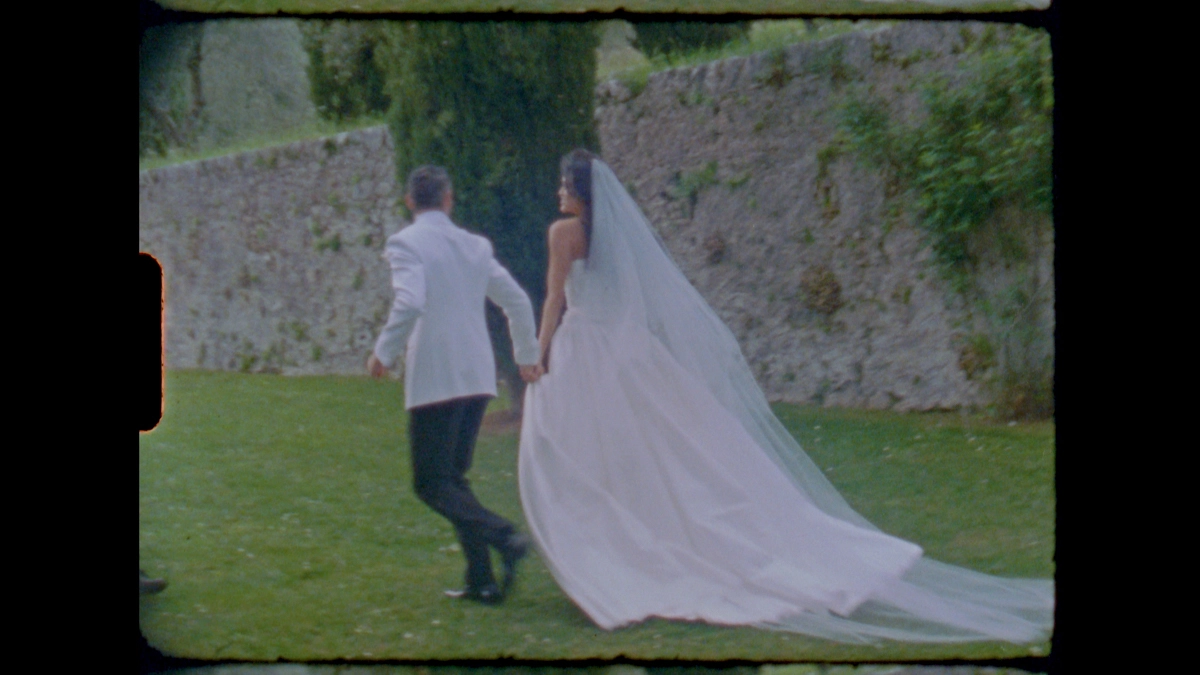
Somewhere in the last few years, couples started asking their videographer for something rougher. Not rougher in craft, but in texture: the soft flicker of Super8, the warm instability of VHS, footage that looks handled rather than rendered. It is a curious request in an age defined by artificial intelligence and images sharpened past the point of believability, and it says something worth pausing on. Grain is not simply an aesthetic choice. It is a signal the eye reads before the mind has time to interpret it, a texture the brain associates, almost instinctively, with memory itself.
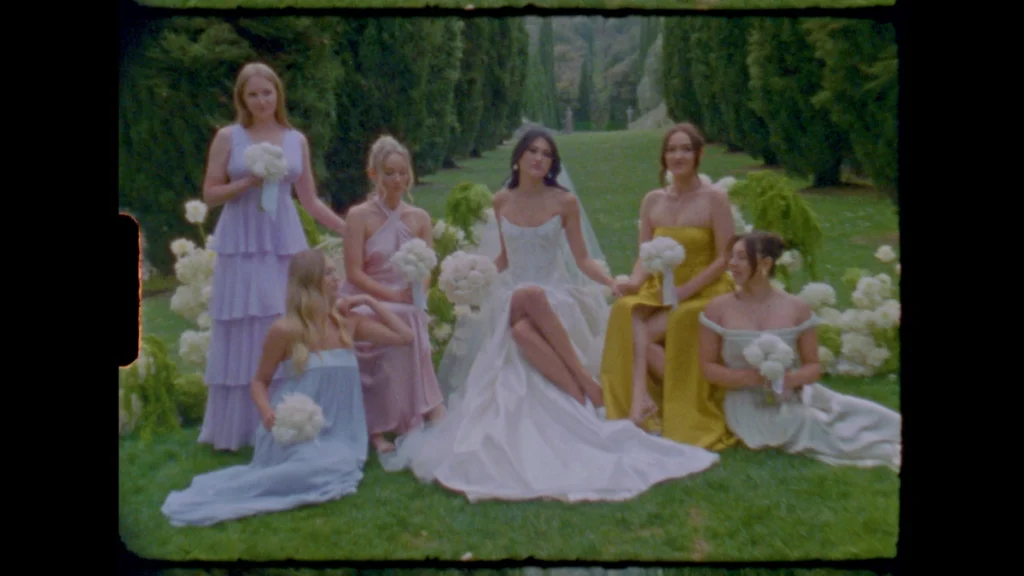
Home movies looked this way. Childhood looked this way, if it was recorded at all. So when a wedding film borrows that same imperfection, softened light, gentle distortion, colours that bloom rather than sit flat, it is speaking a language the viewer already trusts. This is precisely why the format resists being dismissed as nostalgia for its own sake. A couple married last spring did not live through the Super8 era, yet a reel shot in that register feels, to them, oddly closer to truth than footage rendered with clinical precision.
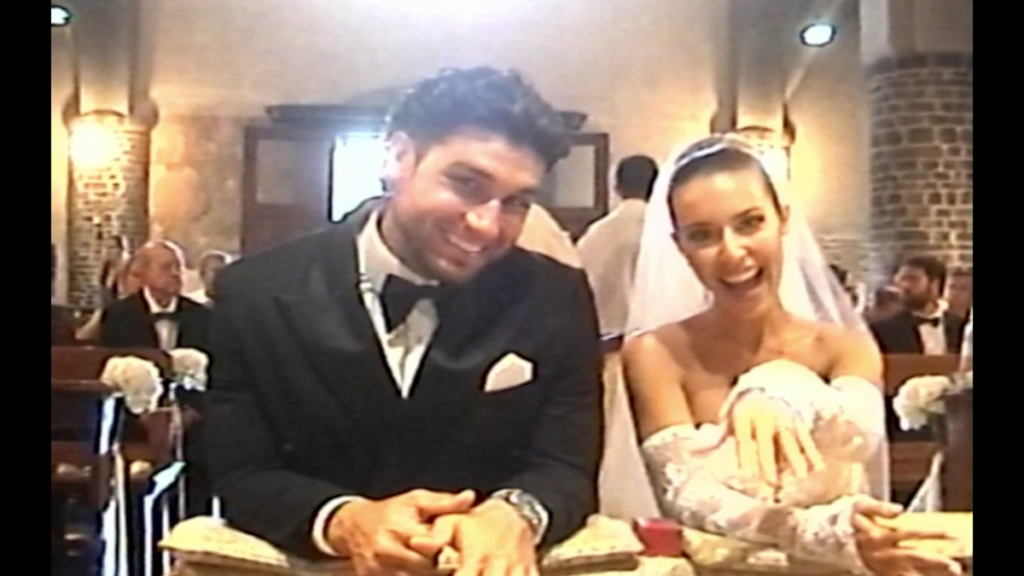
In a moment when digital tools can manufacture flawless faces and frictionless motion, a videographer who deliberately introduces grain, softness, a flicker of instability, is making an argument for authenticity through imperfection rather than despite it. There is craft in getting this right. Vintage texture applied carelessly reads as gimmick. Applied with intention, matched to the light of the day, the mood of the couple, the pacing of the wider film, it becomes atmosphere rather than filter. It reminds the viewer, gently, that what they are watching was lived once, by real people, in a room that existed only for an afternoon.
Italy, Written in Light
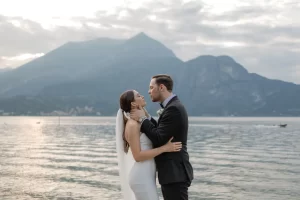
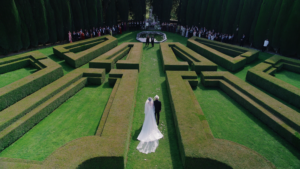
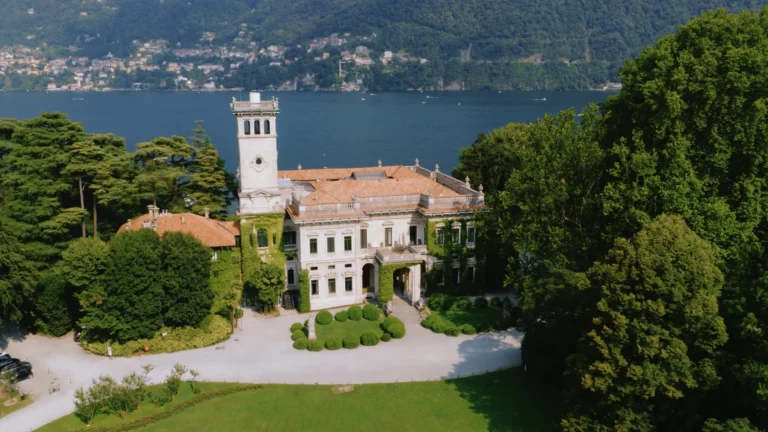
Few countries offer a videographer this range of visual language within a single border. A wedding on the Amalfi coast unfolds against cliffs that fall straight into water the colour of glass, light bouncing off stone and sea until the whole frame seems to glow from within. A ceremony on Lake Como sits inside a different register entirely, villas with frescoed ceilings and gardens cut with the precision of another century, mist settling over the water in early morning that no lighting rig could ever manufacture. Move inland to Tuscany and the register shifts again: cypress-lined driveways, stone farmhouses softened by centuries of sun, a green that changes tone with every hour of the day.
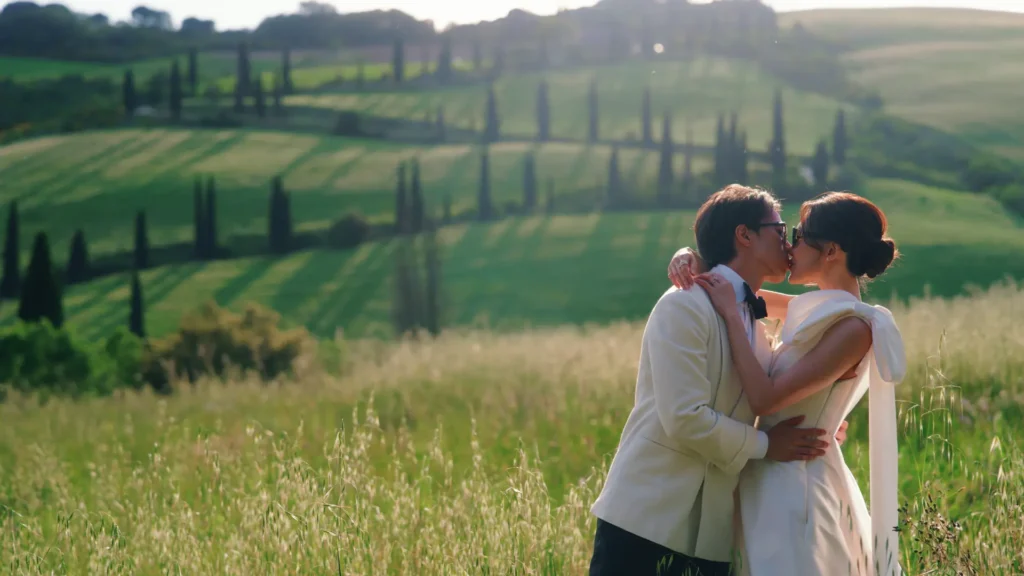
This variety matters enormously to how a wedding film is built, because location is never simply backdrop. It dictates pacing, colour palette, the rhythm at which a camera is allowed to move. An aristocratic villa on Lake Como asks for stillness, long held shots that let its architecture breathe. A coastal terrace in Puglia asks for something looser, sun-bleached and unhurried, closer to a summer memory than a formal portrait. A good videographer reads these differences instinctively, letting the region itself dictate certain choices about atmosphere long before the couple has said a single word about their taste.

What makes this especially valuable is what happens later, when the film is reopened years after the wedding. The landscape does not simply appear behind the couple. It returns the viewer bodily into that specific place, the particular slant of Tuscan afternoon light, the exact blue of a lake few countries can replicate. Choosing Italy as a setting is, in this sense, choosing a co-author for the wedding video itself, one whose contribution to the final story is written not in dialogue but in landscape, texture, and light that no other country happens to offer in quite the same way.
Read also: Destination Weddings in Italy: North, Central & South Compared
Directing the Day Itself
Long before a camera begins to roll, a wedding is already being directed, just not by the videographer. A wedding planner is negotiating timings with a kitchen in Positano. A florist is deciding, at five in the morning, whether the peonies survived the drive from the market. A venue coordinator is quietly resolving a seating conflict that the couple will never hear about. None of this appears in the final film, and yet all of it determines how that film will feel.
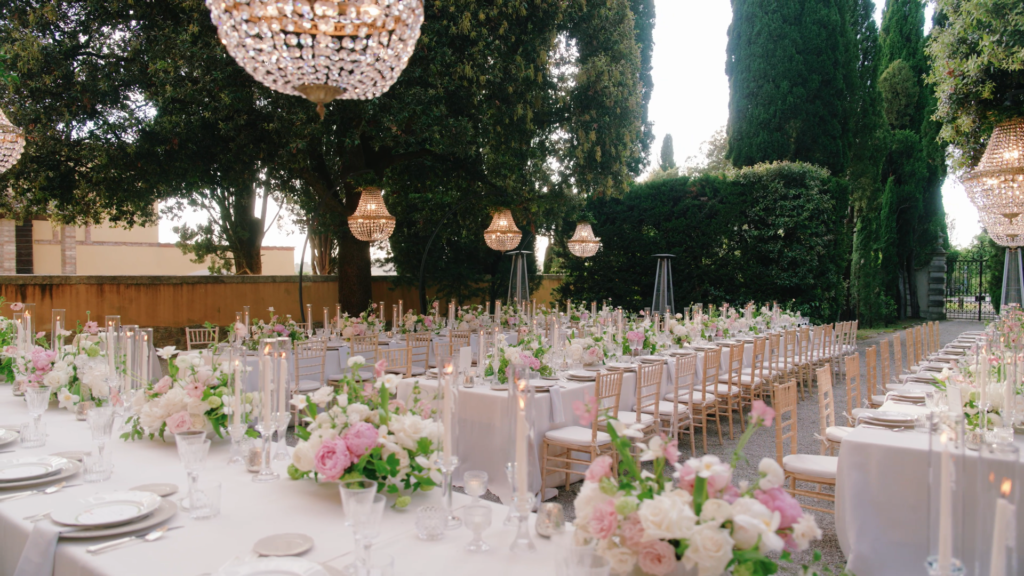
This is worth saying plainly: a couple’s composure on their wedding day is not a personality trait, it is usually the product of good logistics. When the schedule holds, when the flowers arrive on time, when nobody needs to solve a crisis mid-ceremony, the two people at the centre of the day are free to actually inhabit it. And a camera, however skilled the person behind it, can only work with what is genuinely there. A tense jaw, a distracted glance toward a malfunctioning microphone, a bride mentally tracking whether her sister found the venue in time, these things read on screen.

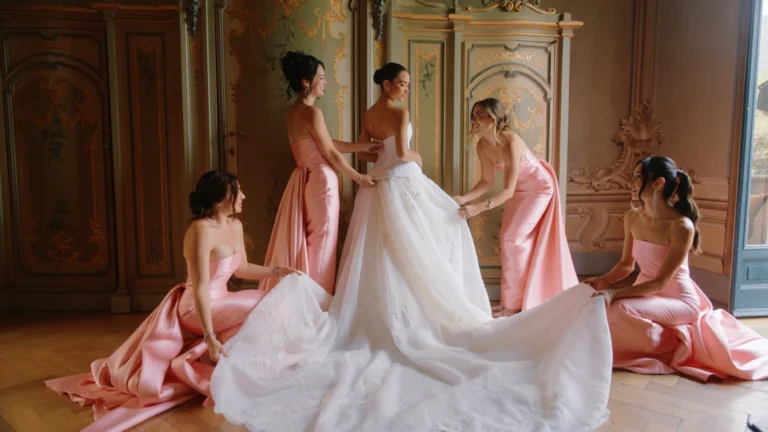
Ease reads on screen too. This is why the strongest wedding films in Italy tend to emerge from weddings where the couple trusted their team enough to stop managing the day themselves. A videographer benefits enormously from a planner who runs a tight schedule, because it means the light is still good when the toasts happen, the golden hour has not been swallowed by a delayed dinner, the couple is relaxed rather than rushed from one photograph to the next. In this sense, every professional on site is, in some quiet way, contributing to the video before a single frame is shot. The final wedding film does not simply record the day. It inherits its atmosphere from how well that day was built.
Read also: How to Look Natural on Camera During Your Wedding
Recognising the Right Eye for Your Story
Choosing a videographer is, in practice, choosing whose sensibility will shape how your marriage is remembered, which makes it worth more scrutiny than a two-minute trailer can offer. A highlight reel is built to seduce, cut to its most dramatic seconds, scored to swell at exactly the right moment. It tells you almost nothing about pacing, about how someone handles a lull in the day, about whether their eye holds steady when nothing dramatic is happening at all. Ask instead for a full wedding film, start to finish, and watch how it breathes.

Portfolio consistency matters more than portfolio size. A body of work that shifts wildly from one aesthetic to the next often signals someone still finding their voice, or someone willing to bend entirely toward whatever a client requests. What you want is recognisable intent: a particular way of handling light, a consistent restraint in editing, an atmosphere that feels authored rather than assembled. If that visual language moves you before you have even considered the couples in the frame, it is a strong sign the same sensibility will know what to do with yours.

Recognition within the industry is worth weighing too, not as a vanity metric but as a rough proxy for peer respect, the kind that comes from consistently sound craft rather than a single viral moment. And because so many of these choices are now made online, from a distance, often before ever meeting the person behind the camera, a certain instinct for trust becomes necessary. Look for clarity in how they communicate, thoroughness in how they plan, warmth in how they discuss couples they have filmed before. A videographer worth hiring sight unseen tends to reveal that seriousness well before the wedding day itself, in the quality of every exchange leading up to it.
Craft, Truth, and What Endures
Everything discussed so far happens before or during the wedding. What follows it, quietly, in an editing suite over the following weeks, is where a wedding film either fulfils its promise or falls short of it. Color correction alone can transform a day: warming a grey sky into something closer to how it actually felt to stand beneath it, balancing skin tones across a dozen different lighting conditions so the film reads as one coherent world rather than a patchwork of settings. Sound design does equally quiet, equally decisive work, layering ambient noise beneath dialogue, smoothing the transition between a vow spoken outdoors and a toast delivered indoors, until the ear never notices the seams.

Music choice carries perhaps the heaviest weight of all. A score chosen to match a current trend will likely feel dated within a few years, tethered to a sound that belonged to a particular season rather than to the couple themselves. A score chosen because it genuinely reflects who they are, what they listened to, what stirred something in them during the planning of the day, tends to hold up regardless of what happens to musical fashion afterward. The same is true of pacing, of color grading, of every stylistic decision layered into the edit. Trends pass. Identity does not.

This is, in the end, the quiet argument running beneath everything written here. A wedding film lasts not because it followed the aesthetic of its moment impeccably, but because someone behind the camera, and later behind the editing timeline, chose to chase something truer than trend: the particular light of that day, the specific sound of those voices, the unrepeatable atmosphere two people built together. Approached this way, a wedding day does not need to be perfect to be worth filming well. It only needs to be genuinely theirs. The rest, given time and the right hands, tends to take care of itself.