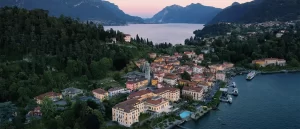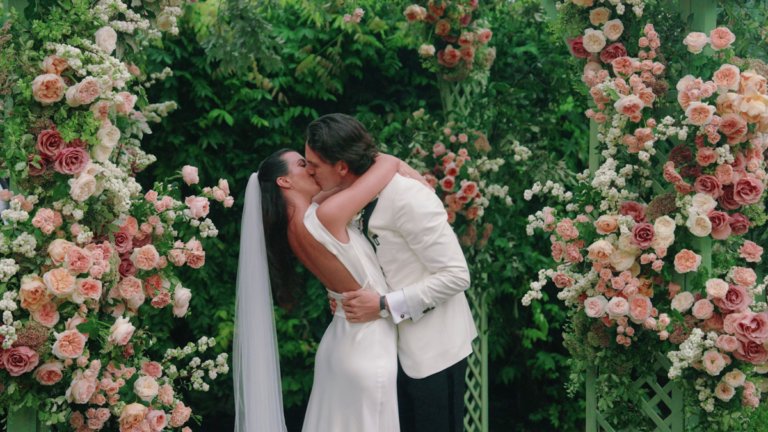

Italy is one of the most beautiful countries in the world, rich in history, art, culture and landscapes like few others. This richness is not the result of a single era or a single tradition, but of a continuous layering that has developed over centuries, leaving traces that are still visible today. It is therefore no coincidence that Italy has the highest number of sites recognized by UNESCO, the United Nations agency that since 1972 has been identifying and protecting places of outstanding universal value, considered significant for all humanity. With 60 sites listed as World Heritage, Italy holds a record that reflects its role in European cultural and landscape history.
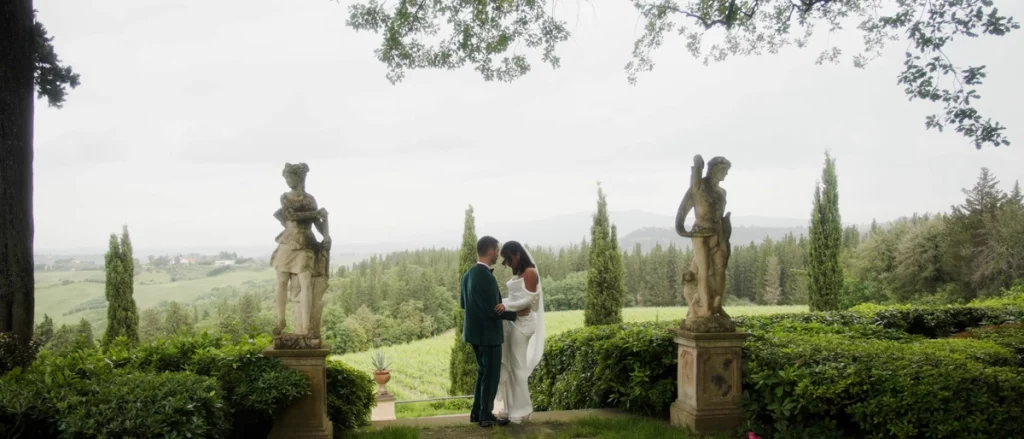
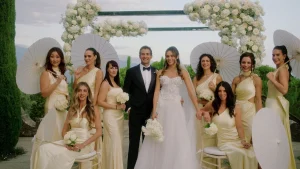
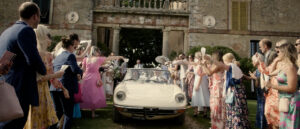
Many of these sites are not just monuments or backdrops to observe from a distance, they are still part of everyday life, crossed, inhabited and used. It is this continuity that makes them particularly appealing for those choosing to get married there. In recent years, more and more foreign couples are choosing Italy for their destination weddings not only for its aesthetic reputation, but also for a combination of practical factors, the variety of locations, generally favorable climate, a world-renowned culinary tradition, and a strong cultural identity. Getting married in Italy often means traveling long distances to reach a place that has only been seen in images, and that for one day becomes part of a personal history.

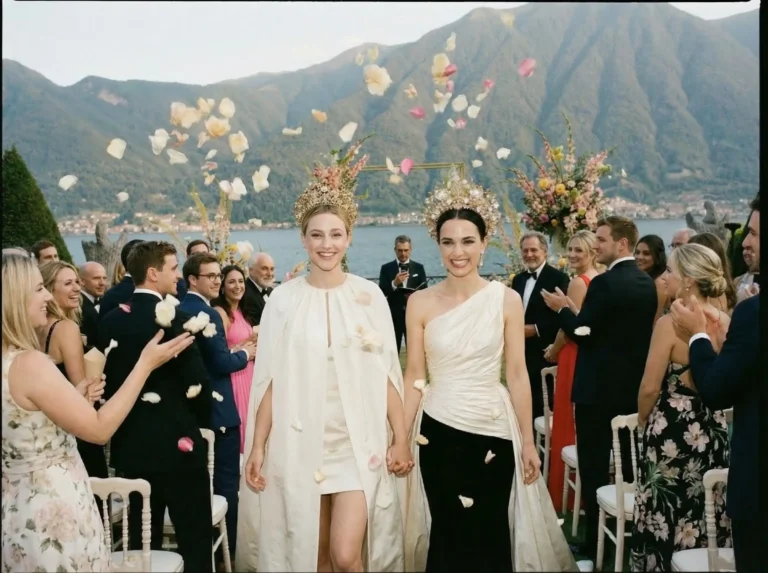
In this way, a wedding goes beyond being a private event and becomes a shared experience, intertwined with places that have a strong historical and cultural identity. Italian UNESCO sites are immediately recognizable, even over time, and this influences the way the wedding is remembered and told. Wedding video, in particular, becomes a useful tool to capture not only what happened, but also where it happened and the type of space in which the day unfolded. When the ceremony takes place in a historic center, a historic residence or a protected natural landscape, the setting stops being a mere backdrop and becomes an integral part of the story, shaping the rhythm, atmosphere, and overall meaning of the experience.
The Amalfi Coast
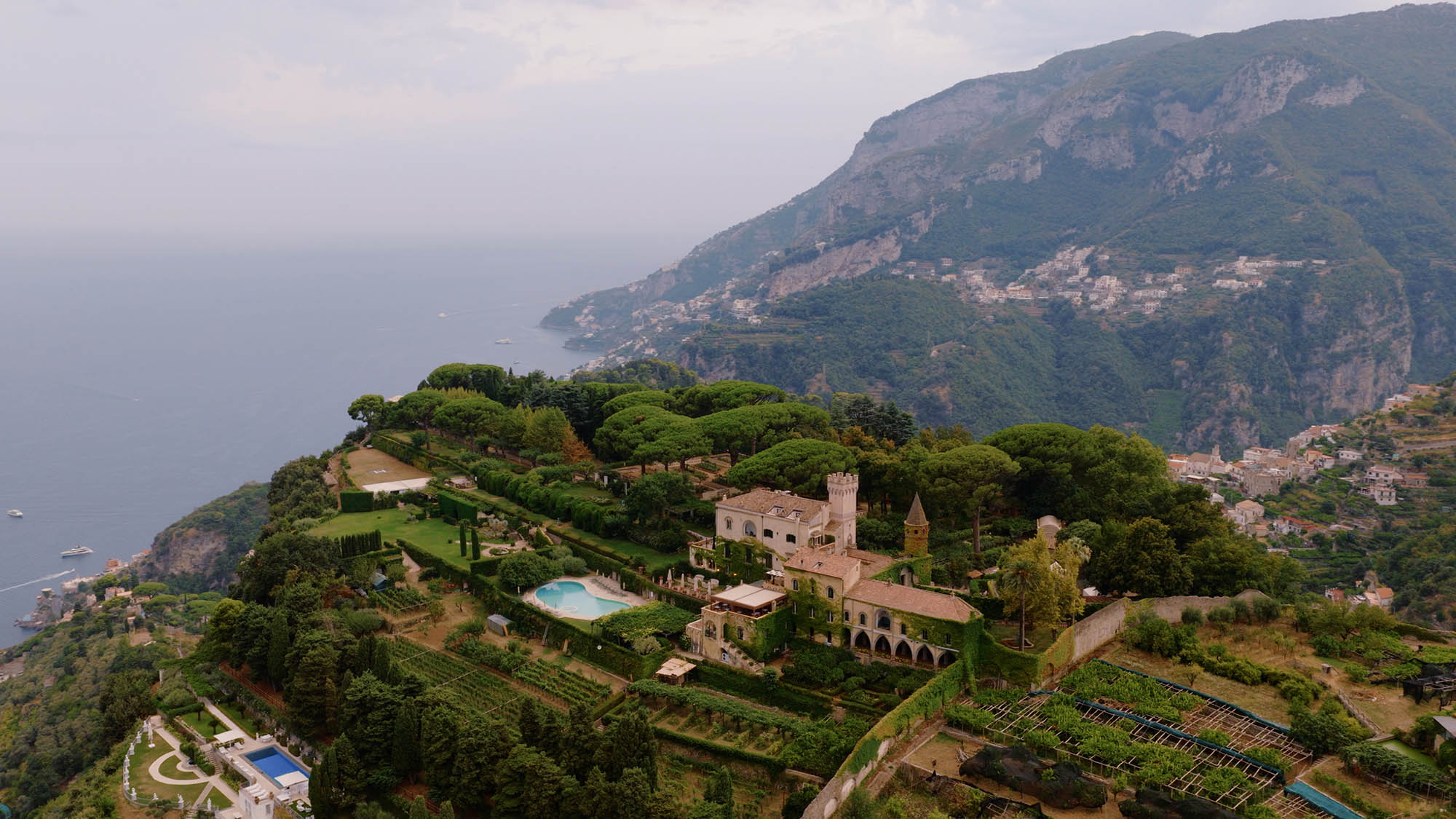
The Amalfi Coast is one of the most iconic Italian destinations for those who wish to celebrate their wedding by the sea. Recognized as a UNESCO World Heritage Site in 1997, this coastal region appears like a balcony suspended between the cobalt blue sea and the slopes of the Lattari Mountains, in a harmonious succession of valleys and promontories where the Mediterranean landscape reaches its fullest expression. Along the coast, several seaside villages each maintain their own character and distinctive aesthetic, such as Amalfi, Positano, and Ravello, climbing the cliffs with their colorful houses and cobbled streets, where many newlyweds enjoy taking a ride on the typical Vespa scooters.

The clear waters of the Tyrrhenian Sea form a natural backdrop to lush gardens cultivated with citrus trees, while panoramic terraces offer views that appear almost hand-painted. Wedding venues range from historic villas with centuries-old gardens to 13th-century monasteries converted into charming hotels, from 11th-century noble palaces with original frescoes to private terraces suspended above the cliffs. Here, it is possible to hold both religious ceremonies in the atmospheric local churches and civil rites in exclusive locations with sea views.
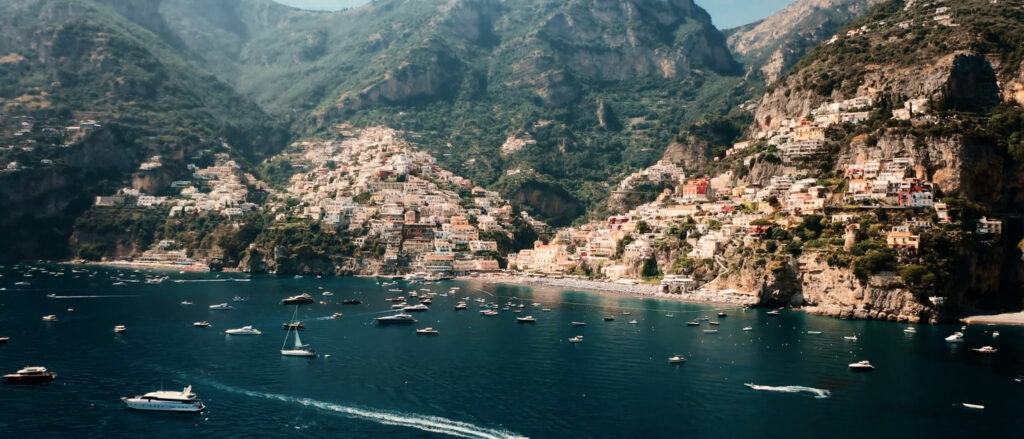
The versatility of the Amalfi Coast allows for intimate weddings in private chapels or grand receptions for hundreds of guests, always with the guarantee of a dreamlike setting. The local culinary tradition, featuring fresh seafood and the famous coastal lemons, the possibility of accessing venues by sea, and the warmth of Campanian hospitality complete an experience that leaves a lasting impression on both the couple and their guests.
Read also: Between Sky, Sea and Mountains: Elopement in Amalfi Coast
Siena and Its Historic Center
Siena is a city that still retains the compact and easily recognizable structure of its medieval past. Its historic center, a UNESCO World Heritage Site, is made up of narrow streets, irregular squares, and brick palaces, creating an urban environment that has remained remarkably coherent over time. For those choosing to get married here, the feeling is that of stepping into a place that has never stopped being itself, providing an artistical and architectural frame that is clear and immediate visually: the materials, colors, and proportions belong to a city that does not need additional staging.

Piazza del Campo is where everything converges. It is a square that is hard to forget, both in form and atmosphere: its gentle slope, the patterned paving, and the profile of the Palazzo Pubblico and Torre del Mangia, which changes with the light throughout the day. Couples celebrating their wedding nearby, or filming a post-ceremony video, will find a setting that works well on camera not simply because it is “beautiful,” but because it is coherent, readable, and instantly recognizable. It is the kind of place that tells viewers where they are without any explanation.
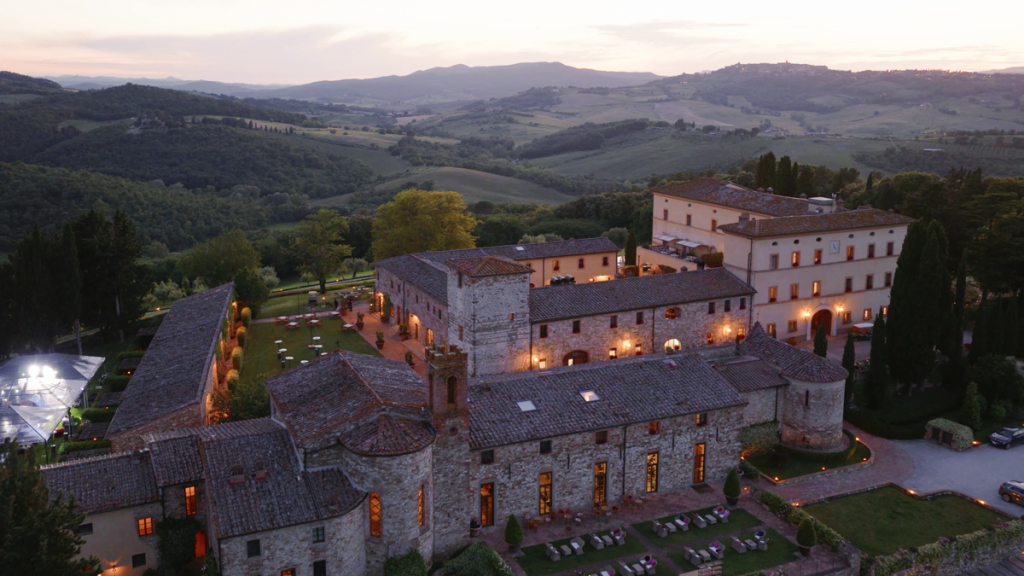
Just a few steps away, the Siena Cathedral offers another dimension, richer in detail and contrast. The black-and-white striped façade, the decorated floor, and the artworks inside provide multiple opportunities for couples who want a wedding video with a more intimate atmosphere, removed from the open urban spaces. Siena is also a convenient starting point for exploring the surrounding area. San Gimignano, Monteriggioni, and the Val d’Orcia are all within a short drive, offering different landscapes, more expansive and rural, which are ideal for those who wish to alternate urban settings with quieter, more relaxed scenery.
Read also: Three Days of Love in Tuscany: Belmond Castello di Casole Wedding
Medici Villas and Gardens in Tuscany
Tuscany is one of the Italian regions richest in history, dotted throughout with Renaissance villas featuring stunning Italian-style gardens. The Medici villas and gardens are a widespread network of historic residences built between the fifteenth and eighteenth centuries by the Medici family, the most influential dynasty that ruled Florence for centuries. Their recognition as a UNESCO World Heritage Site is not based solely on architectural value: these villas are considered an original model of the relationship between noble residences, the surrounding landscape, and agricultural activities, a type of territorial organization that deeply influenced the concept of the European villa. Today, they represent a network of very diverse locations, often away from the busiest tourist routes, offering a setting for a wedding in Tuscany that is elegant without feeling staged.
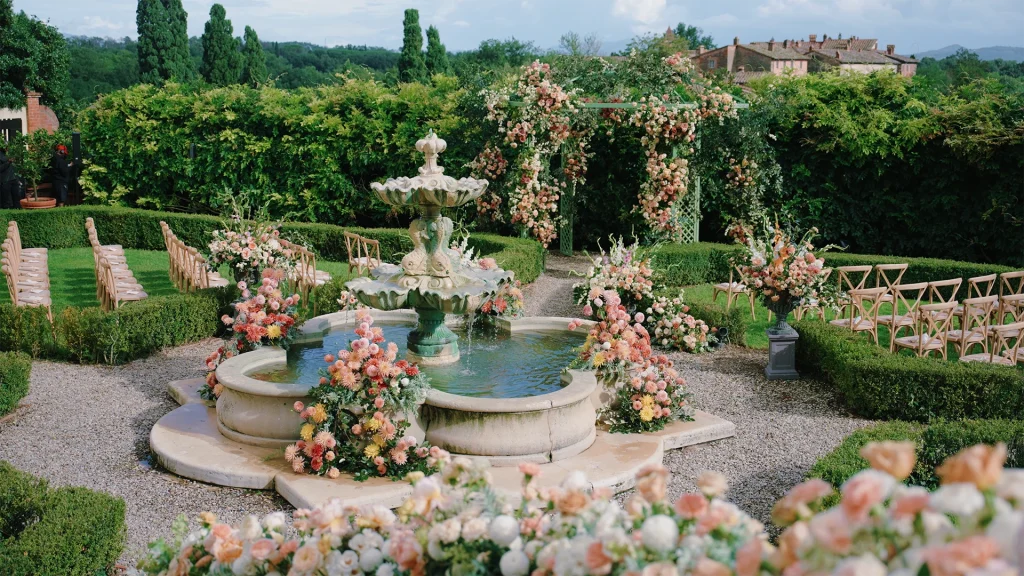
The most famous villas, such as Villa di Castello, Villa La Petraia, Villa di Poggio a Caiano, and Villa di Artimino, are characterized by impressive but restrained architecture, meticulously designed gardens, and a direct connection with the surrounding landscape. Many still retain the Renaissance geometries of their avenues, panoramic terraces, and green spaces intended to be walked through rather than merely observed. For those planning a wedding video, this provides airy, well-lit environments that are easy to capture: clean lines, wide perspectives, soft shadows created by hedges, centuries-old trees, and open loggias.

Another advantage is their location. The Medici villas are spread across the hills around Florence, Prato, Pistoia, and the Mugello area. This allows couples to combine the ceremony with short trips to nearby villages, olive groves, and vineyards without long journeys. International visitors also find Florence convenient as a hub for accommodation, catering, and wedding-related services. Compared to other, more iconic locations in Tuscany, the Medici villas offer a less predictable and more intimate experience. They are spaces suited for couples seeking a historical setting, but who prefer to avoid mass tourism and opt for environments where history is present and tangible, yet unobtrusive.
Florence and Its Historic Center
The historic center of Florence is one of the most recognized places in the world for its artistic density and urban quality. Unlike the Medici villas, which reflect the private and territorial dimension of the Medici power, here their public legacy is on display: palaces, churches, and squares that helped define the imagery of the European Renaissance. In Florence, architecture and art are so distinctive that they do not simply serve as a backdrop, but shape the way people move and orient themselves through the city. The most iconic point is naturally Piazza del Duomo, where the Cathedral of Santa Maria del Fiore, the Baptistery, and Giotto’s Campanile form a complex yet surprisingly coherent ensemble.

The abundance of details, from the famous polychrome marble to reliefs and monumental doors, provides an artistically rich context, though not always easy for wedding videographers. Capturing a wedding video here requires careful attention to light and distance, as spaces are narrow and often crowded. Still, any footage immediately conveys a strong sense of place. A short walk away, Piazza della Signoria represents the city’s civic side: Palazzo Vecchio, the Loggia dei Lanzi, and the sculptures populating the square create an open but defined environment, ideal for couples seeking a historical setting less focused on religious spaces.

From here, a brief walk leads to the Uffizi and the Arno River, where the Ponte Vecchio introduces a more intimate and instantly recognizable element, particularly striking in sunset footage. One advantage of Florence compared to other Italian art cities is its compactness. In just a few minutes, it is possible to move from monumental areas to quieter side streets, ideal for less exposed shooting moments. Additionally, the proximity to the Florentine hills and several Medici villas allows couples to combine different types of settings without leaving the city, offering variety for both ceremonies and wedding videos.
Villa d’Este
Villa d’Este is located in Tivoli, about thirty kilometers from Rome, and is considered one of the absolute masterpieces of Italian Renaissance architecture. Unlike the Medici complexes in Tuscany, the focus here is less on the relationship between the villa and agricultural land and more on the idea of the italian garden as a scenic machine: a space designed to surprise, guide the eye, and create unexpected perspectives. This characteristic makes it a highly significant UNESCO site and a unique setting for a wedding. The garden is the villa’s most famous feature and remains an exceptionally rare example of integrated design combining water, vegetation, and architecture.

Monumental fountains, water features, terraces, and orderly avenues create an environment that changes with light and season. For wedding videography, this offers a variety of scenarios that do not rely on large buildings: the sound of water, reflective surfaces, and the depth of the terraces generate rhythm and atmosphere. It is a place where slow, deliberate movement works particularly well, as the landscape is never static but constantly in motion. Inside the villa, frescoes, decorated rooms, and charming nooks complete the experience, but it is the exterior that leaves the strongest impression.

The scale and elevation changes of the gardens require careful logistical planning, yet they also allow couples to find quiet spots even on busy days. A major advantage is the villa’s proximity to Rome. Many international couples choose Villa d’Este because it allows them to combine the monumental atmosphere of the capital with a more intimate, green setting, without long or complicated travel. In the surrounding area, Tivoli also offers another UNESCO site, Villa Adriana, and rolling hills that provide additional options for wider, less structured video shots.
The Dolomites
The Dolomites are recognized more as a natural heritage than a cultural one, and this fundamentally changes how they are perceived as a wedding destination. Here there are no historic centers, Renaissance villas, or designed gardens: the landscape itself is the main element, immediately recognizable without any added context. The peaks, open valleys, and vertical cliffs that change color throughout the day create a setting that is inherently cinematic. For wedding videographers, this means working with a backdrop that is already narrative, requiring no intervention beyond capturing the magnificence of nature.

The most visited areas, such as Alta Badia, Val Gardena, Cortina d’Ampezzo, and the Pale di San Martino, offer a rare combination: highly scenic landscapes alongside infrastructure that makes travel relatively simple. The Dolomites are especially suitable for couples who prefer outdoor weddings or venues that maintain a close connection with the surrounding territory, including mountain refuges, high-altitude hotels, small alpine churches, and isolated farmsteads. Unlike cities such as Florence or Siena, seasonality plays a major role here: autumn colors, low winter light, and the deep greens of summer create completely different scenarios even in the same location.

For international couples, there are practical considerations to keep in mind. Civil ceremonies can often be organized in the main towns of the valleys, while symbolic ceremonies offer much more flexibility, provided the location is safely accessible. In summer, panoramic terraces can be reached by cable car, which is often used for small private events. In winter, careful planning is necessary as weather and travel conditions can extend transit times. In general, allowing a generous margin in the day’s schedule is advisable: light changes quickly, and the best footage, particularly at sunrise or sunset, requires precise timing.
Venice and Its Lagoon
Venice is a unique case among Italy’s UNESCO sites: a city built on water, with a delicate balance between urban space and the surrounding lagoon. Unlike other heavily visited destinations, there is no single central point to start from here: the entire city functions as a continuous system of calli, campielli, bridges, and canals. The most recognizable areas are around Piazza San Marco, with the Basilica, the Doge’s Palace, and the Procuratie. This area is inevitably crowded, yet it offers an immediate identity that few cities in the world can match. For a wedding videographer, the main challenge is managing tourist flows, especially during peak hours.
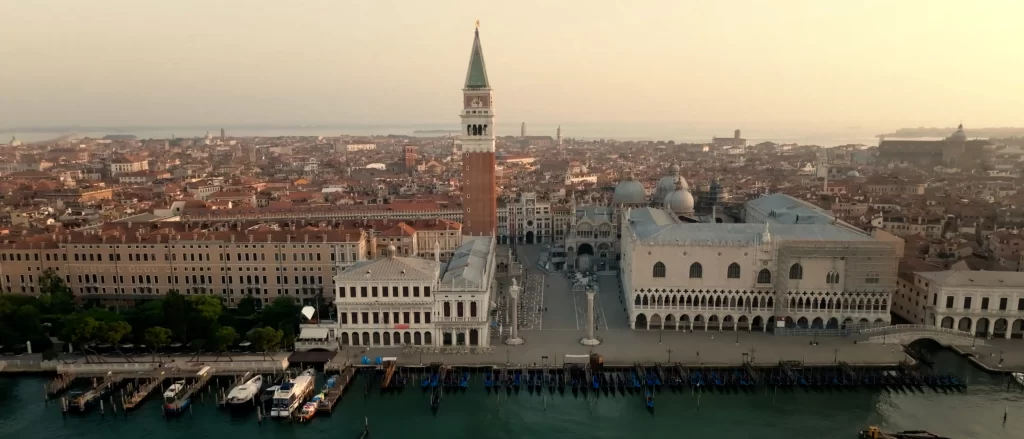
For this reason, early morning often provides the best conditions, with softer light and a relatively empty square. A few minutes’ walk away, neighborhoods such as Dorsoduro, Cannaregio, and Castello reveal a more everyday side of Venice, with narrow canals, low bridges, and less monumental yet equally characteristic buildings. The lagoon, viewed from the islands, adds an element the city alone cannot provide. San Giorgio Maggiore, Murano, Burano, and Torcello allow for weddings at a slower pace and in more open spaces. Torcello in particular retains an almost rural atmosphere, with its basilica and few tourist facilities, often chosen by couples looking to escape the density of the city while remaining within the lagoon context.

From a practical perspective, Venice requires more logistical planning than other destinations. Travel is on foot or by boat, so it is advisable to allow extra time and choose locations that are not too far apart. Civil ceremonies are generally possible in municipal palaces or dedicated venues, while private terraces and canal-facing rooms are available for symbolic or smaller ceremonies. Water and light, which reflect everywhere in the city, are two key elements: they enhance the video, but careful planning of timing and routes is essential.
Read also: A Vogue Wedding in the Exclusive Setting of the Belmond Hotel Cipriani in Venice
Verona
Verona is often associated with the story of Romeo and Juliet, but its UNESCO recognition primarily reflects its urban layering: a combination of eras (Roman, medieval, Scaliger, and Venetian) that coexist in a way that remains readable today. For couples choosing to get married here, this continuity is one of the city’s most appealing features, as each area has its own distinct identity and the distance between different contexts is minimal. Visually, Verona lends itself well to cinematic storytelling, since it does not have a single iconic center but many intermediate settings that can naturally enrich a wedding video.

The Arena, at the edge of Piazza Bra, is the city’s most iconic monument: a Roman amphitheater still actively used for concerts and performances. It is a rare example in Italy and immediately shows how Verona remains a “living” city even in its oldest parts. However, for a wedding, the most interesting spaces are often elsewhere: Piazza delle Erbe, with its irregular architecture and the Lamberti Tower, or Piazza dei Signori, more compact and defined, offer geometries that work well for filming and capturing moments in motion. The area around Ponte Pietra, on the other hand, introduces a more intimate side of Verona, with views that are ideal for informal shots.

From here, it is easy to reach Castel San Pietro, one of the city’s most recognized panoramic points: the view over the bend of the Adige River is particularly effective for a finale with open, natural light. For international couples, Verona is also practical. Distances are short, the city is well connected to Venice and Milan, and many venues for civil or symbolic ceremonies are located within the historic center or in villas just outside the city. Planning the day to alternate between busy areas and quieter spaces is recommended: Verona allows this balance with relative ease, and often it is precisely this alternation that gives a wedding a richer and more natural dimension.
Royal Palace of Caserta
The Royal Palace of Caserta is one of the most impressive architectural complexes in Europe, and its UNESCO recognition stems precisely from this ambition: a palace conceived in the eighteenth century by the Bourbon family to symbolically compete with Versailles and the model of the great European courts. Today, unlike many royal residences that have become fully museumized, the palace maintains a direct relationship with the surrounding territory and the daily flow of the modern city. It alternates between monumental spaces, extensive gardens, and quieter areas, making it surprisingly versatile for a wedding.

The interiors are known for their grandeur: the grand staircase, the royal apartments, and the Palatine Chapel. Everything is lavishly decorated and ideal for those dreaming of a luxury wedding, with precious materials, large volumes, and controlled lighting that works well for formal video shoots. However, the defining feature of the palace, especially for weddings, is its park: a three-kilometer-long perspective axis dotted with fountains, basins, and artificial cascades. The landscape is designed to be experienced sequentially, and this structure works particularly well for video: each section has its own atmosphere, from the Italian-style garden at the beginning to the woods and reflecting pools at the far end.

In practical terms, the palace requires some advance planning. Moving within the site involves considerable distances that are often underestimated, so it is important to clearly define which areas will be used for the ceremony, filming, and reception moments. For international couples, it is useful to know that civil ceremonies can be held in certain designated areas, while symbolic ceremonies are often hosted in nearby private locations offering both a view of the palace and more manageable spaces. Another advantage is the location: Caserta is well connected to Naples and the Amalfi Coast, so couples often combine a wedding here with a wider stay in southern Italy. The Royal Palace thus becomes not only a scenic venue but also a starting point for a broader experience, alternating between monumental architecture and coastal landscapes within a short distance.
Rome and Its Historic Center
The historic center of Rome is not a uniform area, but a series of overlapping layers that coexist almost inevitably: ancient ruins, Renaissance squares, Baroque churches, and nineteenth-century palaces. It is this density, more than any single monument, that defines its value as a UNESCO site. For a wedding, it means moving through a context where every choice immediately references Western history, for better or worse. Rome captivates precisely because it does not strive for coherence; it is a city that cannot be “contained”: chaotic, layered, and alive. The Colosseum and the Roman Forum are the city’s most recognized images. They are also highly exposed locations, with constant flows of visitors and harsh midday light.

They work well for brief video shots, particularly early in the morning or at sunset, when the spaces become more readable. A short distance away, the Campidoglio, designed by Michelangelo, offers a more controlled setting: orderly perspectives, less dispersed spaces, and a view over the ancient city that is ideal for those seeking a more restrained backdrop. Areas around Piazza Navona, the Pantheon, and the Trevi Fountain reveal a more compact Rome, made of irregular streets and squares that open suddenly. For video, these passages work well as transitional moments: Rome shows its best side when approached not as a sequence of monuments, but as a collection of micro-situations.
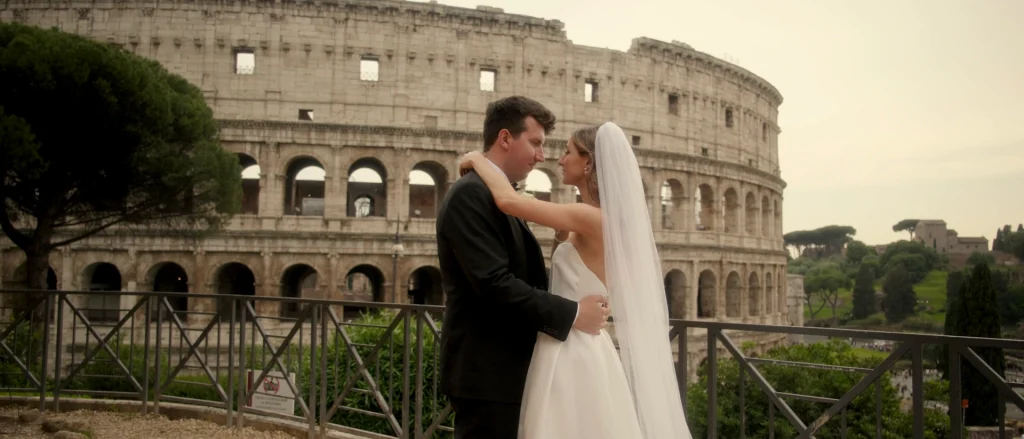
In practical terms, getting married in Rome requires more planning than in other Italian cities. Moving through the historic center can be slow, so it is advisable to limit the number of locations in a single day. Civil ceremonies can be held in historic venues such as the Campidoglio, while religious ceremonies are possible in a wide variety of churches, though some require specific procedures and longer timelines. For calmer footage, neighborhoods such as Monti, Trastevere, or the Jewish Ghetto offer a less tourist-heavy pace without losing the city’s character.
Wedding Videography at Italy’s UNESCO Sites
Choosing to have a wedding video is not a matter of trend or purely aesthetic preference: it is a form of documentation, a way to preserve an experience that lasts only a few hours but carries an emotional impact that can last a lifetime. When a couple decides to celebrate their wedding in places as rich in history or extraordinary landscapes as UNESCO sites, having a video that captures the entire day and the atmosphere of the moment becomes essential. A Renaissance villa, a medieval historic center, or a city built on water is not simply a backdrop; these settings continuously interact with the ceremony and the couple’s gestures.

A thoughtfully produced video can capture this interaction, turning the environment from a passive background into a protagonist. The main advantage of video over photography is temporal: it captures movement, glances, spontaneous smiles, and details that can escape the eye and memory. In locations like Siena or Venice, where light changes rapidly and spaces open and close unpredictably, the videographer acts almost like a discreet director, orchestrating elements without interfering. Choosing the right professional is therefore crucial. It is not enough to have high-quality equipment: the videographer must understand the space, anticipate the movement of light and guests, and build a coherent narrative.

Even the most iconic venues can feel artificial if there is no direction that integrates the site with the couple’s emotions. The video becomes a bridge between personal memory and the identity of the location, a way to relive the atmosphere years later with the same intensity as the actual day. Ultimately, a good wedding video tells not only who is getting married, but also where and how. In Italy’s most evocative contexts, this means transforming monuments, landscapes, and architecture into part of the story, without ever losing sight of the couple’s emotional experience.
Read also: Super 8 Wedding Videography in Italy: The Vintage Film Trend Every Couple Loves